grammy@cjm.com.cn

 English
 русский
 Español
 عربى
عربى
Content
- 1 1. What is a Metal Composite Panel Production Line?
- 2 2. Core Technologies to Consider When Selecting Metal Composite Panel Production Line Equipment
- 2.1 2.1 Core Technology 1: Hot Press Composite Technology
- 2.2 2.2 Core Technology 2: Automation Control System
- 2.3 2.3 Core Technology 3: Surface Treatment and Adhesive Application Technology
- 2.4 2.4 Core Technology 4: Cooling and Shaping Technology
- 2.5 2.5 Core Technology 5: Inspection and Quality Control Technology
- 2.6 2.6 Core Technology 6: Energy-Saving and Environmental Protection Technology
- 3 3. Advantages of Automation Upgrades for Metal Composite Panel Production Lines
- 4 4. How Metal Composite Panel Production Lines Improve Production Efficiency and Product Quality
- 5 5. How Metal Composite Panel Production Lines Help Reduce Costs and Improve Efficiency in the Construction Decoration Industry
- 6 6. Maintenance and Management of Metal Composite Panel Production Lines: Key Details for Enterprises
- 7 7. Key Factors in Selecting a High-Performance Metal Composite Panel Production Line
1. What is a Metal Composite Panel Production Line?
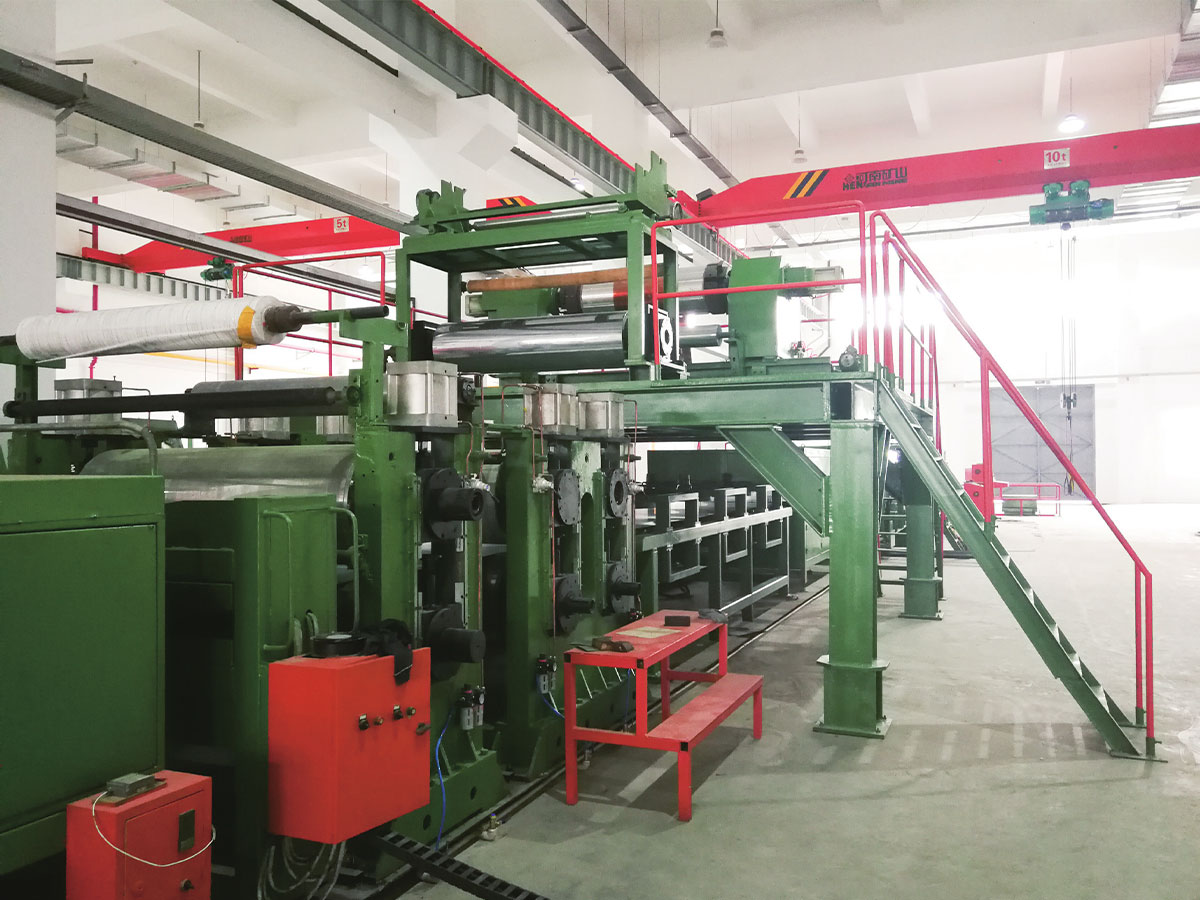
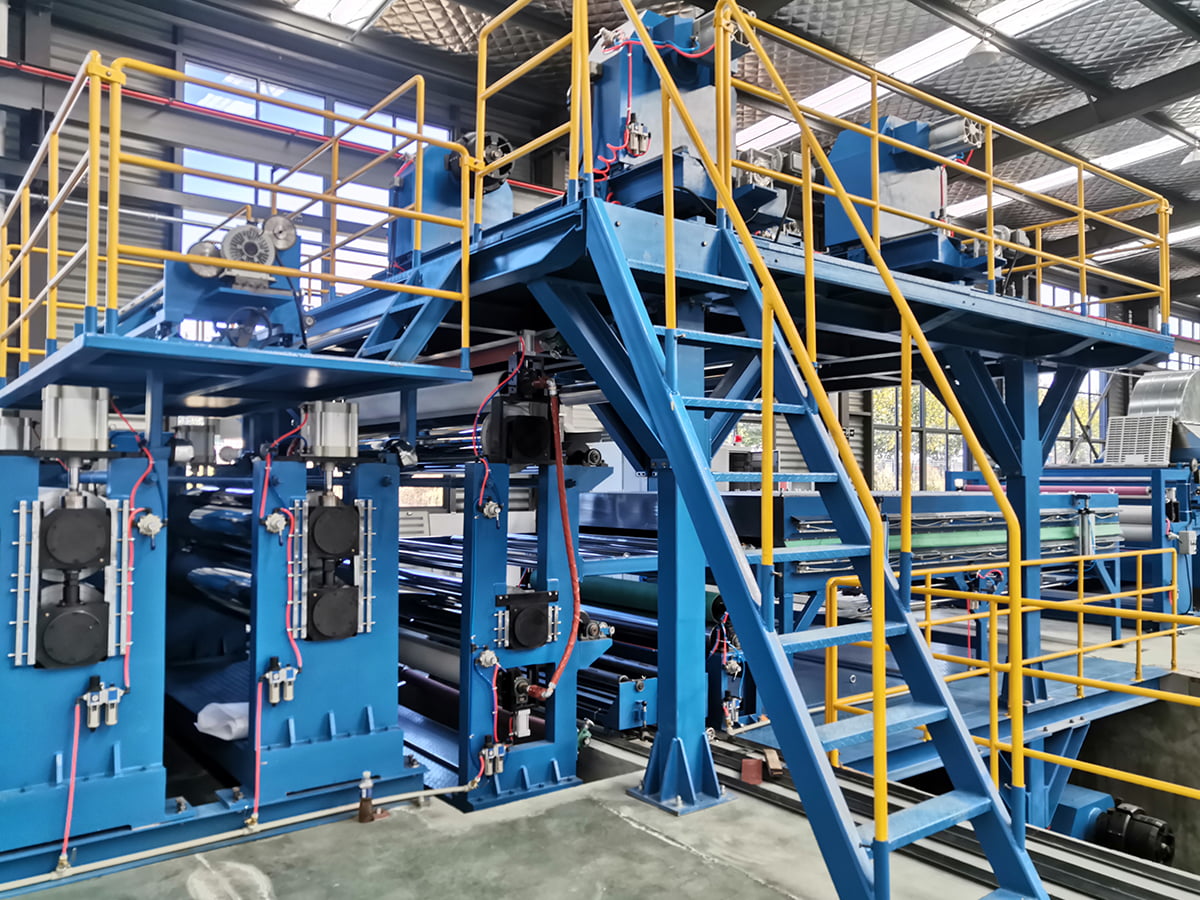
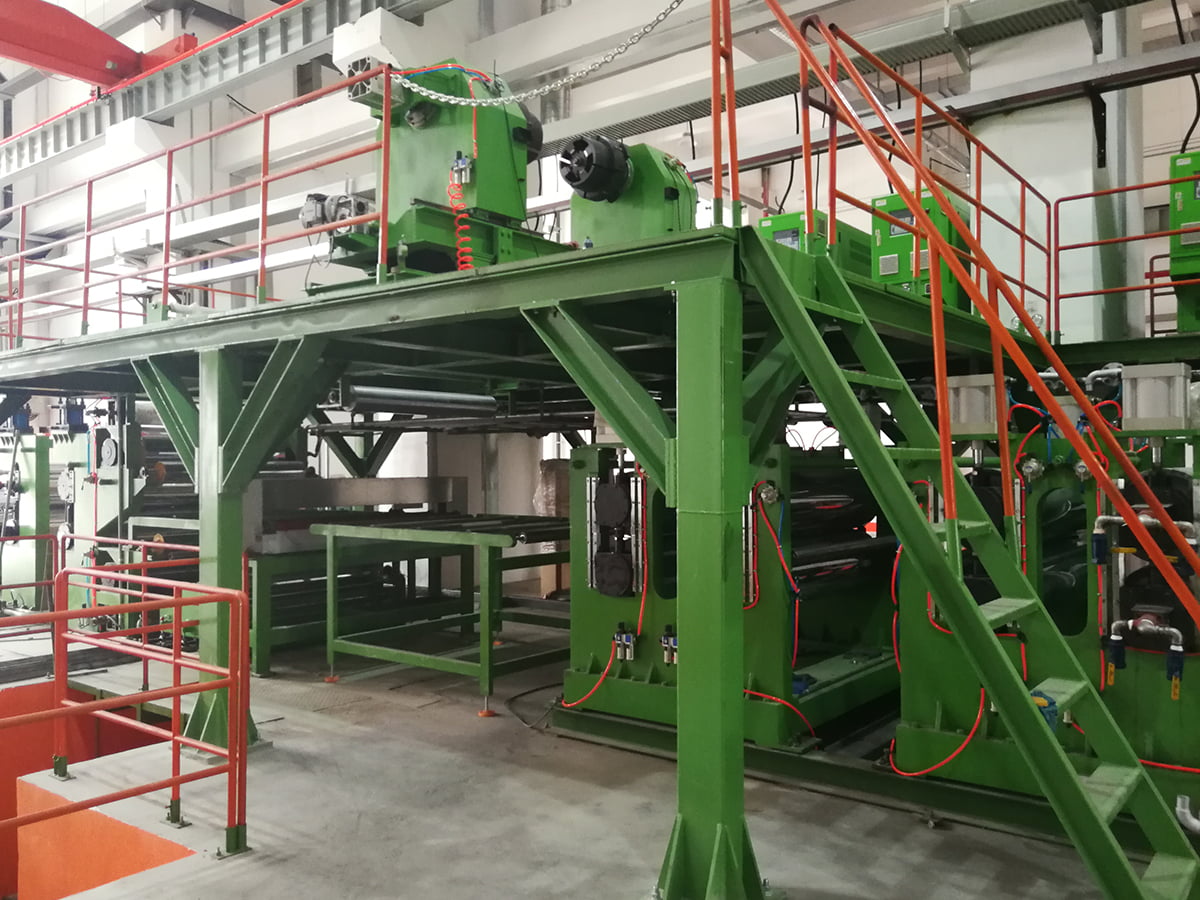
A Metal Composite Panel Production Line is a specialized equipment system used for manufacturing metal composite panels. It combines different types of metal materials or metals with non-metallic materials through advanced production processes to form panels with excellent performance. Metal composite panels are widely applied in construction decoration, transportation, electronic devices, and home manufacturing, making Metal Composite Panel Production Lines an important part of modern industrial production.
A Metal Composite Panel Production Line typically includes key stages such as raw material handling, surface cleaning, adhesive application, lamination, hot pressing, cooling, cutting, and finished product inspection. The entire production process is highly automated, ensuring not only the quality and performance stability of composite panels but also significantly improving production efficiency to meet large-scale production demands.
When selecting a Metal Composite Panel Production Line, production efficiency, equipment stability, energy consumption, automation level, and future maintenance costs are all important factors. Modern Metal Composite Panel Production Lines usually adopt PLC control systems and high-precision temperature control technologies, capable of precisely regulating the temperature and pressure during the composite process to ensure panels have excellent flatness, adhesion, and durability.
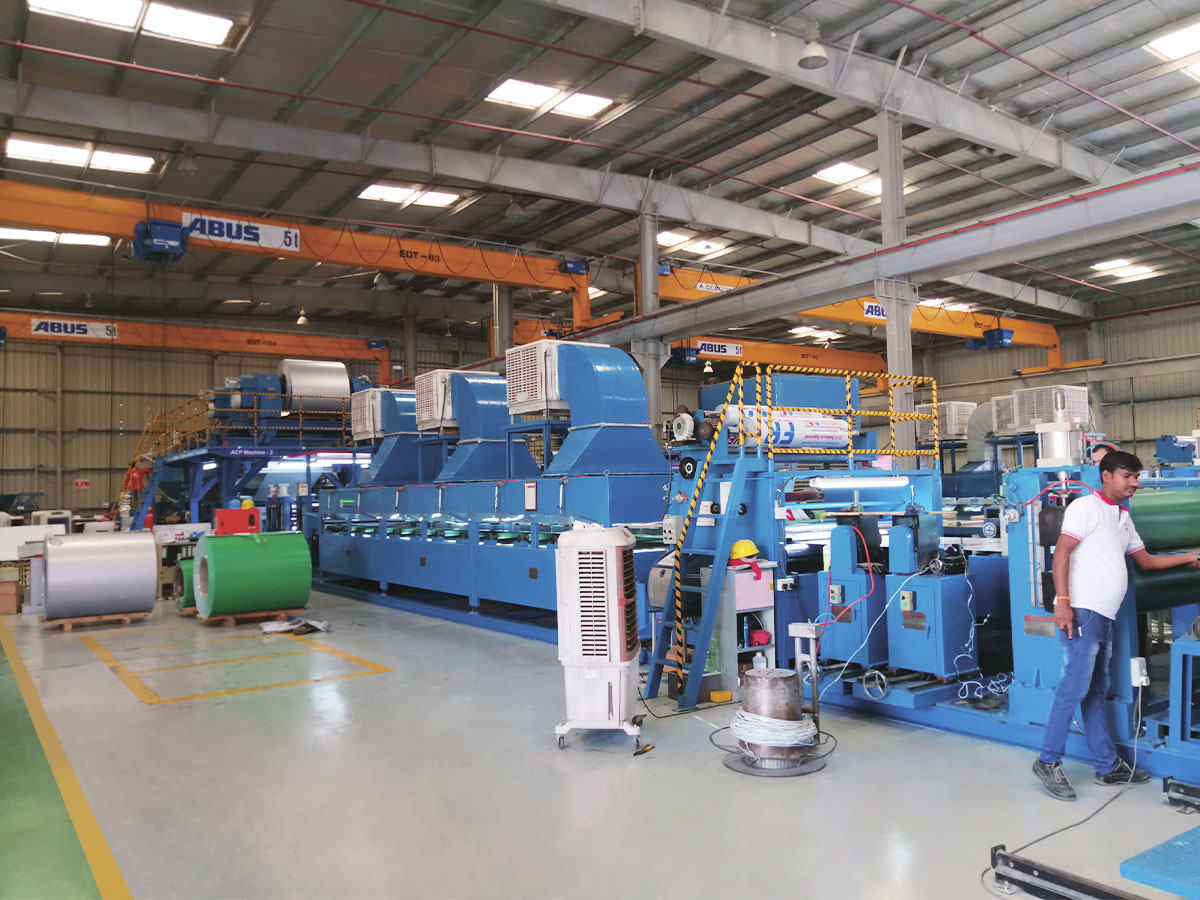
1.1 Main Features of Metal Composite Panel Production Lines
High-efficiency production: Advanced lines achieve continuous production, reduce manual intervention, and increase output.
Strong stability: Automation control systems ensure stable production, reducing errors caused by human operation.
Diverse products: Capable of producing panels of different thicknesses, specifications, and materials to meet diverse market demands.
Energy-saving and environmentally friendly: Optimized production processes reduce energy consumption and minimize waste emissions.
1.2 Application Fields of Metal Composite Panel Production Lines
Due to their light weight, high strength, corrosion resistance, and aesthetic appeal, metal composite panels are widely used in:
Construction industry: For curtain walls, ceilings, partitions, and other decorative projects, enhancing building aesthetics and durability.
Transportation: In automobiles, ships, and train cars for lightweight and soundproofing materials.
Electronic devices: For casings and heat dissipation components, improving device performance.
Home manufacturing: Producing furniture panels, kitchen equipment, and decorative home panels.
1.3 How to Choose a Suitable Metal Composite Panel Production Line
When selecting a Metal Composite Panel Production Line, the following factors should be considered:
Production capacity: Choose equipment with appropriate output according to enterprise demand to avoid resource waste.
Material compatibility: Ensure the production line can handle the required metals and non-metal materials.
Automation level: Highly automated equipment reduces manual labor, improves efficiency, and ensures product consistency.
After-sales service: Select manufacturers with comprehensive after-sales systems to ensure long-term stable operation.
In summary, Metal Composite Panel Production Lines are indispensable in modern industry, enhancing production efficiency and panel quality while promoting the development of construction, transportation, and electronics sectors. With continuous technological upgrades, these production lines will play an increasingly important role in high-performance material manufacturing.
2. Core Technologies to Consider When Selecting Metal Composite Panel Production Line Equipment
When selecting Metal Composite Panel Production Line equipment, the level of core technology directly determines production efficiency, panel quality, and long-term competitiveness. A Metal Composite Panel Production Line involves multiple stages, including raw material pretreatment, surface treatment, adhesive application, hot pressing, cooling and shaping, cutting, and inspection. Each stage relies on advanced technology, making attention to core technologies critical for stable production and panel performance.
2.1 Core Technology 1: Hot Press Composite Technology
Hot press composite is the core process in metal composite panel production, directly affecting bonding strength, flatness, and durability. High-end Metal Composite Panel Production Lines typically use hot press systems with controllable temperature and pressure, combined with precise temperature control and pressure monitoring technologies, ensuring perfect bonding of different metal or metal–non-metal materials while minimizing bubbles, warping, or delamination.
2.2 Core Technology 2: Automation Control System
Modern Metal Composite Panel Production Lines generally use PLC or industrial computer control systems to achieve full automation. Automation technology allows precise adjustment of temperature, pressure, and line speed, ensuring stable quality across batches, reducing human errors, and improving production efficiency and safety.
2.3 Core Technology 3: Surface Treatment and Adhesive Application Technology
Surface treatment includes cleaning, degreasing, and roughening to improve adhesion. Adhesive application affects bonding strength and durability. Advanced Metal Composite Panel Production Lines typically use high-precision spray or roll-coating systems, ensuring uniform adhesive layers without bubbles, and selecting adhesives suitable for different materials to enhance long-term panel performance.
2.4 Core Technology 4: Cooling and Shaping Technology
After hot pressing, panels need rapid and uniform cooling to prevent warping, deformation, or stress concentration. Cooling and shaping technologies are essential to maintain flatness and dimensional accuracy. High-end production lines usually feature efficient cooling systems combined with rollers or leveling devices for rapid and stable shaping.
2.5 Core Technology 5: Inspection and Quality Control Technology
Quality control relies on advanced detection technologies, including thickness measurement, flatness inspection, and bonding strength testing. Real-time online monitoring and feedback systems can detect production anomalies promptly, reducing defective rates and ensuring products meet standard requirements.
2.6 Core Technology 6: Energy-Saving and Environmental Protection Technology
Modern Metal Composite Panel Production Lines also emphasize energy efficiency and environmental protection, optimizing thermal energy utilization and waste recovery systems to reduce energy consumption and production costs while meeting environmental standards. This provides enterprises with a sustainable competitive advantage.
When selecting Metal Composite Panel Production Line equipment, attention should focus on hot press composite technology, automation control systems, surface treatment and adhesive application, cooling and shaping, inspection and quality control, and energy-saving/environmental protection technologies. Only equipment with advanced capabilities in these core technologies can guarantee high-quality panel production and enhance enterprise competitiveness.
3. Advantages of Automation Upgrades for Metal Composite Panel Production Lines
With the development of Industry 4.0 and intelligent manufacturing, automation upgrades of Metal Composite Panel Production Lines have become crucial for improving production efficiency and product quality. Automation upgrades reduce manual intervention and errors, optimize production processes, increase efficiency, and improve panel consistency, providing significant market advantages.
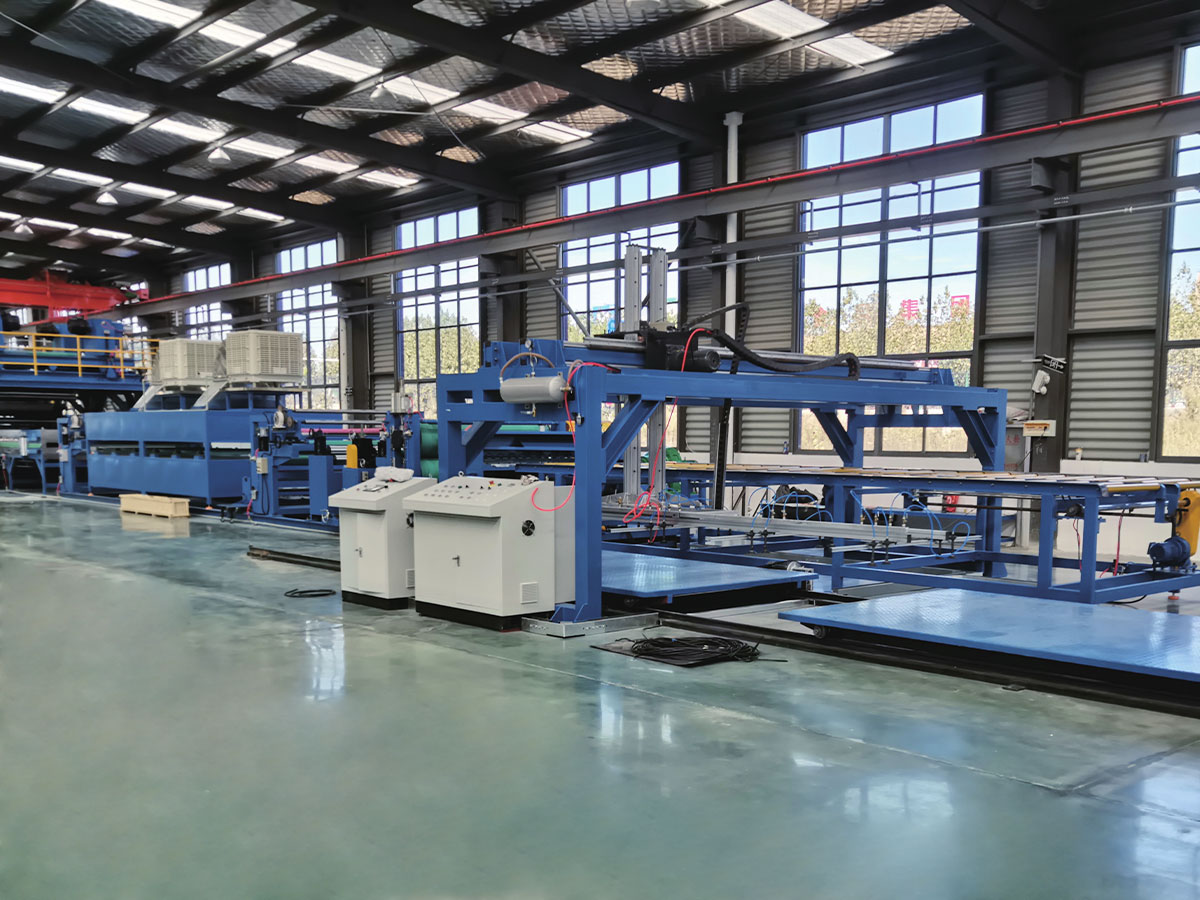
3.1 Main Advantages of Automation Upgrades
Improved production efficiency: Automation enables continuous operation, reduces downtime, and increases output. Intelligent control systems allow 24-hour stable operation, meeting large-scale production requirements.
Consistent product quality: Automated control precisely regulates temperature, pressure, and adhesive thickness, maintaining uniformity across hot pressing and cooling stages, reducing warping, bubbles, and delamination.
Lower labor costs and operational risks: Reduced manual operations save labor costs and enhance safety, while intelligent monitoring systems detect anomalies in real time.
Optimized energy utilization and production efficiency: Smart systems adjust equipment operation based on load, optimizing energy use in heating and cooling stages and reducing resource waste.
Enhanced competitiveness and market responsiveness: Automation allows quick adjustments for different panel specifications and materials, enabling flexibility for market changes and personalized orders.
3.2 Key Technologies for Automation Upgrades
PLC and intelligent control systems: For full-process automation management and data monitoring.
High-precision temperature and pressure control: To ensure bonding strength and stability.
Online detection and feedback: Real-time monitoring of thickness, flatness, and surface quality.
Automatic feeding and cutting systems: Increase efficiency and reduce manual intervention.
Automation upgrades in Metal Composite Panel Production Lines significantly improve efficiency, quality, safety, and market competitiveness, establishing intelligent and green production as the industry standard.
4. How Metal Composite Panel Production Lines Improve Production Efficiency and Product Quality
Metal Composite Panel Production Lines are essential equipment in construction decoration, transportation, and electronics. Improving efficiency and quality helps reduce costs and enhance competitiveness. By optimizing production processes, upgrading automation, and strengthening quality control, production lines can achieve high output and stability while maintaining panel performance.
4.1 Methods to Improve Production Efficiency
Automation control system: PLC or industrial computer systems manage the full process including feeding, adhesive application, hot pressing, cooling, and cutting. Automation reduces manual intervention and allows 24-hour continuous production.
Optimized hot press process: Precise control of temperature, pressure, and time ensures optimal bonding strength while avoiding warping and bubbles, reducing rework and increasing efficiency.
Intelligent production scheduling: Real-time monitoring allows rational allocation of materials, equipment sequence, and production cadence, reducing idle time and increasing efficiency.
Efficient material handling: Automatic feeding, cutting, and roll management minimize manual handling, improving line throughput.
4.2 Key Measures to Improve Product Quality
| Technology Stage | Optimization Measures | Effect |
| Surface treatment | Cleaning, degreasing, roughening | Improves adhesive bonding and panel strength |
| Adhesive application | Precise spray or roll coating | Uniform adhesive, no bubbles, improved durability |
| Hot pressing | Adjustable temperature and pressure system | Ensures flatness and bonding strength |
| Cooling and shaping | Efficient cooling + roller leveling | Prevents warping, improves dimensional accuracy |
| Online inspection | Thickness, flatness, bonding strength monitoring | Detects issues promptly, reduces defective rates |
4.3 Integration of Automation and Intelligent Technologies
Online monitoring: Real-time collection of temperature, pressure, speed, and other key parameters.
Data feedback and analysis: Automatic storage and analysis of production data to optimize process parameters and reduce defects.
Energy-saving and environmental design: Intelligent adjustment of heating and power usage improves efficiency and reduces costs.
Through process optimization, automation, and quality monitoring, Metal Composite Panel Production Lines significantly improve efficiency and quality, ensuring flat, durable, and high-performance panels for construction, transportation, and electronics sectors.
5. How Metal Composite Panel Production Lines Help Reduce Costs and Improve Efficiency in the Construction Decoration Industry
As key equipment in the modern construction decoration industry, Metal Composite Panel Production Lines play a critical role in enhancing efficiency, reducing costs, and ensuring product quality. Through automation, process optimization, and intelligent management, they provide effective solutions for cost reduction and efficiency improvement while enhancing panel performance and market competitiveness.
5.1 Key Paths to Cost Reduction and Efficiency Improvement
Automation reduces labor costs: Automatic feeding, adhesive application, hot pressing, cooling, and cutting reduce manual labor, improve output, and reduce rework.
Optimized processes increase efficiency: Precise control of hot press temperature, pressure, and time ensures flatness and bonding while enabling fast continuous production.
Intelligent management reduces energy consumption: Systems adjust equipment operation based on load, optimizing energy usage and reducing production costs.
Online quality monitoring reduces defective rates: Real-time monitoring of thickness, flatness, and bonding strength allows timely adjustments, reducing waste.
5.2 Advantages Compared to Traditional Production
| Advantage Category | Traditional Method | Automated Metal Composite Panel Production Line |
| Labor cost | High, requires multiple operators | Low, automated operation replaces labor |
| Production efficiency | Medium-low, affected by manual work | High, continuous production with stable cadence |
| Product quality | Fluctuates with operator skill | Stable, high flatness and bonding strength |
| Material utilization | Low, frequent rework | High, reduced waste, improved utilization |
| Energy consumption | Uneven, high waste | Optimized, reduced costs |
5.3 Comprehensive Effects
Reduced production cost: Lower labor and energy consumption, improved material utilization.
Increased production efficiency: Continuous operation reduces downtime, meeting large-scale project demands.
Stable product quality: Fewer defects and rework improve project efficiency and customer satisfaction.
Enhanced market competitiveness: High-efficiency, high-quality production strengthens pricing and quality advantages.
Through automation, intelligent management, and process optimization, Metal Composite Panel Production Lines provide clear cost-saving and efficiency-improving benefits for the construction decoration industry.
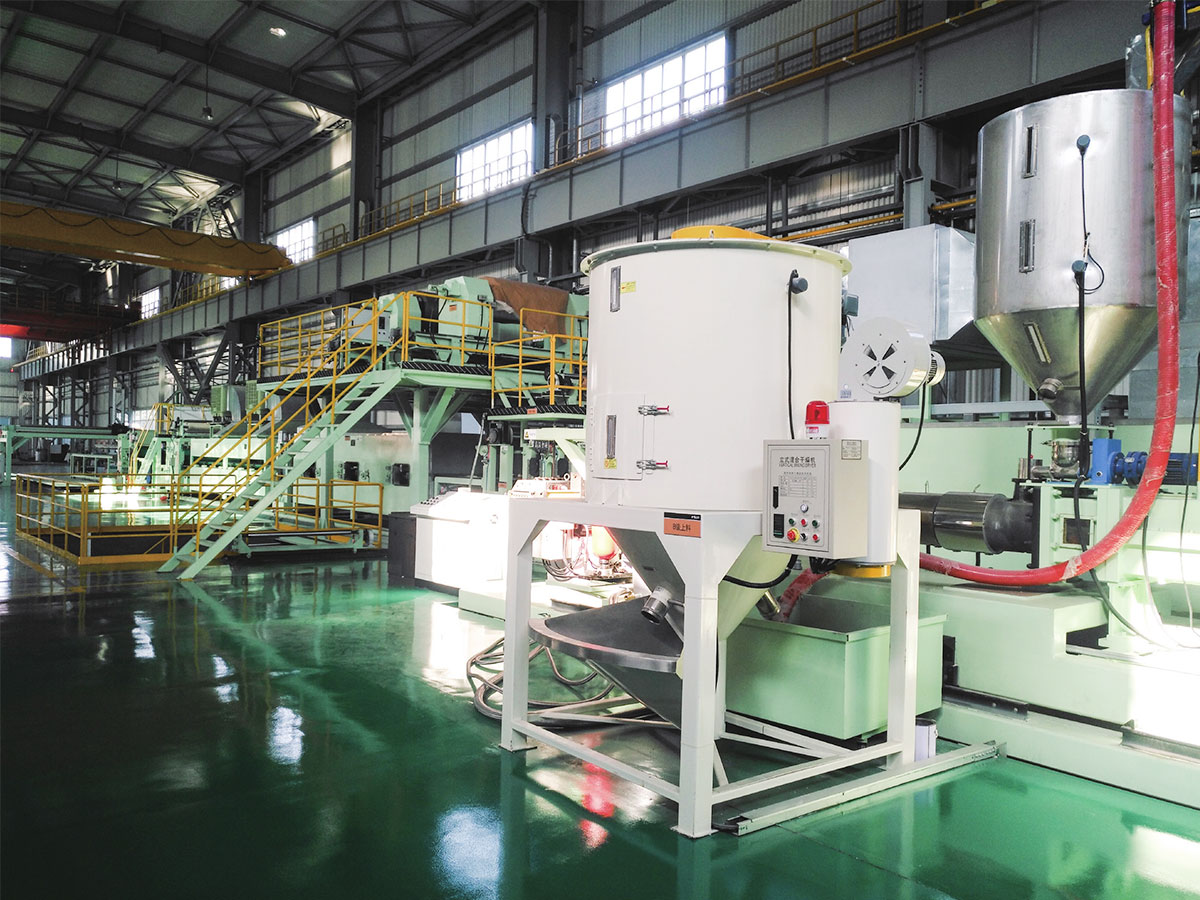
6. Maintenance and Management of Metal Composite Panel Production Lines: Key Details for Enterprises
Metal Composite Panel Production Lines are essential in construction, transportation, and home manufacturing. Stable operation and high efficiency directly affect costs and quality. Enterprises must prioritize maintenance and management, focusing on critical details to ensure long-term performance and lifespan.
6.1 Key Maintenance and Management Details
Daily inspection and upkeep: Regularly check key components such as conveyor systems, hot press equipment, adhesive applicators, and cooling systems. Clean dust, oil, and debris.
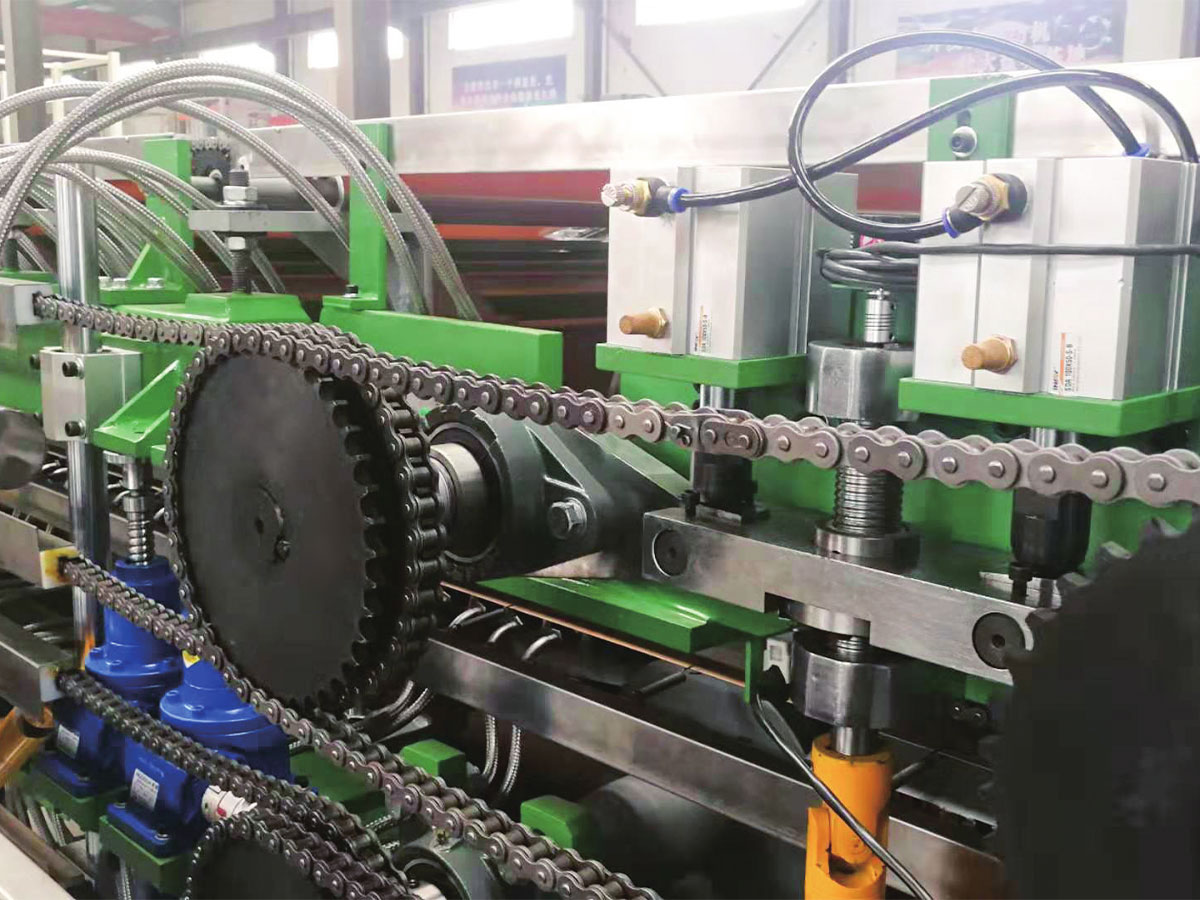
Equipment lubrication and part replacement: Regularly lubricate shafts, gears, and chains. Replace worn parts promptly to avoid downtime.
Automation system maintenance: Check PLC or industrial control systems, sensors, and wiring to ensure accurate data and stable operation.
Calibration of temperature and pressure systems: Regularly calibrate sensors in hot pressing to ensure consistent bonding strength and quality.
Safety protection and emergency management: Inspect safety devices such as emergency stop buttons, guards, and sensors. Establish emergency procedures to prevent damage or injury.
6.2 Maintenance Key Points Table
| Maintenance Stage | Specific Measures | Notes |
| Mechanical parts | Clean dust, lubricate, check transmission system | Avoid contaminating panel surfaces |
| Hot press system | Calibrate temperature and pressure sensors, inspect heating elements | Ensure uniform hot pressing, prevent warping |
| Adhesive and surface treatment | Inspect coating uniformity, clean spray lines | Avoid blockages and uneven layers |
| Cooling and shaping | Check cooling channels and roller leveling | Prevent warping or stress concentration |
| Automation & control | Backup programs, calibrate sensors, check wiring | Prevent production interruptions due to system faults |
| Safety management | Inspect safety devices, train operators | Ensure safe operation and emergency handling |
6.3 Suggestions to Improve Maintenance Efficiency
Establish a scheduled maintenance plan based on operation time and load.
Train operators and maintenance staff to reduce human errors.
Use digital management tools for monitoring and predictive maintenance.
Maintain detailed maintenance logs for reference and planning.
Proper maintenance and management ensure high efficiency, extended lifespan, improved panel quality, and reduced losses from equipment failures.
7. Key Factors in Selecting a High-Performance Metal Composite Panel Production Line
7.1 Production Capacity and Output Matching
Choose a line with capacity aligned to daily production and future expansion plans to avoid overinvestment or insufficient output.
7.2 Automation Level
High-performance lines should include PLC control, automatic feeding, adhesive application, hot pressing, cooling, and cutting systems to improve efficiency and reduce manual intervention.
7.3 Process Stability and Technical Level
Hot pressing, adhesive application, and cooling technologies should be mature and reliable, ensuring flatness, bonding strength, and surface quality, while reducing defective rates.
7.4 Material Compatibility
The line should handle different thicknesses, materials, and specifications of metals and non-metals, supporting product diversification.
7.5 Energy Efficiency and Environmental Design
High-performance lines typically feature energy-optimized designs, efficient use of thermal and electrical energy, and compliance with environmental regulations.
7.6 After-Sales Service and Technical Support
A comprehensive after-sales system with rapid response ensures long-term stable operation and reduces downtime risks.
7.7 Key Selection Points Table
| Selection Point | Focus Detail | Evaluation Criteria |
| Capacity & speed | Output per hour, batch continuity | Meets production plan, allows moderate expansion |
| Automation level | PLC, automatic feeding, cutting, adhesive systems | Highly automated, reduces manual work, ensures stability |
| Hot press process | Temperature and pressure precision, uniformity | Ensures bonding strength and panel flatness |
| Material compatibility | Supports multiple metals and composites | Flexible specifications for different projects |
| Energy & environment | Energy-saving system, waste recovery | Reduces operating costs, meets regulations |
| After-sales service | Training, parts supply, fast response | Ensures long-term stable operation |
Selecting a high-performance Metal Composite Panel Production Line requires attention not only to capacity and equipment performance but also to process stability, material compatibility, automation, and after-sales service. Scientific evaluation and proper selection help enterprises improve efficiency, reduce costs, and ensure panel quality, providing stable, high-quality products for construction, decoration, transportation, and electronics industries.