grammy@cjm.com.cn

 English
 русский
 Español
 عربى
عربى
Content
A coil of aluminium painted after cutting and forming almost always costs more per square metre than the same coil painted while it is still a coil on a continuous line. That economic fact explains why pre-painted aluminium supplies most of the cladding, roofing, signage and aluminium composite panel market.
Quality in coated aluminium coil is settled in three places: how clean the strip is when it reaches the coating head, how accurately that head meters the film, and how evenly the oven delivers the cure. Colour, gloss and service life follow from those three, not from the paint brand alone.
How continuous coating of aluminium coil works
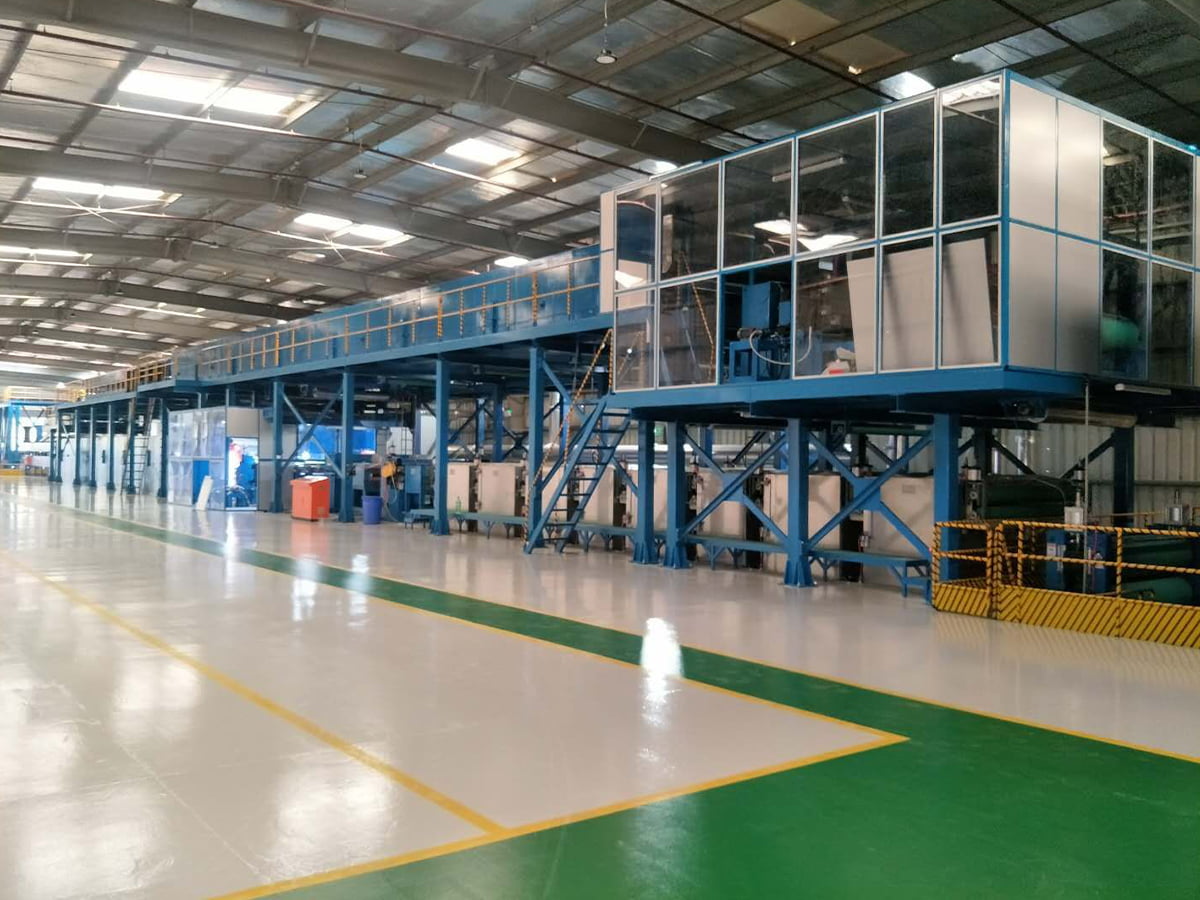
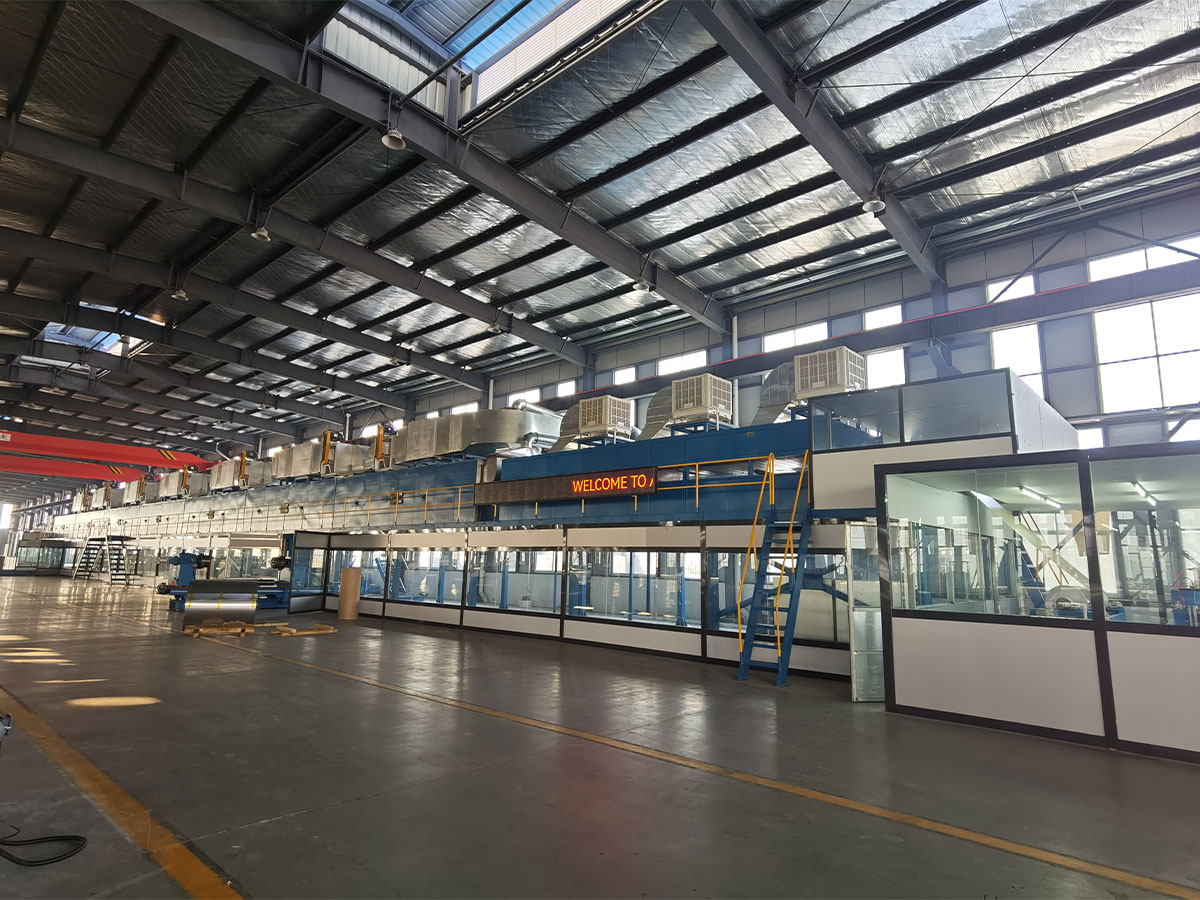
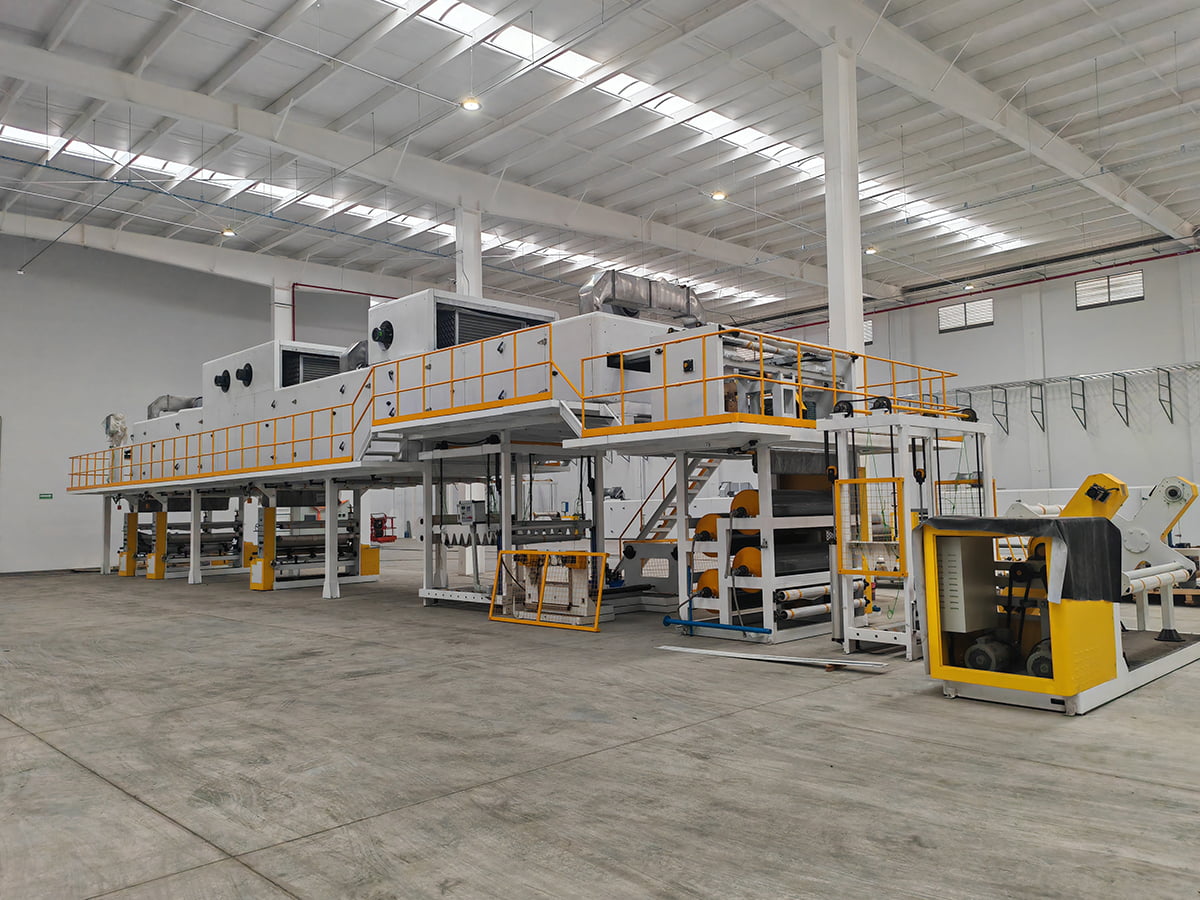
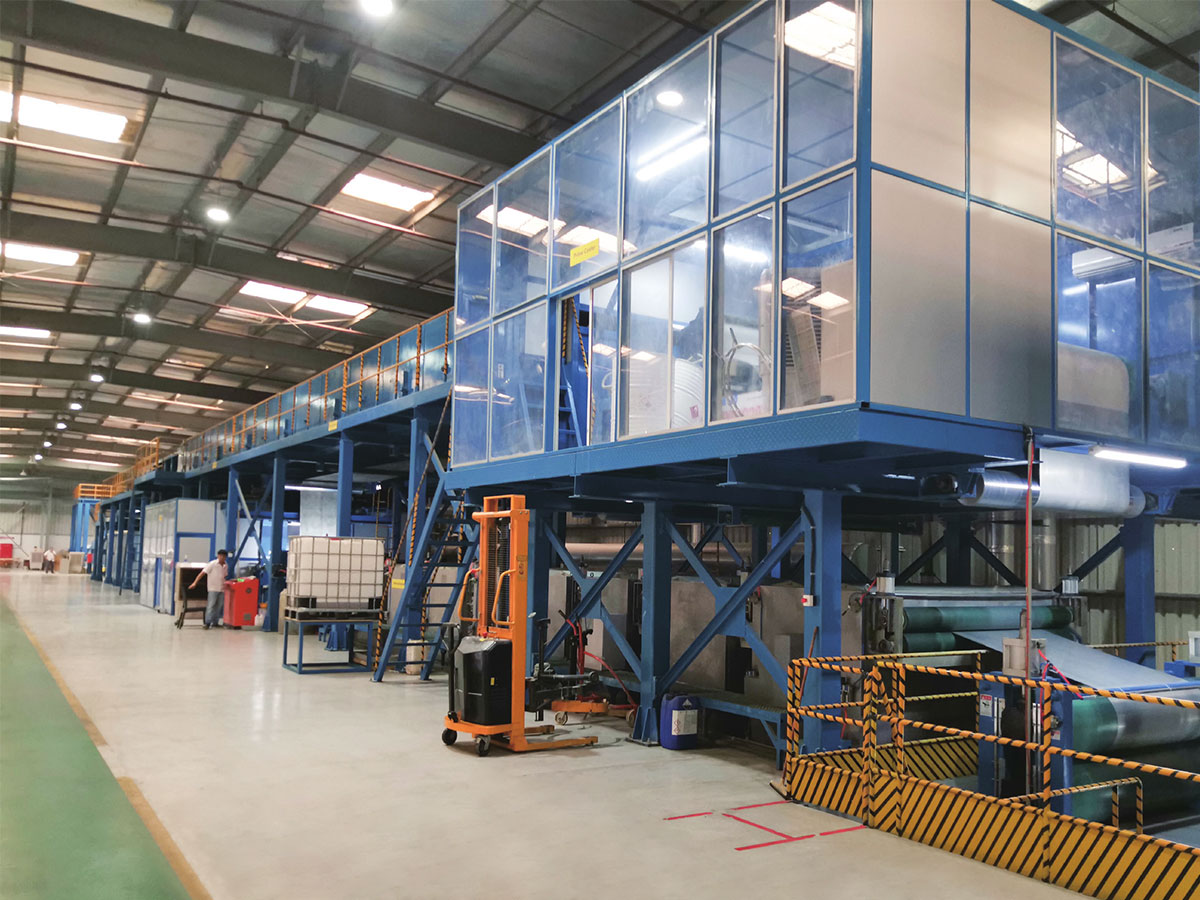
Coil coating is a continuous, automated process that applies an organic coating to metal strip before the strip is cut or formed. Aluminium arrives as a coil, is uncoiled, cleaned, chemically pre-treated, coated, cured, cooled and rewound as pre-painted coil. Because the strip does not stop during steady running, film thickness, cure and appearance are set by machine parameters rather than operator feel. Architectural lines commonly run at 20 to 60 metres per minute, with strip widths of 600 to 1600 millimetres and a total dry film of 20 to 27 micrometres including primer.
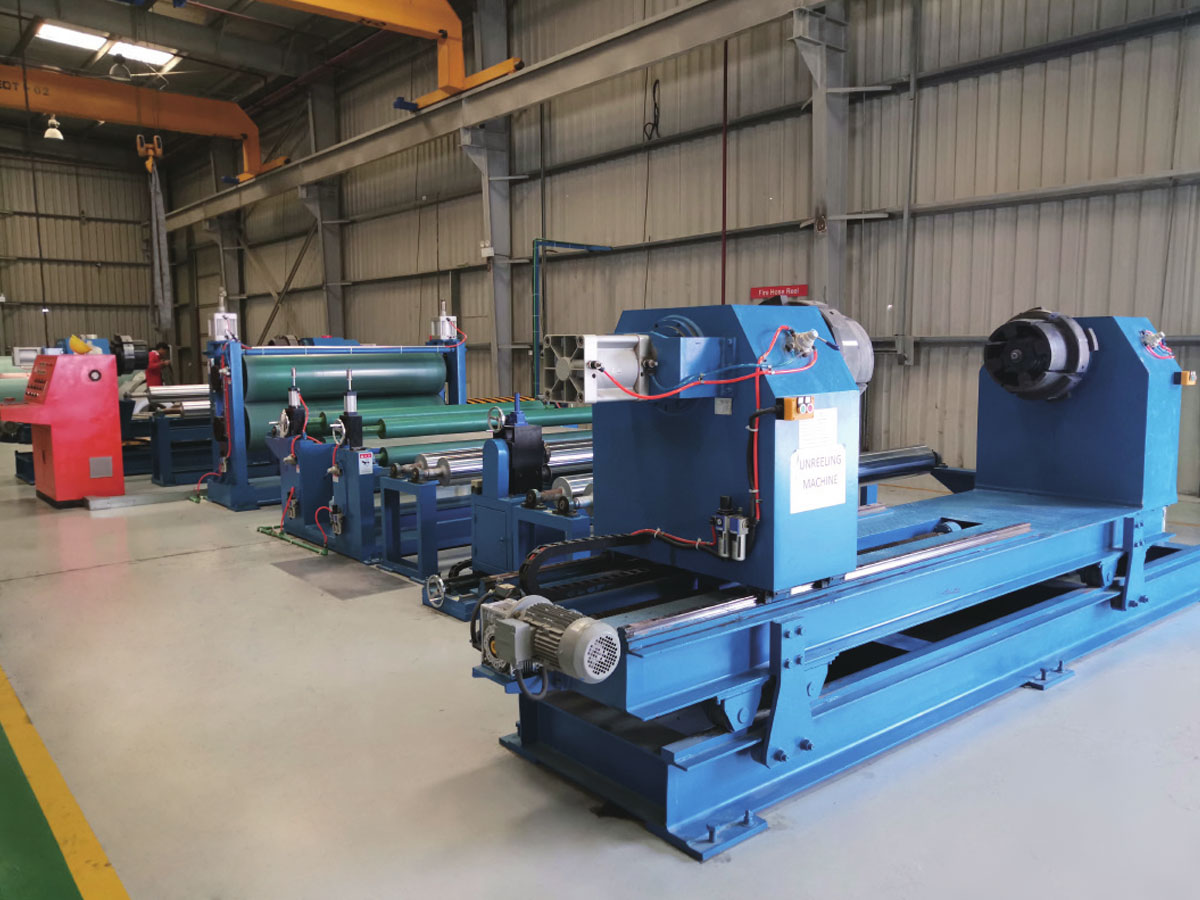
- Uncoiling and stitching: the tail of the running coil is joined to the head of the next one, and the seam must pass through the line without marking rollers.
- Accumulation: an entry accumulator stores strip so the coating head and oven keep running through a coil change.
- Cleaning and pre-treatment: alkaline cleaning, rinsing, a chemical conversion coating and a dry-off oven. This stage decides adhesion more than any other.
- Primer and topcoat: roller coaters apply the primer, a flash-off section removes solvent, then the topcoat follows.
- Curing: a multi-zone oven brings the metal, not just the air, to the peak metal temperature the chemistry needs.
- Quenching and rewind: cooling brings the strip down to handling temperature and the finished coil is rewound under controlled tension.
Strip preparation decides most adhesion results
Incomplete cleaning stops the conversion coating from forming evenly, and the failure appears later as coating loss along a bend or a cut edge. The cleaning section must therefore be long enough for the line speed you actually run, and wet section rollers need a cleaning schedule, because dried chemical residue transfers straight onto the strip as streaks.
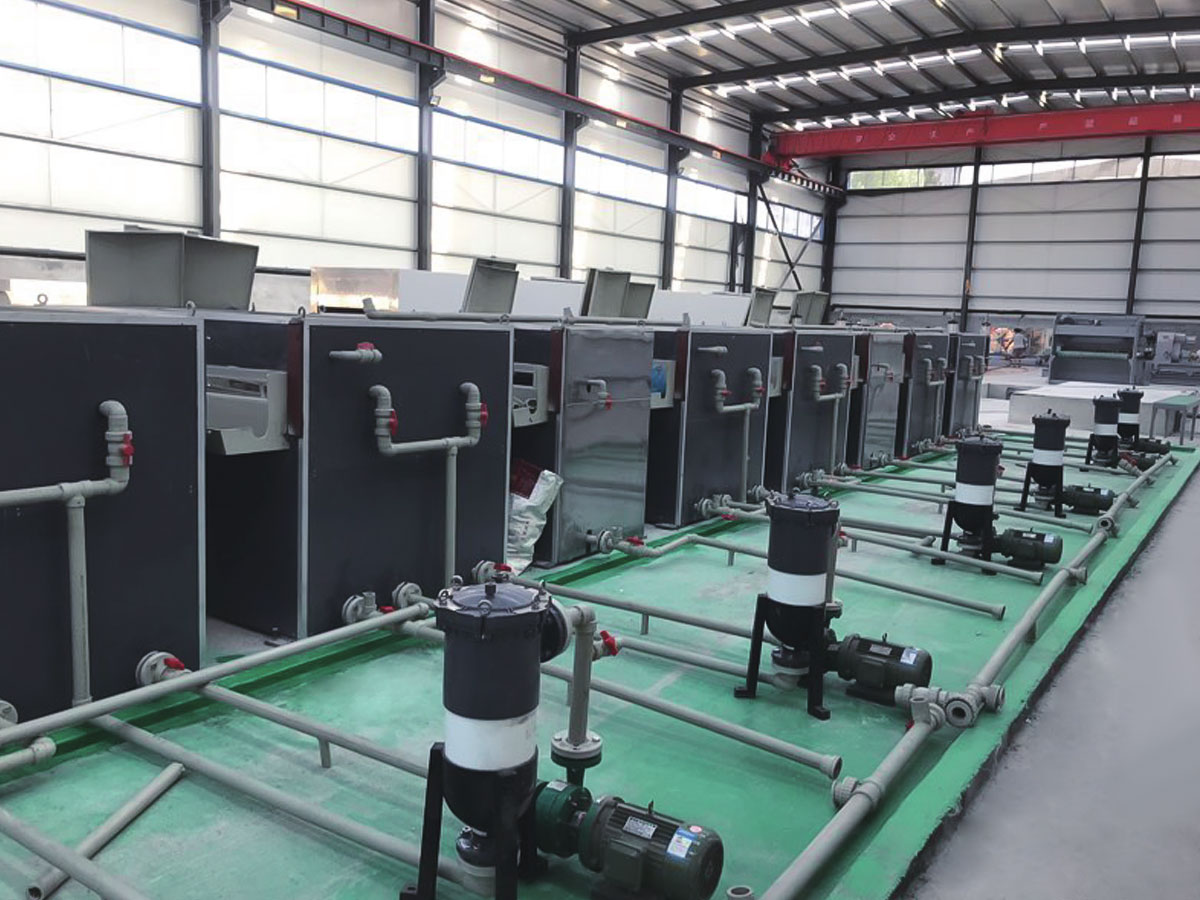 Pretreatment Cleaning LineThe cleanliness of metal surfaces and the quality of chemical conversion coatings directly determine the corrosion resistance, paint adhesion, and final product qualit...View Product →
Coating heads, film control and cure
Lines use three-roll or four-roll heads. Three-roll is simpler to maintain, while four-roll controls very thin films more finely and suits lines that also print. Film thickness is set by the speed ratio between applicator and strip, so stable speed and stable tension come first. Further down the line, under-cure costs solvent resistance and flexibility, while over-cure costs colour and ductility. The control variable is peak metal temperature, measured at the strip, typically around 230 to 249 degrees Celsius for PVDF and 216 to 232 degrees Celsius for polyester. Confirm the window with the coating supplier before setting the oven.
Coating systems and where each one fits
No single coating covers every exposure. The choice depends on the environment the finished product will face, the forming the coil will undergo afterwards, and how long colour and gloss must hold.
| Coating system | Typical total dry film | Cure window | Best suited to | Main limitation |
|---|---|---|---|---|
| Polyester | 18 to 25 micrometres | 216 to 232 C | Interior panels, signage, light duty cladding | Chalking and fade outdoors |
| Silicon modified polyester | 20 to 25 micrometres | 220 to 235 C | Roofing and wall cladding in moderate climates | Weaker solvent resistance than PVDF |
| PVDF | 23 to 27 micrometres | 230 to 249 C | Exterior facades, coastal and industrial exposure | Higher cost, narrow cure window |
| Polyurethane | 20 to 25 micrometres | 210 to 230 C | Film lamination and premium interior finishes | Moisture sensitivity in storage |
| Epoxy primer | 5 to 7 micrometres | Set by the topcoat | Adhesion and corrosion base layer | Chalks if left uncoated |
Two rules follow. A PVDF topcoat over a thin or uneven primer still fails at the cut edge, because corrosion starts at exposed metal. And a coating cured at the bottom of its window can pass a visual check and still fail a solvent rub or a bend test on the same day.
Tests that release a coated coil
Release testing is fast, destructive and specific. Samples come from the head, middle and tail of each coil, because a batch that looks right can still fail one of the following.
- Dry film thickness, read on the strip with a magnetic or eddy current gauge against a tolerance of roughly plus or minus 2 micrometres.
- T-bend adhesion, where a coupon is bent back on itself and tape pulled to check for coating loss; exterior products usually need to pass 1T or 2T.
- MEK double rubs, which indicate cure level rather than long-term chemical performance.
- Reverse impact, confirming the coating survives sudden deformation, not only a slow bend.
- Gloss at 60 degrees and colour difference, measured against the approved sample, with delta E usually held at about 1.0 or tighter for panels that will sit side by side.
- Salt spray or humidity exposure, commonly 1000 hours, used for qualification rather than for every batch.
These checks are cheap and repeatable, but they do not replace external weathering data, and they should never release a coating cured outside its published window.
Specifying a coating line: the numbers that matter
Line purchases usually start with price and end with the details that decide yield. These items are worth fixing in writing before a contract is signed.
- Strip width and thickness range, including the narrowest width you will actually run, because roller crowns behave differently at the edges of a range.
- Line speed and coil change time, since accumulator capacity sets how long the line runs between coils.
- Coating head configuration, three-roll or four-roll, and how many heads are fitted for primer, topcoat and any backing coat.
- Oven zoning and peak metal temperature control, including the ability to hold the cure window at both the lowest and the highest line speed.
- Pre-treatment section length and chemistry, matched to line speed so contact time is not short-changed.
- Tension levelling and strip tension control, which affect flatness, coating uniformity and slivers from the seam.
- Colour changeover time and spare parts support, figures that rarely appear in a quotation but show up in every shift.
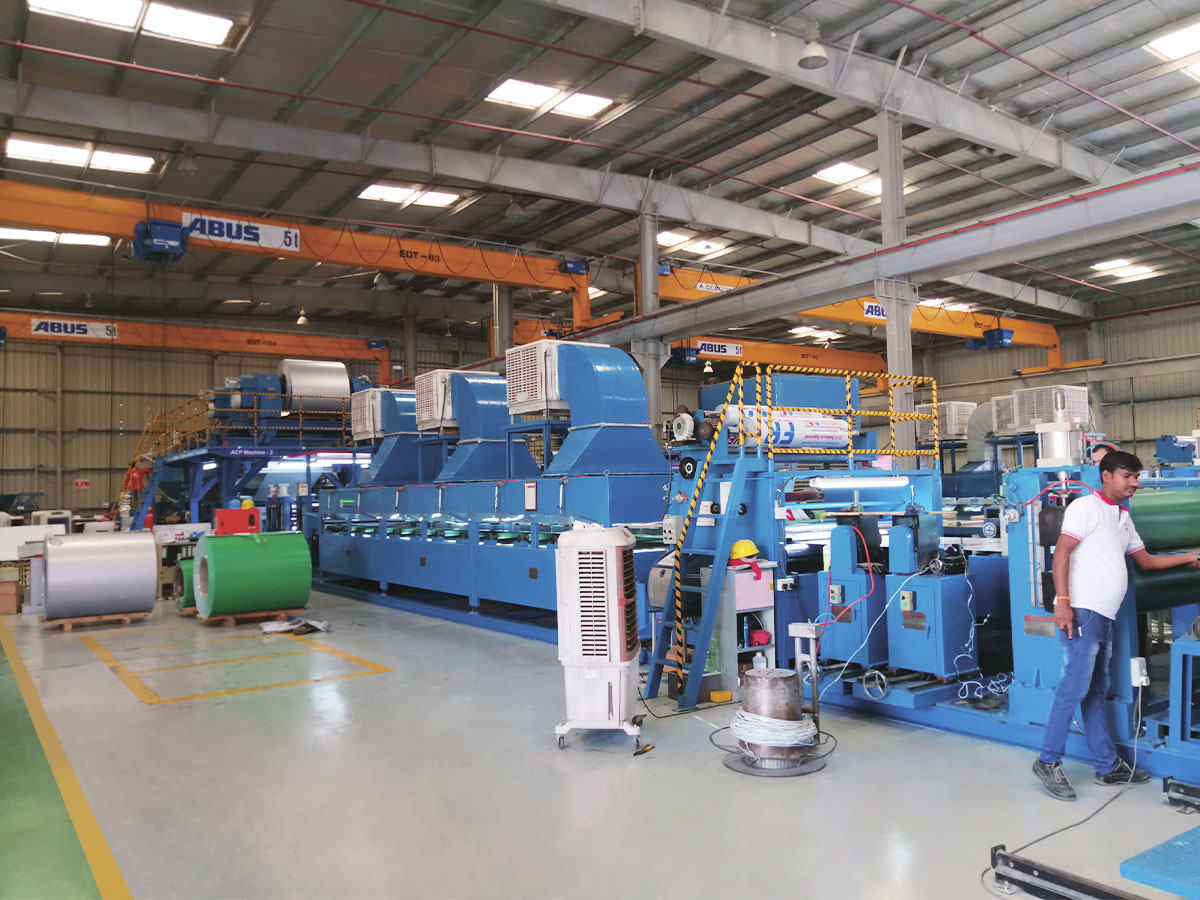 Color Coating LineThrough automated and intelligent processes, the coating production line provides aesthetically pleasing, durable, and functional surface coatings for a wide range of ...View Product →
Buyers should also ask how the line handles a change from one coating chemistry to another, and whether the same equipment can run printing or film lamination, because those options change the product mix over the lifetime of the machine. Rated speed decides very little on its own, which is why the production advantages of a metal coil coating line are better judged on annual output and changeover loss than on a brochure figure.
Defects, causes and first corrections
Most coating problems repeat, and most trace back to strip cleanliness, film metering or cure.
| Defect | Likely cause | First correction |
|---|---|---|
| Coating lifts along a cut edge | Thin primer at the edge or incomplete pre-treatment | Check primer film and cleaning contact time |
| Streaks running in the coil direction | Contaminated roller or dried chemical residue | Clean coating and wet section rollers |
| Orange peel appearance | Solvent retention or uneven film split | Adjust the flash-off zone and roller speeds |
| Colour drift across a batch | Peak metal temperature variation between coils | Log strip temperature per coil and recheck the cure window |
| Blistering after curing | Moisture on the strip or under-cure | Check the dry-off oven and rinses |
| Poor bend adhesion | Over-cure or primer outside its thickness range | Lower peak metal temperature and verify primer film |
Choosing a supplier for a coating line
Two suppliers can quote the same line speed and strip width and still deliver very different equipment, so it is worth asking what a builder makes besides the coating line. A supplier that also provides the materials used downstream understands how the equipment behaves in production, not only how it is drawn.
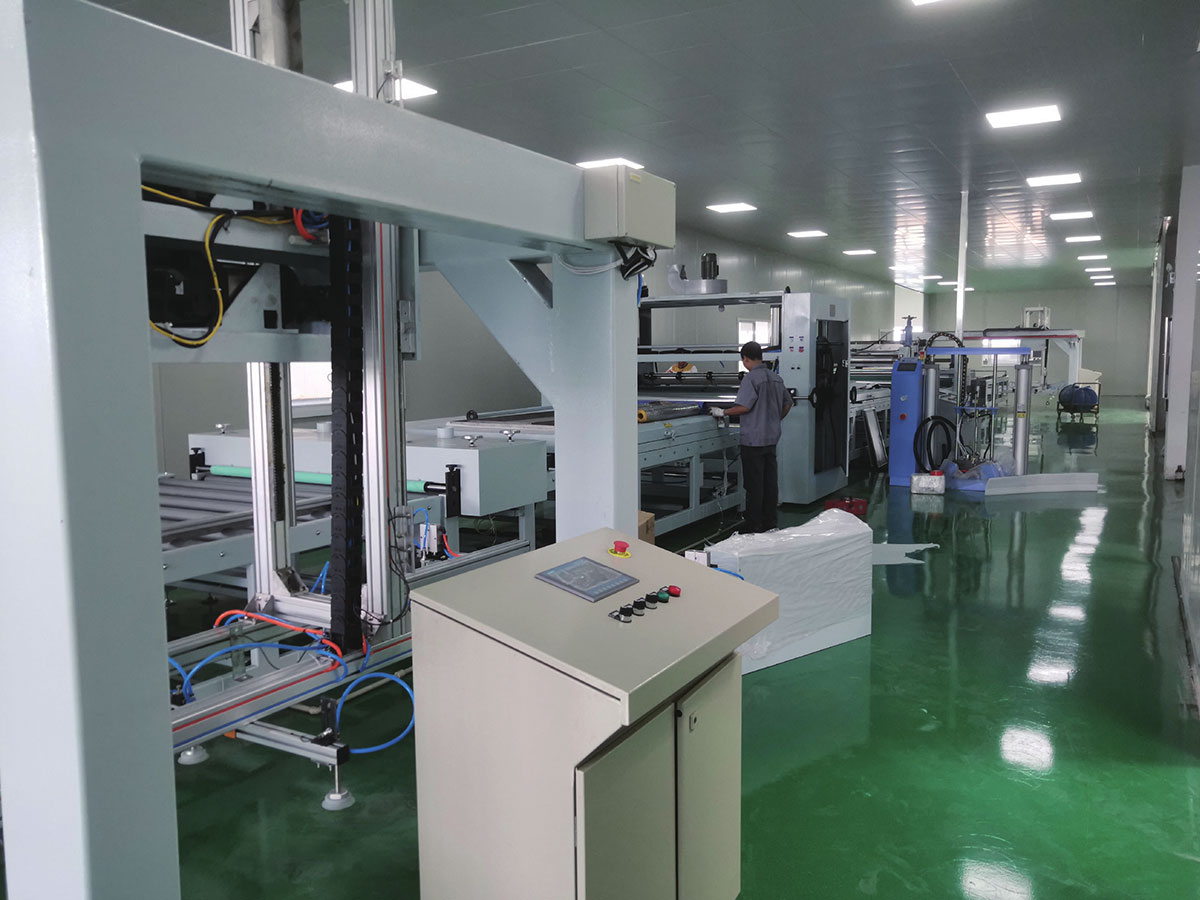
JiangSu XieCheng Intelligent Equipment Co., Ltd., based in the Jinhu Economic Development Zone in Huai'an, Jiangsu, builds metal coil coating and printing lines, pre-treatment cleaning lines, PUR and film lamination lines, and combined roller and spray coating lines. Its machinery background goes back to 2004, when the predecessor company began producing aluminium composite panel laminating machines and colour coating lines. It now operates as the wholly-owned machinery subsidiary of Jiangsu Aludeco New Materials, and it also supplies A2 fire core coil, pre-coated aluminium coil and polymer bonding film, so its engineers see coated coil from both sides of the machine.
Within the wider ALMINE group, the operation is recognised as a provincial engineering technology research centre for A2 grade fire-rated aluminium composite panel and production equipment, and holds an AA grade quality credit rating. Its A2 grade aluminium composite panel line was named a Jiangsu first set of major equipment and key components. The wider range covers metal composite panel lines, SPC flooring lines, PVC and PU leather coating lines, CFRT composite lines and non-standard customised equipment, supported after delivery by remote support, on-site service and spare parts.
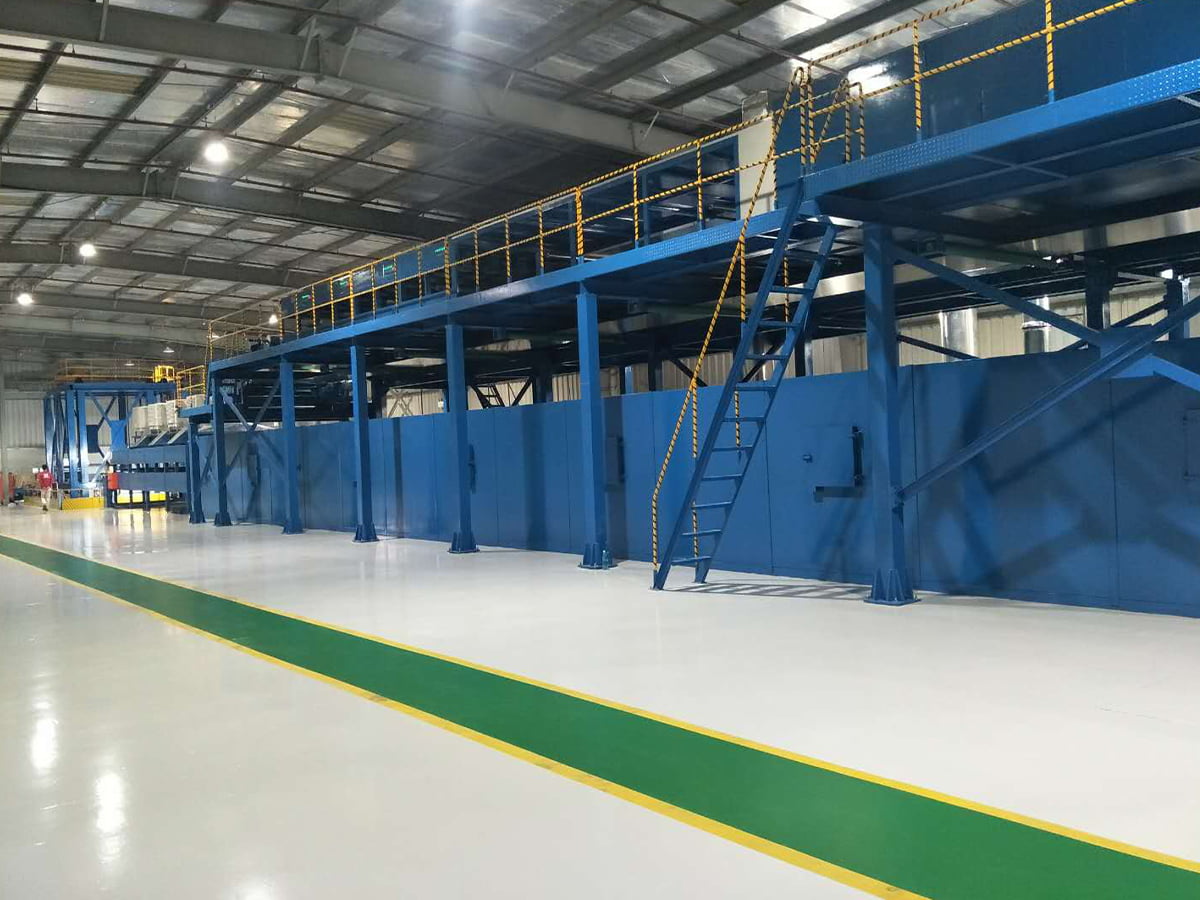 Aluminum/Steel Coil Coating and Printing LineEquipment AccessoriesView Product →
When comparing offers, put the specification list above next to the equipment quoted, and ask how peak metal temperature and film tolerance are verified at the factory before shipment. That conversation usually separates serious builders from catalogue sellers. The engineering team can be reached through the contact page to discuss strip width, coating chemistry and target output for a specific project.
Coating aluminium coil rewards the same discipline in every plant: continuous operation before forming, with tight control of strip cleanliness, film metering and cure. A line bought on price alone tends to show its weaknesses in changeover time, colour complaints and edge corrosion two or three years later.
Get those three variables right and the rest follows. Colour holds, bends survive, cut edges last, and the coil leaves the line behaving the way the specification promised by the time it reaches a facade.