grammy@cjm.com.cn


 English
 русский
 Español
 عربى

Content
- 1 What a Hot Dip Galvanized Zinc Coating Actually Is
- 2 Batch Dipping and Continuous Coil Galvanizing Are Different Processes
- 3 Reading Coating Mass Designations Correctly
- 4 How Hot Dip Compares With Electro-Zinc and Zinc Aluminium
- 5 Where the Zinc Surface Meets the Paint Line
- 6 Purchase Checks That Prevent Coating Complaints
- 7 Matching Substrate and Line for Composite Panels
A galvanized coil can pass its coating mass inspection, sit in a warehouse for three weeks, and then fail a paint adhesion test the moment it reaches the coating line. The zinc itself is rarely the problem. What sits on top of the zinc is: a passivation film that was never matched to the paint system, a mill oil the degreaser cannot fully remove, or white rust grown in a damp corner of the store.
The practical rule is short. The zinc coating provides barrier protection and sacrificial protection at cut edges and scratches. The paint system provides colour, gloss and chemical resistance. Neither layer performs if the boundary between them is contaminated or mechanically unstable. Everything below follows from that rule.
What a Hot Dip Galvanized Zinc Coating Actually Is
A hot dip coating is not a single sheet of pure zinc. When steel leaves the molten bath, zinc reacts with iron and builds a thin sequence of zinc-iron intermetallic layers at the interface, with a mostly pure zinc layer on the outside. Working outward from the steel you pass through a very thin gamma layer, then delta and zeta layers, then the eta layer that makes up most of the visible thickness.
That metallurgical bond is the reason a hot dip coating survives bending, punching and edge exposure better than an electroplated coating of similar thickness. The zinc is part of the surface structure, not something sitting on it.
Zinc has a density of roughly 7.14 grams per cubic centimetre, which means one micrometre of coating on one square metre weighs about 7.1 grams. That single conversion is the most useful tool in this subject, because it lets you move between grams per square metre and micrometres without guessing.
Batch Dipping and Continuous Coil Galvanizing Are Different Processes
Batch galvanizing immerses finished fabricated parts into a kettle of molten zinc. Coatings are thick, commonly 45 to 100 micrometres, and the process suits structural steel, brackets and frames where the part is the product.
Continuous galvanizing runs coil through an in-line cycle: cleaning, annealing in a reducing atmosphere, entry into a zinc bath held at about 450 to 460 degrees Celsius, then air knives that wipe excess metal off both faces to control coating weight. After cooling, the strip is skin passed or tension levelled, passivated and oiled before coiling.
The distinction matters commercially. Pre-painted building panels, appliance skins, composite panel facings and cold-formed sections all start from continuously galvanized coil, where coating weight is controlled to a few grams per square metre and surface condition is controlled for downstream painting. A batch-dipped part and a continuously galvanized coil are governed by different standards and different inspection logic, so mixing specifications between them creates arguments at goods-inward inspection.
Reading Coating Mass Designations Correctly
The letter and number on the mill certificate, such as Z275, describe total zinc mass on both faces, not thickness on one face. Divide by two, then divide by 7.1, and you have the approximate per-face thickness in micrometres. Most coating complaints start with somebody reading the designation as a single-face figure.
| Designation | Total zinc mass, both faces (g/m2) | Approximate thickness per face (micrometres) | Typical exposure |
|---|---|---|---|
| Z100 | 100 | 7 | Indoor and sheltered parts, painted interior components |
| Z180 | 180 | 12 to 13 | General outdoor use, mild urban atmosphere |
| Z275 | 275 | 19 | Industrial and coastal sites, pre-painted wall and roof panels |
| Z350 | 350 | 24 to 25 | Heavy industrial and marine environments, long service life |
| Z450 | 450 | 31 to 32 | Severe marine and infrastructure work |
Mass is normally controlled through an average of several test spots, so a coil can pass on average while one area reads below the nominal figure. If a project needs a guaranteed local minimum rather than an average, that must be written into the purchase order, because the standard designation alone will not deliver it.
How Hot Dip Compares With Electro-Zinc and Zinc Aluminium
Buyers often compare these three as if they were grades of the same product. They are not, and the differences show up first at the paint interface rather than in the corrosion rate.
| Property | Continuous hot dip zinc | Electrogalvanized | Zinc aluminium alloy |
|---|---|---|---|
| Coating thickness per face | 7 to 32 micrometres | 2.5 to 12 micrometres | 20 to 30 micrometres |
| Edge and scratch protection | Strong, thick zinc nearby feeds the cut edge | Weaker, thin coating is consumed quickly | Good barrier, but cut edges rely more on primer |
| Surface appearance | Visible spangle unless skin passed | Smooth and uniform, matte | Smooth, darker grey tone |
| Painting behaviour | Needs pretreatment matched to passivation and oil | Simple, thin conversion coating usually sufficient | Demanding, adhesion failure shows up fast |
| Usual fit | Building panels, structural sections, pre-painted coil | Appliances, indoor parts, automotive | Long-life roofing in aggressive atmospheres |
Where the Zinc Surface Meets the Paint Line
Between the galvanizing bath and the paint oven there is a short list of variables that decide whether the finished coil passes or fails. Three of them cause most of the trouble.
Passivation film and mill oil
Most galvanized coil carries a thin passivation layer, chromate based or chrome free, typically applied at a few milligrams per square metre to prevent white rust in transit. It is a protective film, and it is also an obstacle. Alkaline cleaning that is adequate for cold rolled steel often leaves too much of it behind, and paint applied over a surviving film blisters under humid heat. Mill oil at roughly 0.5 to 2 grams per square metre creates the same problem from a different direction.
The reliable route is a pretreatment sequence designed for galvanized substrate from the start: two-stage alkaline degreasing with spray or brush agitation, thorough rinse, then a thin conversion coating chosen to match the passivation chemistry. Running galvanized and cold rolled stock through one recipe and hoping for the best is how adhesion complaints begin.
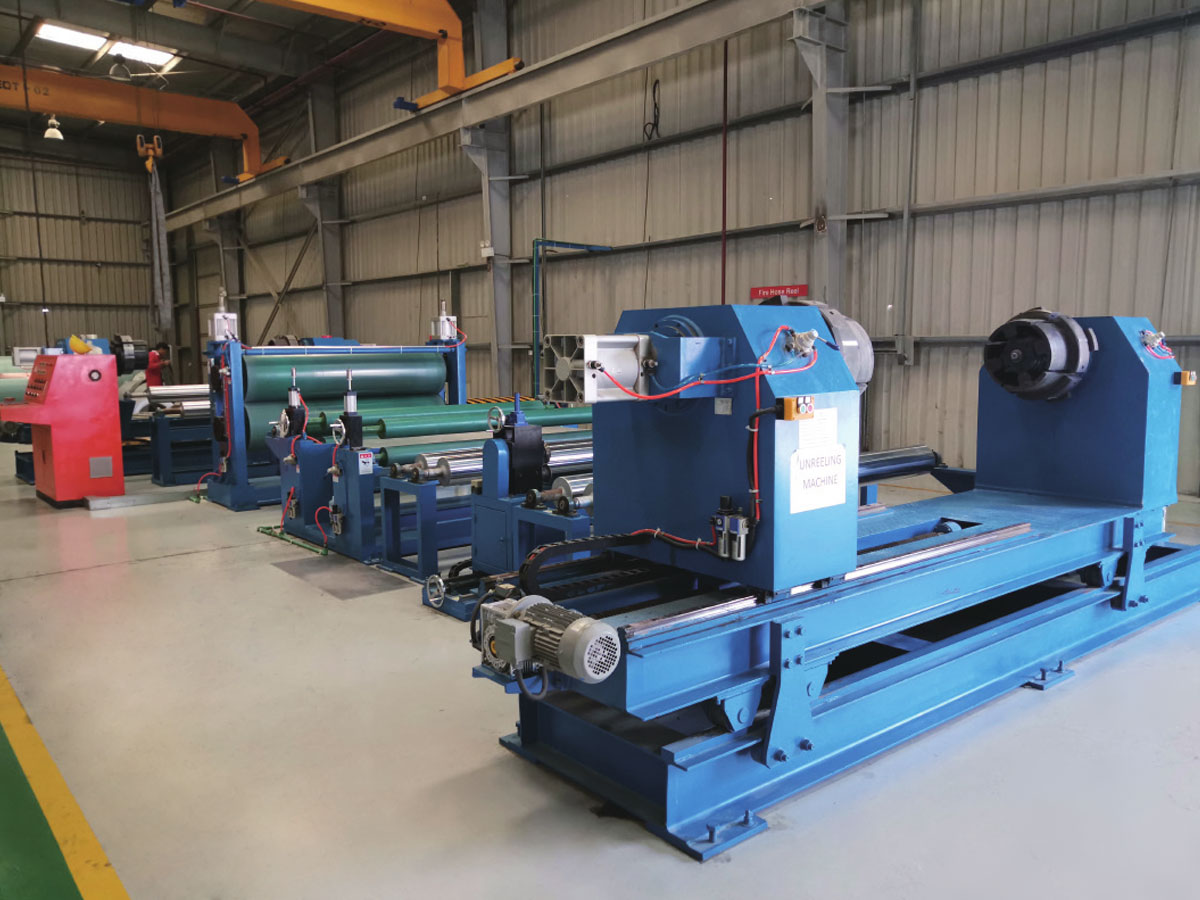
 Coil Pretreatment and Chemical Conversion Cleaning LinePrepares metal coil before color coating with multi-stage alkaline cleaning, rinsing, and a uniform conversion coating for adhesion and corrosion resistance.View Product →
Spangle, roughness and paint appearance
Free zinc crystallises as spangle, and large spangle leaves height differences of a few micrometres across the surface. Paint film over that topography looks mottled under grazing light even when coverage is technically correct. A skin-passed, temper-rolled surface flattens the crystals and narrows the roughness range, which is why pre-painted architectural panels usually specify a skin-passed substrate.
Smoother is not automatically better. Conversion coating chemistry, not roughness alone, carries the adhesion duty on a skin-passed surface, and a line that only adjusts roll pressure to chase appearance will eventually trade one defect for another.
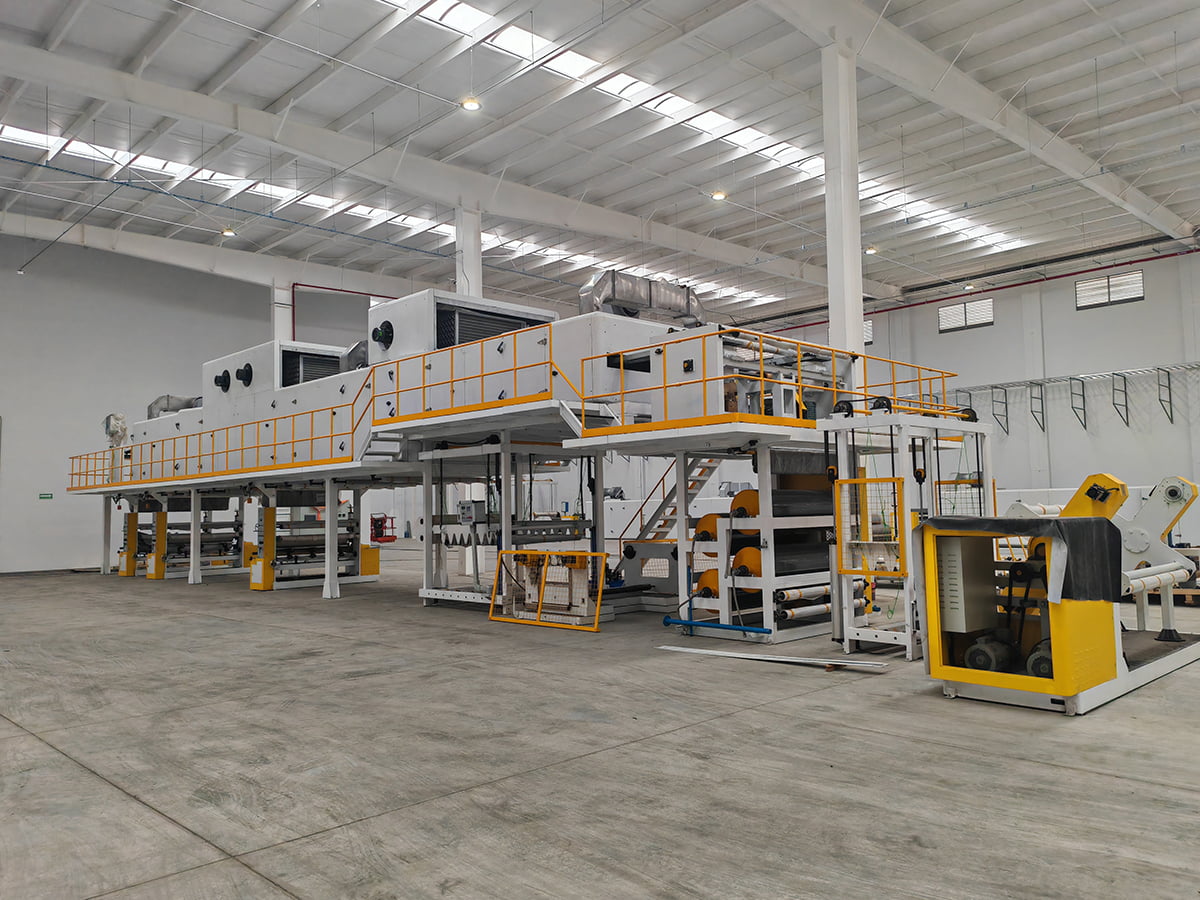
 Aluminum and Steel Coil Coating and Printing LineOEM coil coating and printing line for aluminum or steel, presented for review when defining substrate, coating chemistry and order specifications before production.View Product →
Tests that tell the truth
- T-bend on production thickness, usually 1T or 2T, checked on the outside of the bend where the film stretches.
- Cross hatch adhesion, recorded as a class rather than a pass or fail comment.
- Impact or cupping for panels that will be formed after painting.
- Salt spray at 500 or 1000 hours, read as scribe creep rather than gloss loss.
- Boiling water or humidity resistance when the panel will face rain and heat together.
Purchase Checks That Prevent Coating Complaints
Most disputes are settled by what was written on the order rather than by what the coil actually did. These are the items worth specifying in writing before the first coil ships.
- Coating mass with the standard named, such as ISO 3575, ASTM A653 or EN 10346, plus whether the figure is an average or a local minimum.
- Passivation type and film weight, and confirmation that your paint supplier has qualified that chemistry.
- Oil type and weight, including whether the mill can ship unoiled stock if your degreaser cannot handle heavy oil.
- Surface condition: skin passed or not, spangle requirement, and a roughness range rather than a single number.
- Edge condition and coil wrap quality, since edge damage becomes the first corrosion site on a finished panel.
- Storage and shelf life before painting, because white rust forms in unventilated storage above roughly 70 percent relative humidity.
- Flatness and camber limits, because a wavy coil tracks badly through a coating line and produces uneven film weight.
A coil that meets all seven items costs slightly more per tonne and considerably less per complaint. The reverse is also true, and the cost usually arrives six weeks later in the form of rejected panels.
Matching Substrate and Line for Composite Panels
In metal composite panel production, the facing skin is usually pre-painted galvanized steel or aluminium at 0.3 to 0.5 millimetres. The zinc coating protects the skin; the paint carries the colour warranty; the adhesive film carries the peel strength. A heavier coating does not compensate for a contaminated surface. A Z275 skin with matched pretreatment and clean handling bonds more consistently than a heavier coating with a film of oil still on it.
For lines that coat their own substrate rather than buying pre-painted coil, the whole sequence from degreasing to curing has to be treated as one system. The production advantages of an integrated metal coil coating line are real, but they depend on pretreatment being set for the galvanized surface rather than inherited from a cold rolled steel recipe.
 A2 Metal Composite Panel Continuous Lamination LineContinuous lamination line for Class A2 fire-resistant panels, bonding pre-prepared inorganic core coil with metal skins and avoiding in-house core production.View Product →
Hot dip galvanized zinc coating is a mature technology, and that is exactly why so many failures come from assumptions rather than from the metallurgy. Specify the mass with the right standard, state whether it is an average or a minimum, qualify the passivation and oil against your paint system, and test adhesion with a T-bend rather than a glance. If you are configuring a coating or composite panel line and want the pretreatment stage set for galvanized substrate from the first coil, send our engineers the substrate specification and target film build and we will review the line configuration with you.