grammy@cjm.com.cn


 English
 русский
 Español
 عربى

Content
- 1 The short answer before the details
- 2 How each process bonds zinc to steel
- 3 Thickness, tolerances and appearance compared
- 4 Corrosion life in real environments
- 5 Hydrogen embrittlement and strength limits
- 6 Cost: per part or per square metre of zinc
- 7 Where this lands in coil coating and panel production
- 8 A practical selection checklist
Two steel brackets, same drawing, same grade, leave the same fabrication shop and end up in very different condition five years later. The first was hot dip galvanized and still shows no red rust on a coastal walkway. The second was zinc plated and began staining at the edges in its third rainy season. Both are described as zinc coated on paper, which is exactly why the two processes get confused during quoting.
The difference comes down to how much zinc stays on the part and how that zinc is bonded to the steel. Hot dip galvanizing normally leaves 45 to 85 microns of coating, part of it alloyed into the surface. Zinc plating usually leaves 5 to 25 microns of pure zinc sitting on top of the surface. That single fact drives corrosion life, thread fit, cost and the choice of finishing equipment.
The short answer before the details
Choose hot dip galvanizing when the part lives outdoors, in humidity, in soil or near the coast, and when the coating must survive scratches and abrasion for a decade or more. Choose zinc plating when the part is small, dimensionally tight, visually exposed indoors, or when a thin, smooth, paintable finish matters more than long weather resistance. Electroplated fasteners inside a machine, brackets in a dry warehouse and decorative hardware are classic plating work. Guardrails, transmission towers, ground anchors and marine frames are classic galvanizing work. Neither process is a premium upgrade of the other; they solve different problems.
How each process bonds zinc to steel
Hot dip galvanizing
Parts are degreased, pickled, fluxed and dipped into molten zinc at roughly 450 degrees Celsius. The zinc reacts with iron and builds a layered coating: thin gamma and delta layers, a zeta layer, and an outer layer of nearly pure zinc. The result is not a jacket sitting on the steel but a metallurgical extension of it. There is no sharp interface to lift, so the coating resists chipping, and it protects cut edges and drilled holes by sacrificial action.
Zinc plating and its variants
Zinc plating, also called electrogalvanizing, deposits zinc from an electrolyte bath at close to room temperature. No alloy layer forms; the deposit is pure zinc, or a zinc-nickel or zinc-iron alloy when the bath is formulated that way. Thickness is set by current density and dwell time, which is why plating holds tight tolerances on small parts. Post-treatments such as trivalent passivation add a very thin conversion film that delays white rust and can give a clear, blue or yellow tint. Mechanical galvanizing, where zinc powder is tumbled onto parts with glass beads, sits between the two in thickness and suits small fasteners that cannot be racked for plating.
Thickness, tolerances and appearance compared
Both coatings change dimensions, but not by the same amount. A 10 micron plating deposit adds about 10 microns per coated surface, which rarely disturbs a thread. A 70 micron galvanized coating can fill a fine thread, so galvanized fasteners are usually tapped oversize or spun while still molten. Appearance splits the same way: plating gives a bright, uniform surface that takes dye and passivation well, while galvanizing gives a matte, crystalline grey that varies from heat to heat.
| Property | Hot dip galvanized | Zinc plated |
|---|---|---|
| Coating thickness | 45 to 85 microns, thicker on heavy sections | 5 to 25 microns, with 5 to 13 microns most common |
| Coating structure | Zinc-iron alloy layers plus outer pure zinc | Pure zinc or zinc alloy deposit, no diffusion layer |
| Dimensional change per surface | About 45 to 85 microns | About 5 to 25 microns |
| Finish | Matte, crystalline, variable grey | Bright, smooth, uniform, can be passivated or dyed |
| Outdoor life to first red rust | Often 20 to 50 years in rural and suburban air | Often 1 to 5 years outdoors, less in salt air |
| Hydrogen embrittlement risk | Low from the process itself, but very high strength steels are still restricted | Present on high strength parts unless baked after plating |
| Heat effect on the part | About 450 degrees Celsius, so thin panels may distort | Near ambient, no thermal distortion |
| Typical cost basis | Per kilogram of steel, low cost per square metre | Per part, efficient for small hardware in volume |
Corrosion life in real environments
Zinc protects steel twice over: as a barrier and as a sacrificial anode. Both coatings do this, but the size of the zinc reservoir decides how long protection lasts. In rural air, zinc is consumed at roughly 1 to 1.5 microns per year, so an 85 micron galvanized coating can run several decades before the steel is exposed. In industrial or coastal air the loss rate can climb several times higher, yet galvanizing still outlasts a 10 micron plating by a wide margin. Where the coating is scratched, both systems keep protecting the exposed steel nearby, but only the thicker coating has enough zinc left to keep doing it after years of exposure.
Salt spray testing tells a similar story and deserves a caution. A clear passivated zinc plating may reach 24 to 96 hours before white rust appears, while hot dip galvanized coupons commonly run past 500 hours without red rust. Read these as screening numbers, not as a service life forecast, because salt spray is far harsher and far more constant than most real sites.
Hydrogen embrittlement and strength limits
Acid pickling and electroplating generate hydrogen that can enter high strength steel and cause delayed fracture under load. Above roughly 1000 MPa tensile strength, plated parts normally need a baking step within a defined window after plating, and even then the risk is reduced rather than eliminated. Hot dip galvanizing avoids the plating bath, but it exposes the steel to about 450 degrees Celsius, which can relax residual stress or soften a temper, so standards restrict galvanizing on very high strength fasteners. If your design uses grade 10.9 or 12.9 bolts, settle the coating question with the fastener supplier before the drawing is released, not after the first batch is rejected.
Cost: per part or per square metre of zinc
Buyers often assume galvanizing is the expensive option. Per square metre of protected surface it is usually the cheaper one, because the process uses zinc efficiently and handles large fabrications in batches. Plating wins on small parts and on parts that need very little zinc: a rack of thousands of screws is cheap to plate and awkward to galvanize. Watch the hidden costs on both sides. Galvanizing may bring thread chasing, re-tapping, straightening and freight to a job shop that runs a kettle. Plating may bring baking, rack marks, limited part size and effluent controls. A fair comparison prices the finished, inspected part, not the coating alone.
Where this lands in coil coating and panel production
For continuous production the same question reappears as coil selection. Hot dip galvanized steel coil is the workhorse substrate for building panels, and a coating mass designation such as Z275 tells you how much zinc sits on both surfaces, roughly 20 microns per side. Electrogalvanized coil carries a thinner, smoother layer and is chosen where paint appearance and formability outweigh weather exposure, as in appliance and automotive skins. In both cases the visible surface life is decided by the paint system, and that system starts with cleaning.
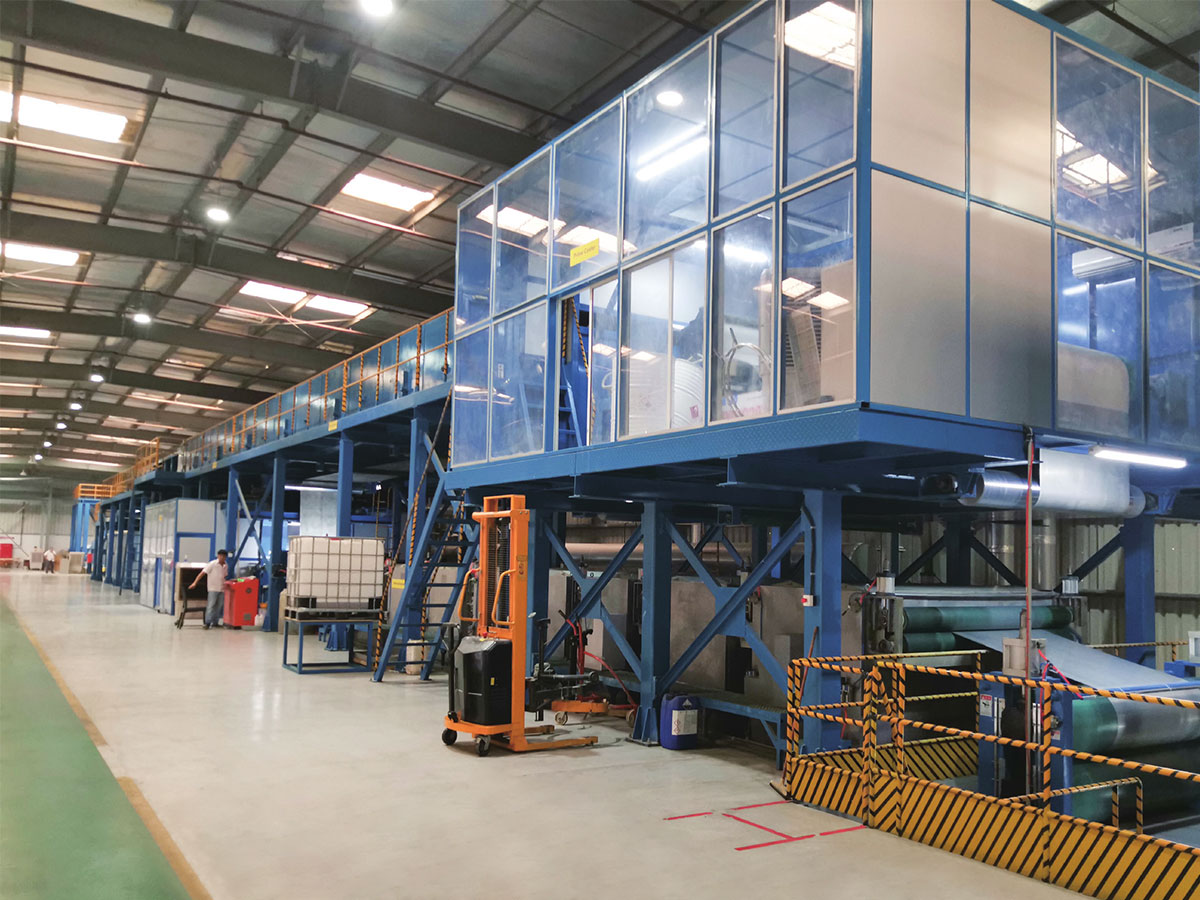
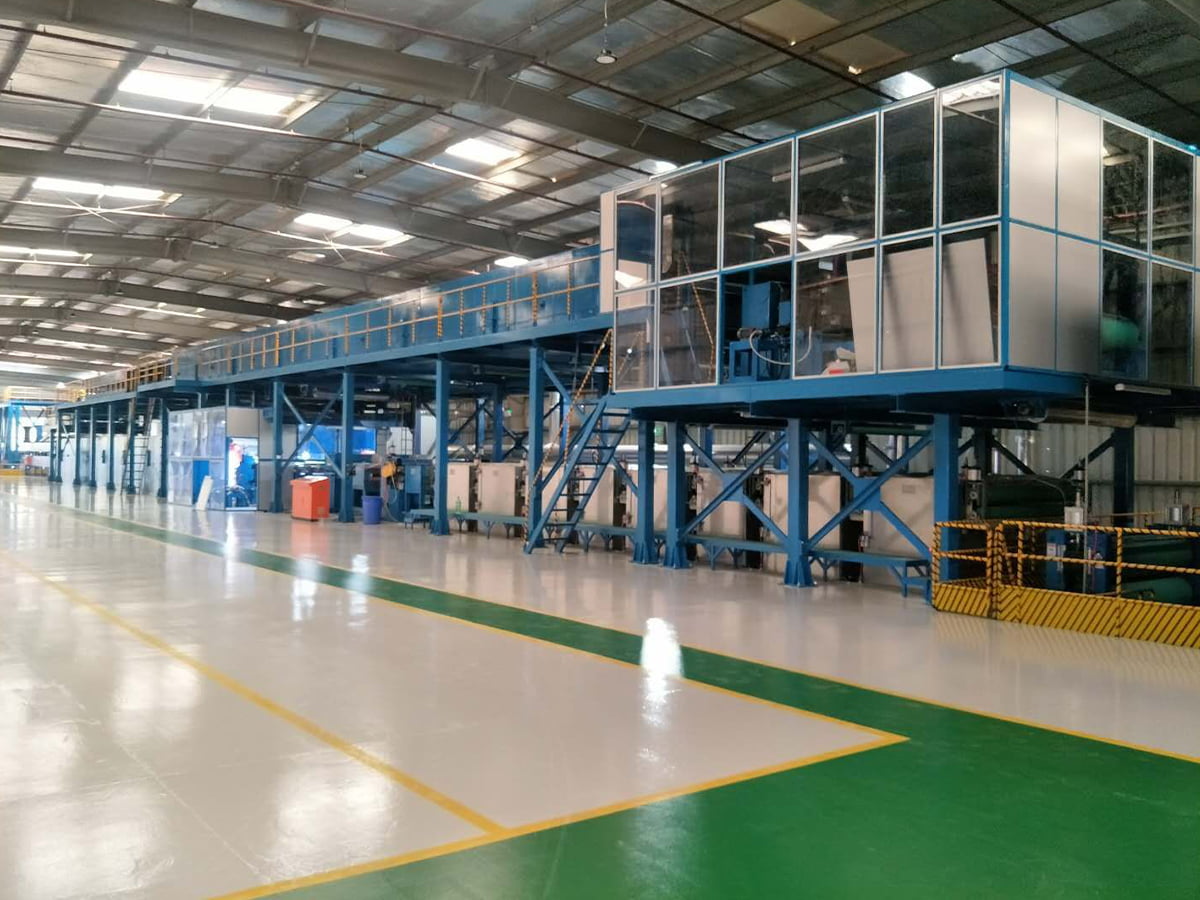
 Pretreatment Cleaning Line for Metal Coil CoatingPrepares coil surfaces before primer by removing oil and impurities and applying a chromium-free treating primer for adhesion.View Product →
Zinc is an active surface, so residual oil, oxide and roller marks have to go before a primer touches it. After pretreatment, primer and topcoat are applied and cured in line, where film build, cure temperature and line speed set colour and gloss consistency across a coil.
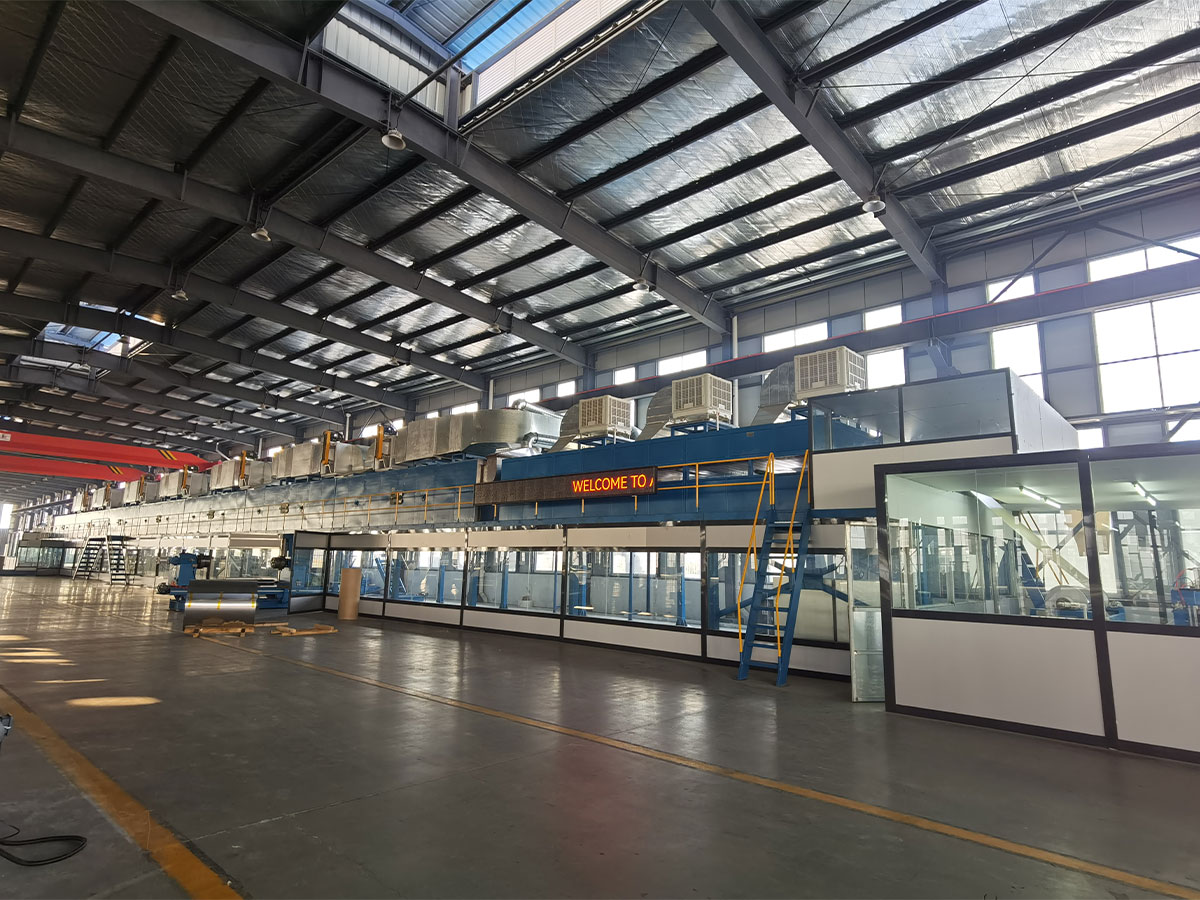
 Color Coating Line for Coil FinishingApplies primer and topcoat through automated coating and controlled curing for consistent colour, gloss and coating performance on metal coil.View Product →
Coated or bare galvanized coil then feeds panel fabrication. In a metal composite panel, the fire rating comes mainly from the core, while the metal skin has to resist handling, cutting and site damage without losing adhesion at the cut edge, which is exactly where the zinc begins working as a sacrificial anode. That is why primer selection and edge quality matter as much as the coil coating mass. Production teams comparing line options often weigh these process details early, for example when they review the production advantages a metal coil coating line can bring to a mixed substrate product range.
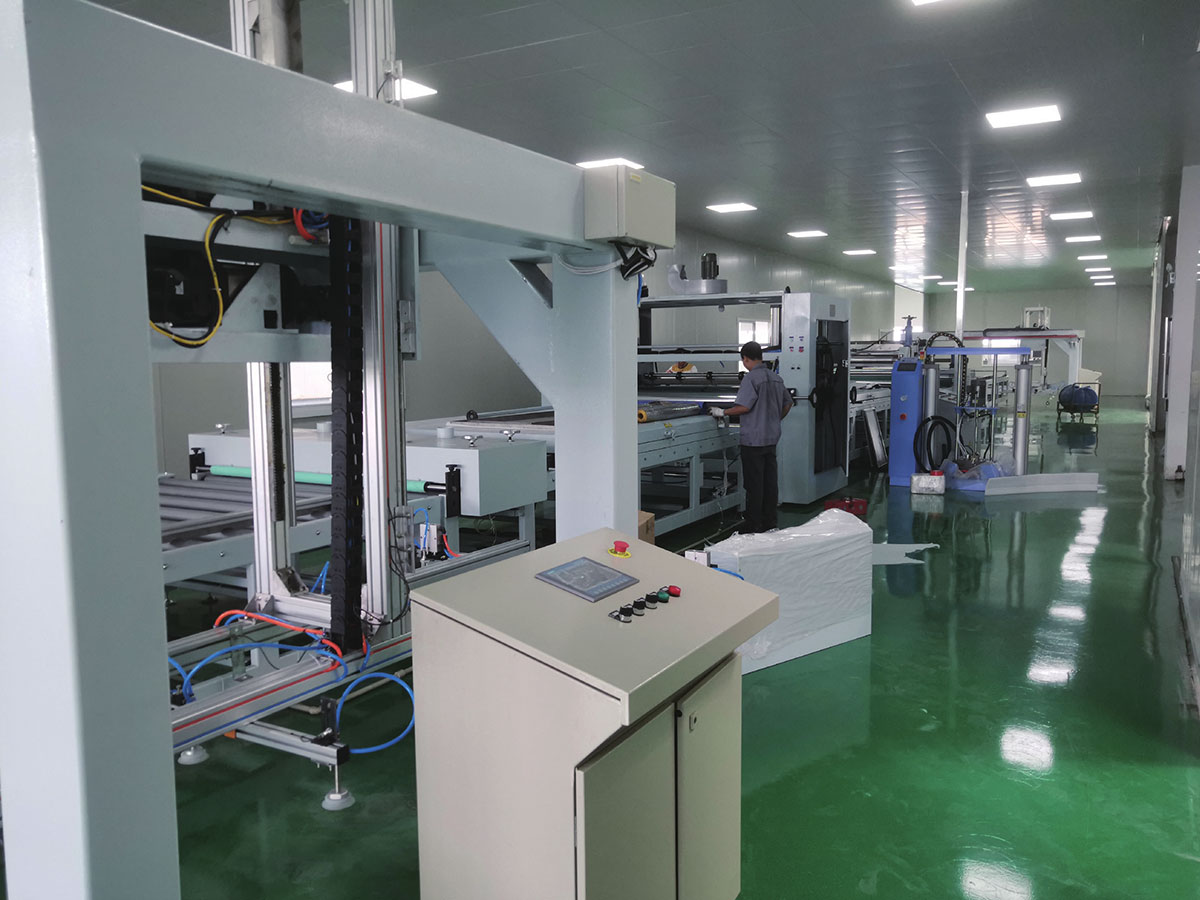
 A2/B1 Two-Way Metal Composite Panel Production LineDual-mode line switches between PE/B1 extrusion and A2 inorganic core lamination to produce fire-rated metal composite panels in one setup.View Product →
A practical selection checklist
- Exposure: outdoor, coastal, buried or chemical contact points toward hot dip galvanizing.
- Service life target: ask how many microns per year your site consumes and size the coating from that.
- Geometry: fine threads, close fits and thin panels favour plating or selective coating.
- Strength: anything above 1000 MPa needs an embrittlement review regardless of process.
- Appearance: visible indoor surfaces and decorative parts usually need the smooth plated finish.
- Post-processing: welding, bending and machining after coating both remove zinc and require touch-up.
- Volume: large fabrications in batches favour galvanizing; small hardware in high volume favours plating.
- Specification: quote the standard, the minimum thickness and the acceptance test in writing.
The two processes are not rivals so much as different answers to the same question about how much zinc a part can carry and how long it must last. Decide the environment and the service life first, then let thickness, tolerance and cost follow. If a project mixes galvanized coil, plated hardware and painted panels, map the coating route for each component before the first purchase order, because retrofitting a finish onto a finished assembly is where most of the avoidable cost sits. Our team is glad to walk through substrate and line choices with you through the contact page.