grammy@cjm.com.cn

 English
 русский
 Español
 عربى
عربى
Content
In the building material industry, an ACP line is a continuous production line for aluminum composite panels (ACP). If a search brought you here while you were looking for the Affordable Connectivity Program, please note that this article covers the manufacturing meaning of ACP. ACP lines process aluminum coils, core material, bonding film, and protective film into finished panels for building facades, wall cladding, signs, ceilings, and interior paneling. The decision to buy an ACP line affects your product quality, operating cost, and market flexibility for many years. For this reason, equipment selection deserves more attention than a simple price comparison.
What an ACP Line Does
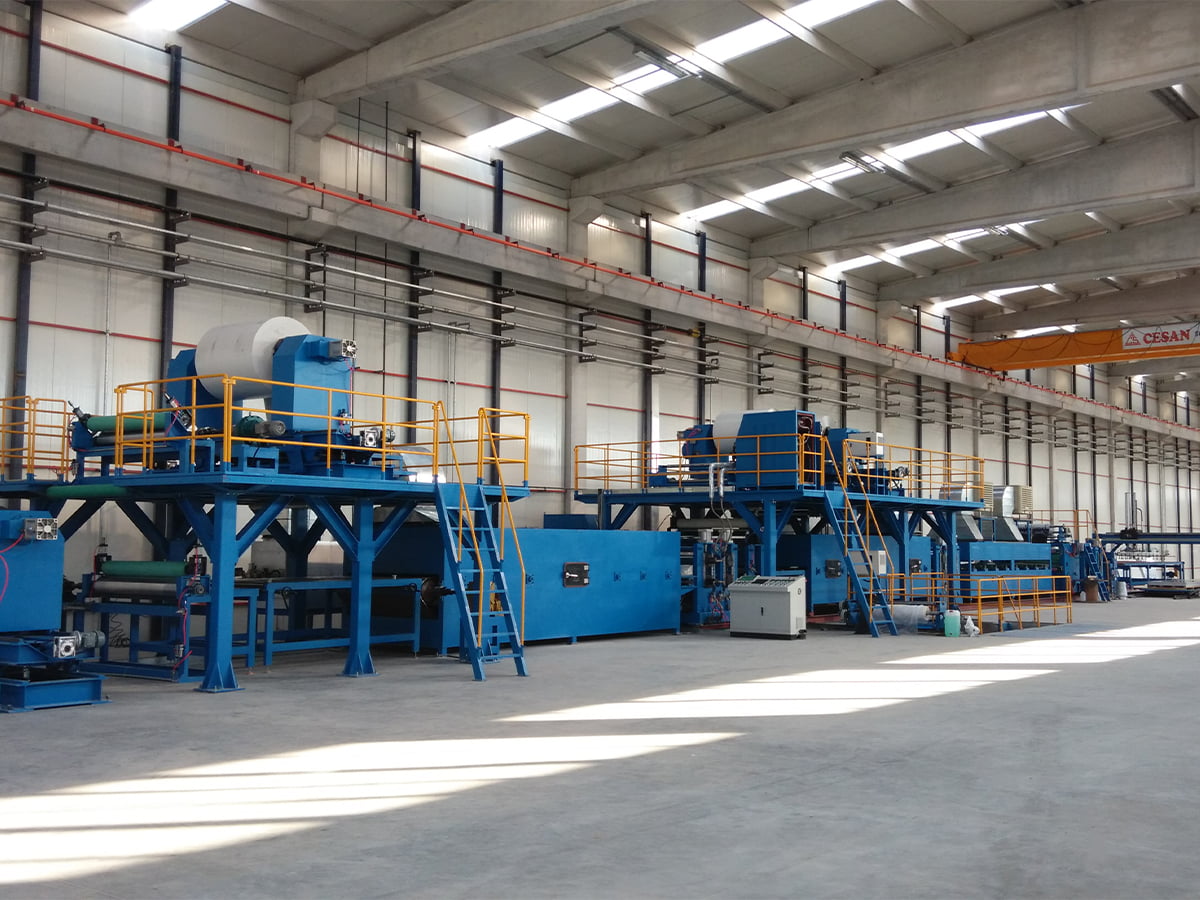
An ACP line combines several process steps into one controlled flow. A typical line unwinds aluminum coil, cleans and pretreats the surface, applies adhesive or film, laminates the core material between two aluminum skins, cools the sandwich, trims the edges, and cuts it into panels. Some ACP lines also include feeding stations for protective film, peelable film, or fire-resistant core rolls. The line can be arranged as a sheet-to-sheet unit, a coil-to-sheet unit, or a coil-to-coil unit. Each arrangement changes the line footprint, labor requirement, and panel output.
The horizontal bar chart above compares typical operating speeds of different ACP line configurations. It is not a maximum specification, but an average of what operators can expect when the line is producing with a stable batch. The PE ACP line usually runs faster because the polyethylene core is easy to feed and laminates at a lower temperature. A2 lines are slower because mineral-based fireproof cores require more careful heating, pressure, and handling. Coil-to-coil A2 lines still hold a good speed because they avoid repeated sheet alignment and threading at each cycle. Thicker panels, heavier aluminum coils, and additional inspection stations all reduce the average speed.
Core Modules and Process Flow
The performance of an ACP line is determined by how well each module works with the next. A common mistake is to compare only the laminating unit, while ignoring the cleaning unit, the adhesive application station, and the cutting section. These modules have a direct influence on peel strength, visual surface quality, and dimensional accuracy. The following table gives a simplified view of the major process stages and their quality impact.
| Module | Function | Quality impact |
|---|---|---|
| Uncoiler | Feeds aluminum coil under controlled tension | Stable tension prevents scratches and distortion |
| Pretreatment and cleaning | Prepares the aluminum surface for bonding | Good adhesion depends on a clean and chemically treated surface |
| Roller coating or film lamination | Applies adhesive or polymer film to the aluminum face | Uniform coating thickness reduces air pockets and peel failure |
| Laminating unit | Bonds core and aluminum skin under heat and pressure | Pressure and roll gap control final bond strength |
| Cooling conveyor | Sets the bond and reduces thermal stress | Uneven cooling causes bowing and residual stress |
| Trimming and cutting | Trims edges and cuts panels to length | Accurate cutting determines dimensional tolerance and squareness |
The message in this table is simple: a strong line is not a single heavy press; it is a balanced system. For example, a good pretreatment section removes oil and oxide residues so that the adhesive can form a stable bond. If the adhesive coating is uneven, even the most expensive core material can cause bubbles or edge separation. If the cooling section is not long enough, panels may come out warm and deform during stacking. During a plant visit, ask how the line controls tension, roller gap, heating, cooling, and cutting at each step.
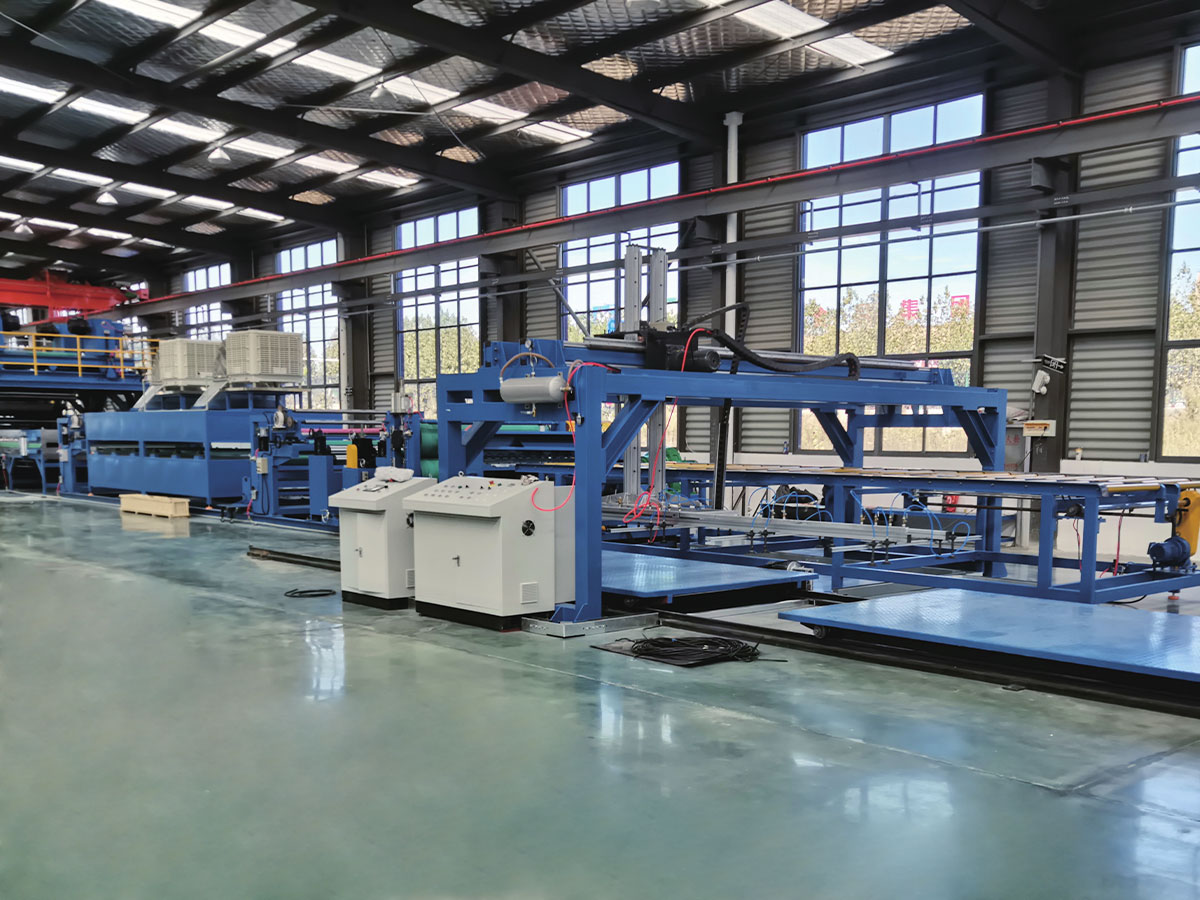
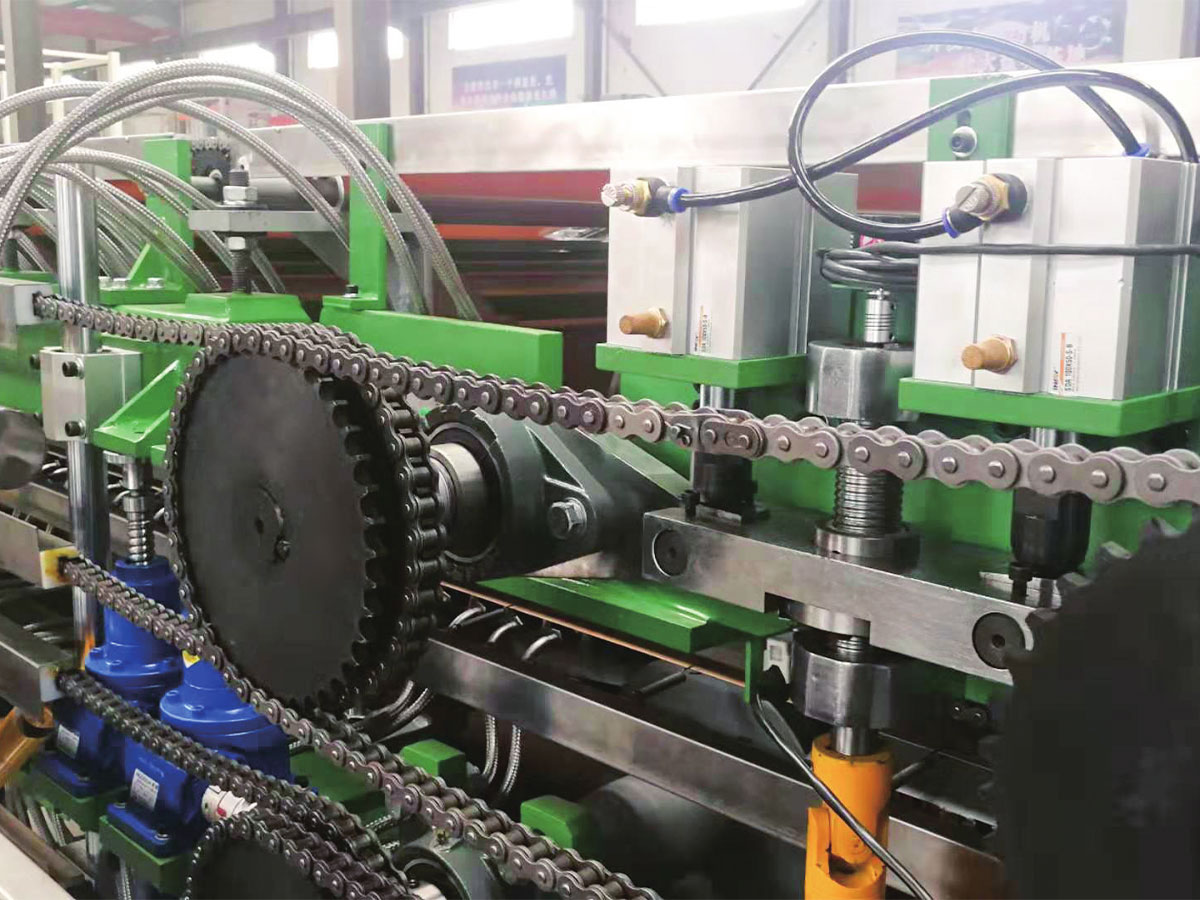
Manufacturers that process A2 fireproof core rolls often prefer a coil-to-coil ACP line because the core material is supplied as a roll and the two aluminum faces are laminated continuously.
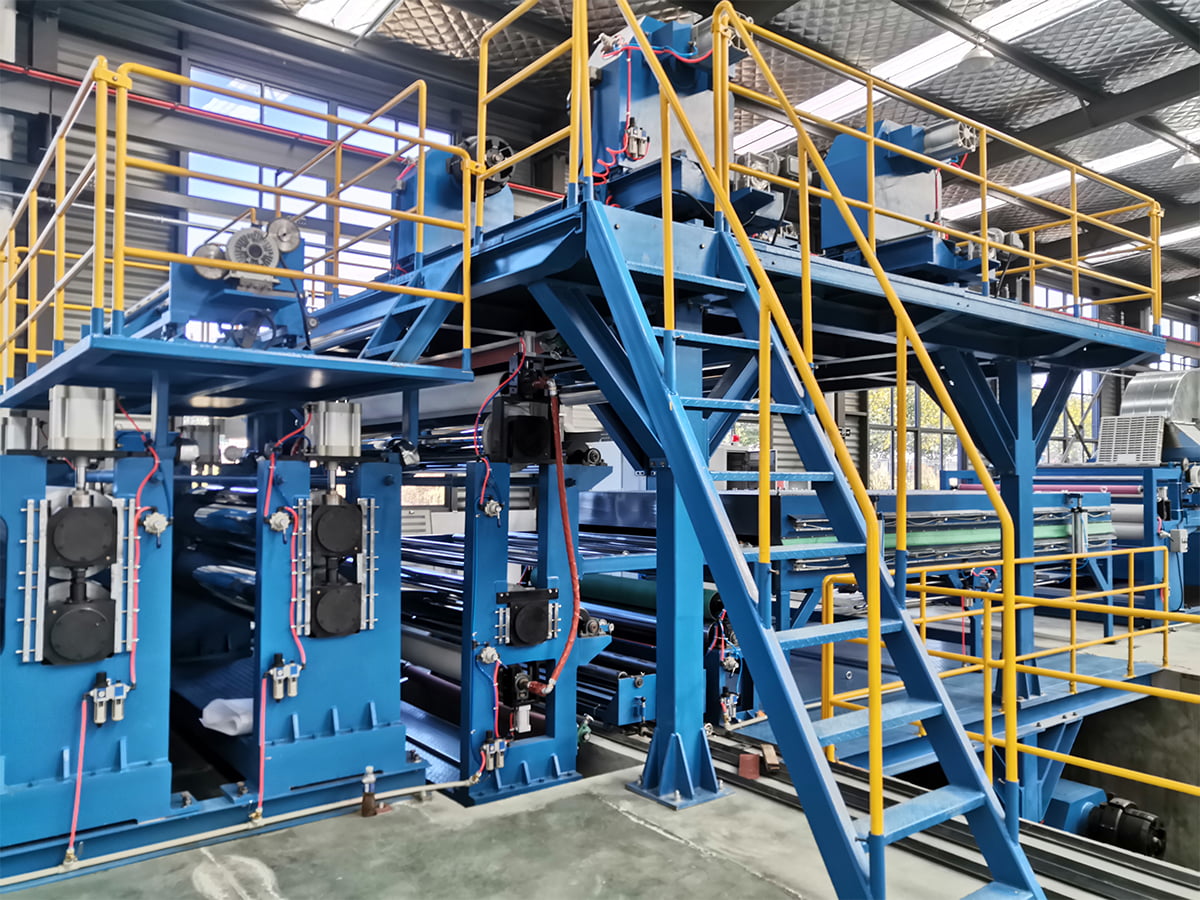 A2 Coil-to-Coil Metal Composite Panel Production LineThis line processes A2 fireproof mineral core rolls in a continuous coil-to-coil lamination process, making it a practical choice for manufacturers focused on fire-safe facade panels.View Product →
A2, B1, and PE ACP Lines: How They Differ
Fire performance is the first factor that most ACP buyers consider. A2 is a limited combustibility grade in the European EN 13501-1 classification and is widely used for external building facades where fire codes restrict combustible materials. B1 is a flame-retardant grade; it still contains polyethylene but with additives that slow the spread of flame. PE core panels have no special fire-resistant claim and are normally used for signs, interior decoration, and short-life projects. The core material changes not only the fire performance but also the line configuration, pressure settings, heating profile, and speed.
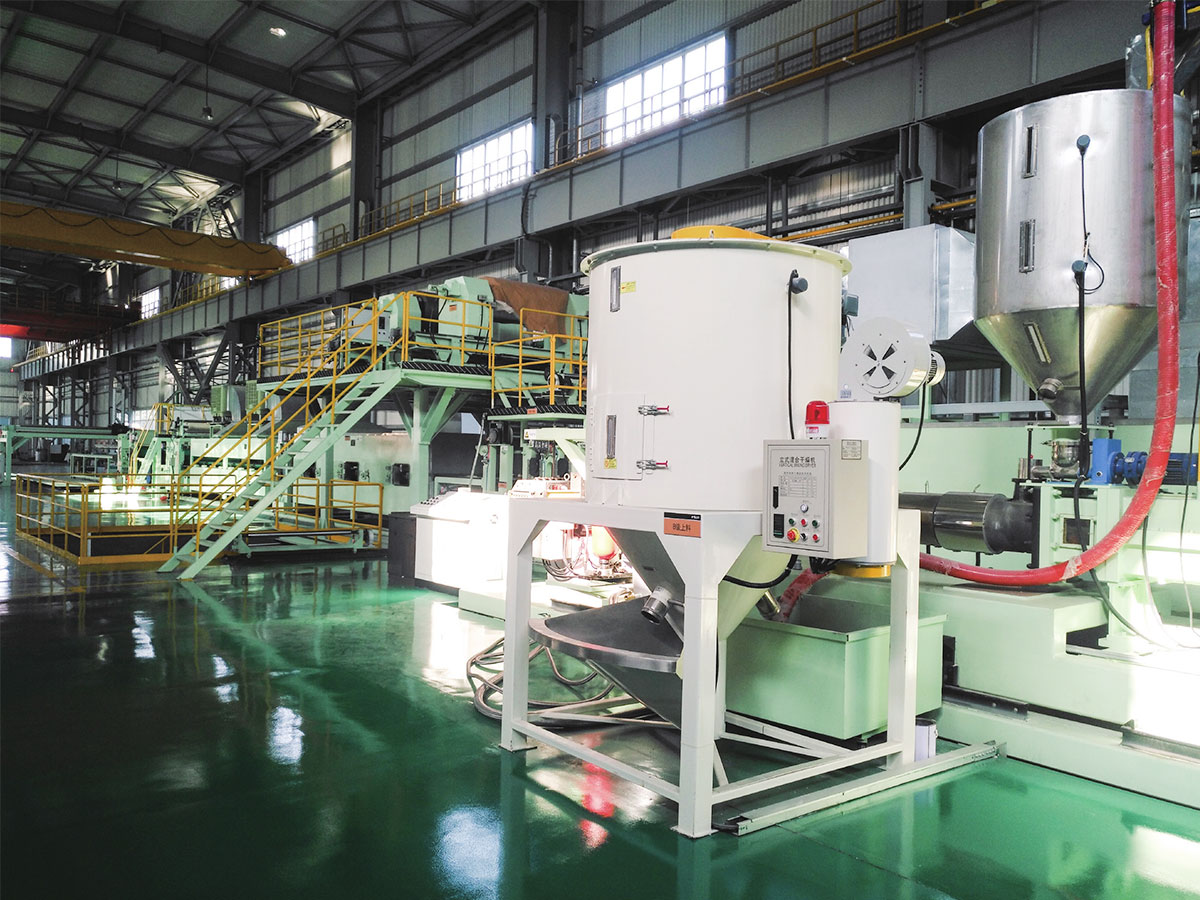
Because A2 and B1 cores have different density and surface behavior, a production line must be designed to handle both without excessive changeover time. A two-way metal composite panel line is a common answer, because it allows the operator to switch between fire-resistant mineral core and flame-retardant polyethylene core. This configuration also sends a clear signal to customers: the factory can respond to changing building codes without investing in a second complete line.
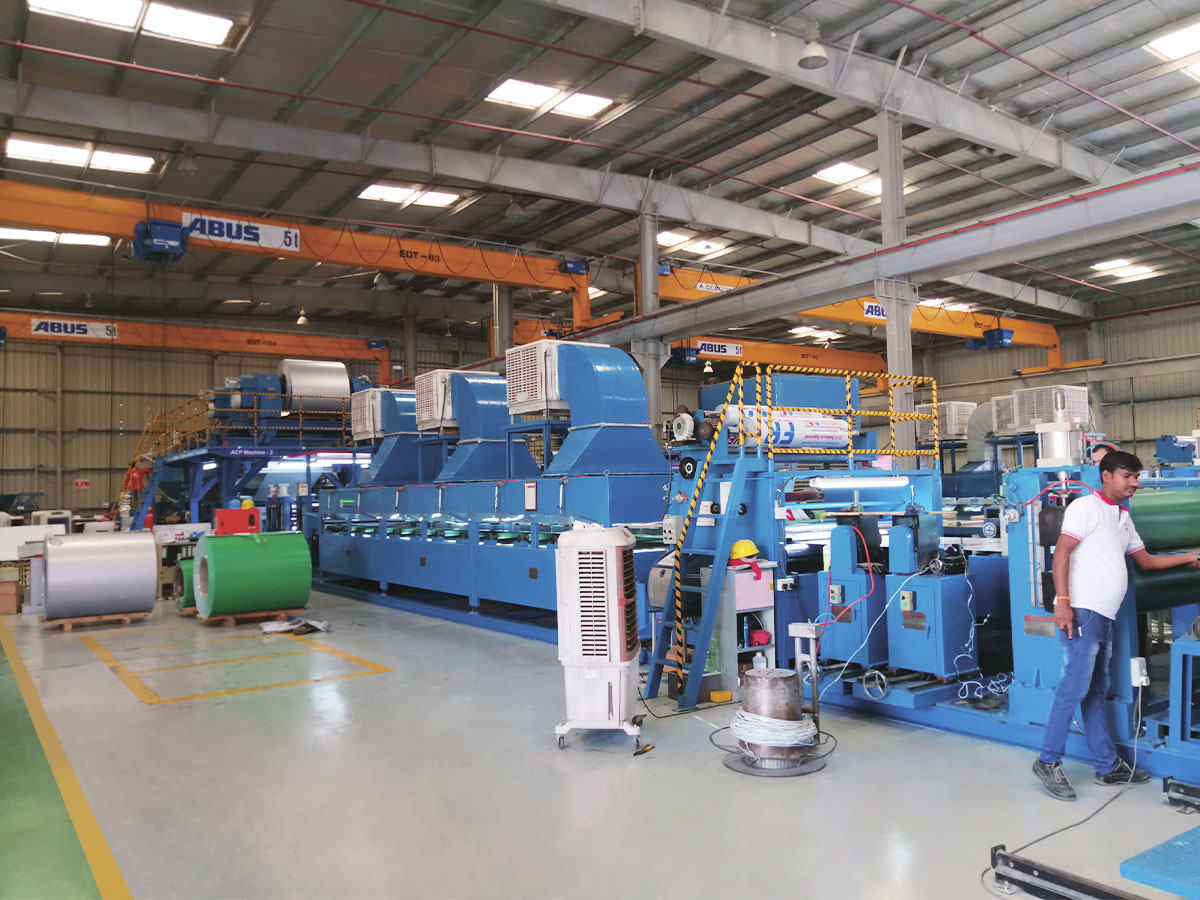 A2/B1 Dual-Purpose Metal Composite Panel Production LineThis two-way line switches between A2 mineral core and PE/B1 extruded core on one platform, offering flexible production and better equipment utilization for changing fire safety demands.View Product →
The radar chart above is not a substitute for laboratory test data, but it helps identify the balance that each product family offers. A2 clearly wins the fire safety and facade suitability axes, which is why it is specified for high-rise and public buildings in many markets. B1 is a balanced option for indoor wall panels, advertising boards, and retail fit-out work. PE is the most formable and the cheapest on material cost; however, it should only be used where fire codes allow combustible cores. Use this comparison as a starting point and then confirm actual certification with your material supplier.
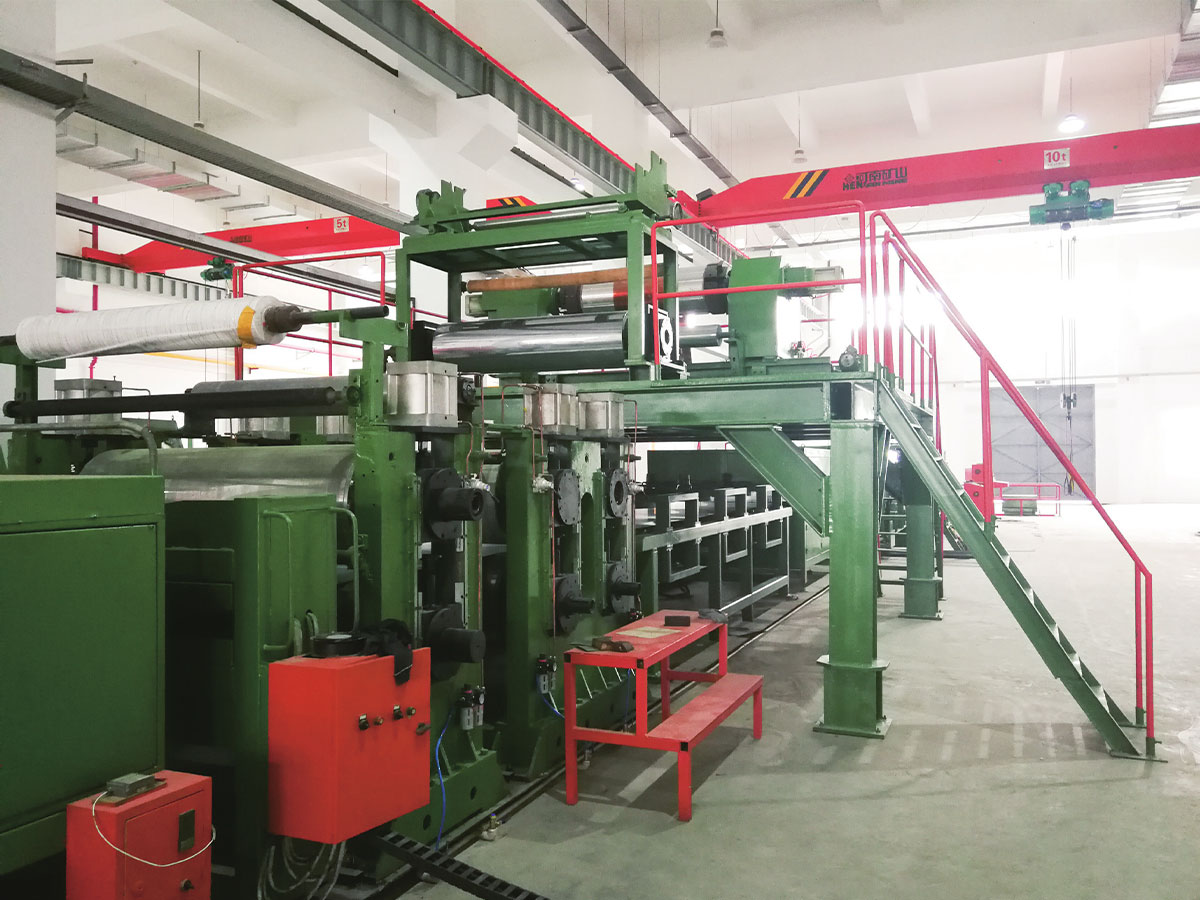
Producers entering the market with budget-friendly panels often choose a PE and B1 FR composite line, because it can run both standard polyethylene and flame-retardant cores up to a certain thickness.
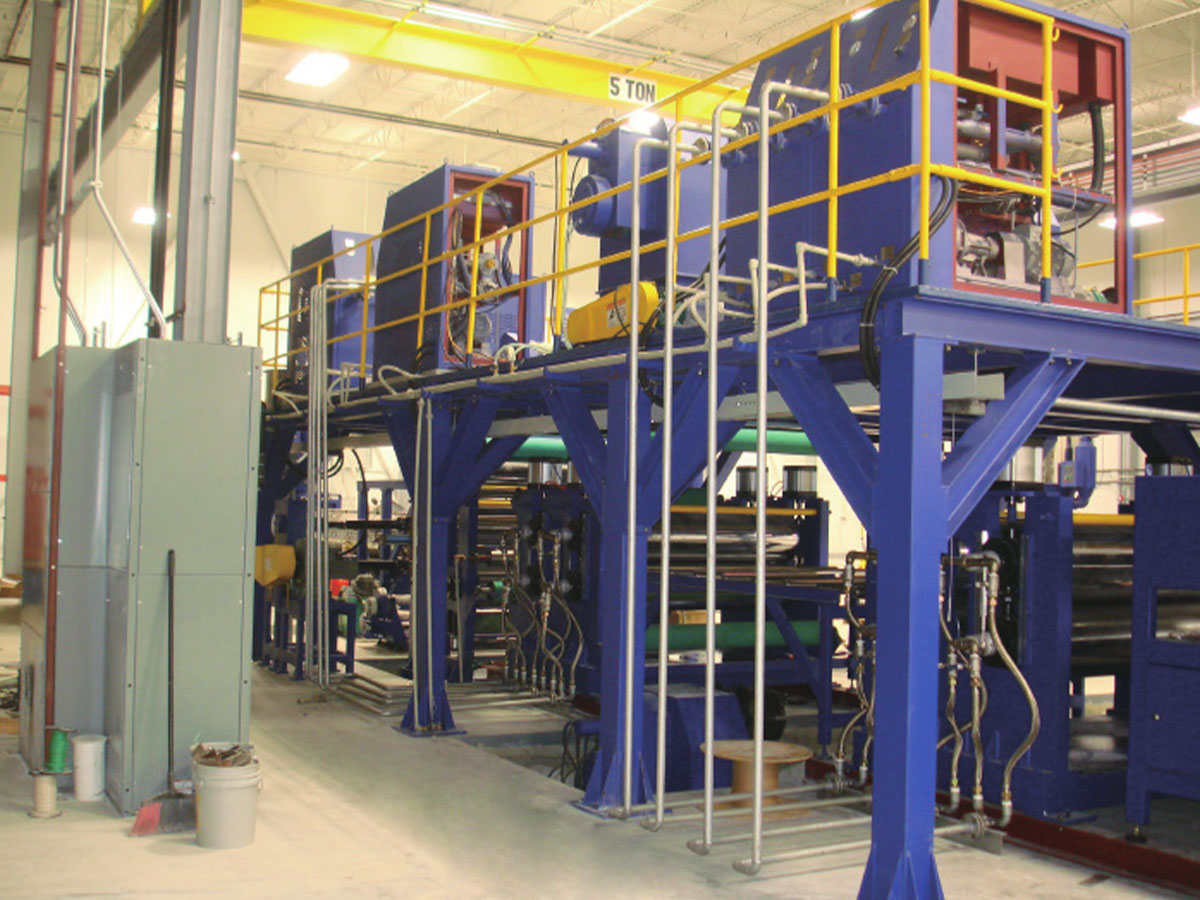 PE/B1 Flame-Retardant ACP Composite Production LineThis thermal lamination line runs both standard PE and B1 flame-retardant cores, with PLC control and multiple roller options to balance flatness, efficiency, and production cost.View Product →
Performance Data That Matters
The best way to compare ACP lines is to put a set of numbers next to the process description. Three numbers matter in every purchase: line speed, energy consumption, and scrap rate. Speed determines how many square meters you can produce per shift, but speed alone does not tell you whether the panels stay flat and well bonded. Energy consumption appears in every monthly power bill, and an efficient machine keeps that cost under control. Scrap rate is the hidden cost that often separates a well-built line from a cheap one because it directly affects your material consumption.
The column chart above shows the approximate connected load of a medium-size ACP line by module. Pretreatment, which includes cleaning, rinsing, drying, and sometimes chemical treatment, often has the highest connected load because it runs many pumps and drying fans. The laminating unit is another large consumer because it powers heating elements and heavy rollers. The unwinding module consumes less power but should not be ignored because it needs to provide accurate tension. Cutting and outlet handling equipment add a smaller but still measurable load. When comparing lines, ask the supplier for a complete list of connected power by module and estimate usage by product type.
How to Choose an ACP Line
Start with your product plan, not with the machine brochure. Define the panel width, thickness range, core type, color surface, and weekly output you need. Then match the line to those parameters. In addition, ask how long it takes to change from one panel size to another, because many ACP orders are small and frequent. A line that handles a wide range of sizes can reduce inventory even if its maximum speed is lower.
- Panel width: typical 1000 to 1600 millimeters
- Core thickness: typical 2 to 6 millimeters
- Panel thickness tolerance: around plus or minus 0.2 millimeter
- Surface finish: PVDF, polyester, and similar coil coating options
- Automation level: manual, semi automatic, or fully automatic with PLC control
Batch size influences unit cost more than many buyers expect.
The line chart above shows an illustrative relationship between batch size and unit production cost. On small batches, setup time, color change, cleaning, and test panels consume a large share of the production time. As batch size grows, these fixed costs are spread over more square meters, so the average cost drops quickly. The shape of the curve will vary with line design, but the downward trend is a reliable starting point for cost planning. If your orders are small, choose a line with fast color change and short cleaning cycles even if it costs more upfront. If your orders are long and repetitive, focus more on line speed and continuous operation.
For a more detailed comparison method, see our side-by-side guide to how to choose a high performance metal composite panel production line. The guide covers specification sheets, factory audits, and acceptance tests in practical language.
Supplier Experience That Affects Your Line
Equipment construction experience is visible in details such as roller alignment, frame rigidity, tension control, and safety interlocks. Our machinery division in Jiangsu has been involved in aluminum composite panel and coil coating equipment since 2004. The A2 aluminum composite panel production line produced by our company has been recognized by Jiangsu province as a first set major equipment and key component. These details matter because an ACP line must run continuously for long shifts, and small design flaws usually show up after the first year of production. As the equipment subsidiary of Jiangsu Aludeco New Materials, we also understand the behavior of A2 core rolls, aluminum coils, and adhesive films.
An ACP line is a long-term asset. The right choice depends on your market, your fire-rating needs, your production volume, and your after-sales support expectations. Visit a real manufacturing plant, inspect line modules, ask for process data, and verify delivery and installation schedules. If we can help you compare an ACP line for your panel size and budget, contact our engineering team. We can translate your production targets into a practical line proposal.