grammy@cjm.com.cn

 English
 русский
 Español
 عربى
عربى
Content
The term "3A composites" appears in many contexts. For architects and builders, it brings to mind the company behind some of the most widely used aluminium composite panel brands in the world. For a manufacturer, though, the name raises a more practical question: what does it take to produce composite panels that meet the same fire ratings, flatness tolerances, and surface quality that have made 3A composites a reference point in facade engineering? The answer lies less in material science alone and more in the continuous production technology that turns aluminium coils and fire-rated core materials into a finished bonded panel. Choosing the right composite panel production line is where that question is answered in practice.
The Meaning of 3A Composites in Panel Production
Before discussing production, it helps to define the benchmark. 3A composites, as a product family, includes aluminium composite panels with polyethylene, flame-retardant, and mineral-filled A2 cores; rigid foam and balsa core materials for sandwich construction; and printable sheets used in signage and graphic display. For anyone producing panels commercially, the most important of these is the fire-rated aluminium composite panel. The performance of such a panel is set by three variables: the mineral content of the core, the adhesion strength between the aluminium skins and the core, and the thickness tolerance across the length of the panel. All three variables are decided by the production line, not by the raw materials alone.
This chart compares the mineral filler share in three common core types. A standard polyethylene core contains roughly 30 percent mineral filler, which gives it light weight and good formability but poor fire behaviour. A flame-retardant B1 core raises the mineral share to about 65 percent by using aluminium hydroxide and other nonflammable fillers. An A2 core must hold at least 90 percent mineral content to pass the noncombustibility test defined by European fire safety classes. In practice, a core with 92 percent mineral content, as shown here, is what many panel producers aim for. The jump from 65 to 92 percent changes not only the chemistry but also the way the core material flows, compresses, and bonds inside a continuous production line. That is why an A2-capable line cannot simply be the same B1 line running with different material; the machine design, heating profile, and roll pressure must all be adapted.
A2 Fire Rating: The New Baseline
A2 classification matters because high-rise facades and public buildings across Europe, the Middle East, and increasingly in Asia now specify A2-rated panels. The core must contain at least 90 percent mineral material and limited organic components, so the panel does not contribute to a fire. This trend has practical consequences for equipment purchases. A manufacturer who buys a line capable of producing only PE or B1 cores will be shut out of the fastest growing segment of the composite panel market. Every major facade project pre-qualifies the panel by asking for a fire test certificate. If your production line cannot deliver A2 material with a consistent mineral content, no certificate will help.
What the Production Line Actually Decides
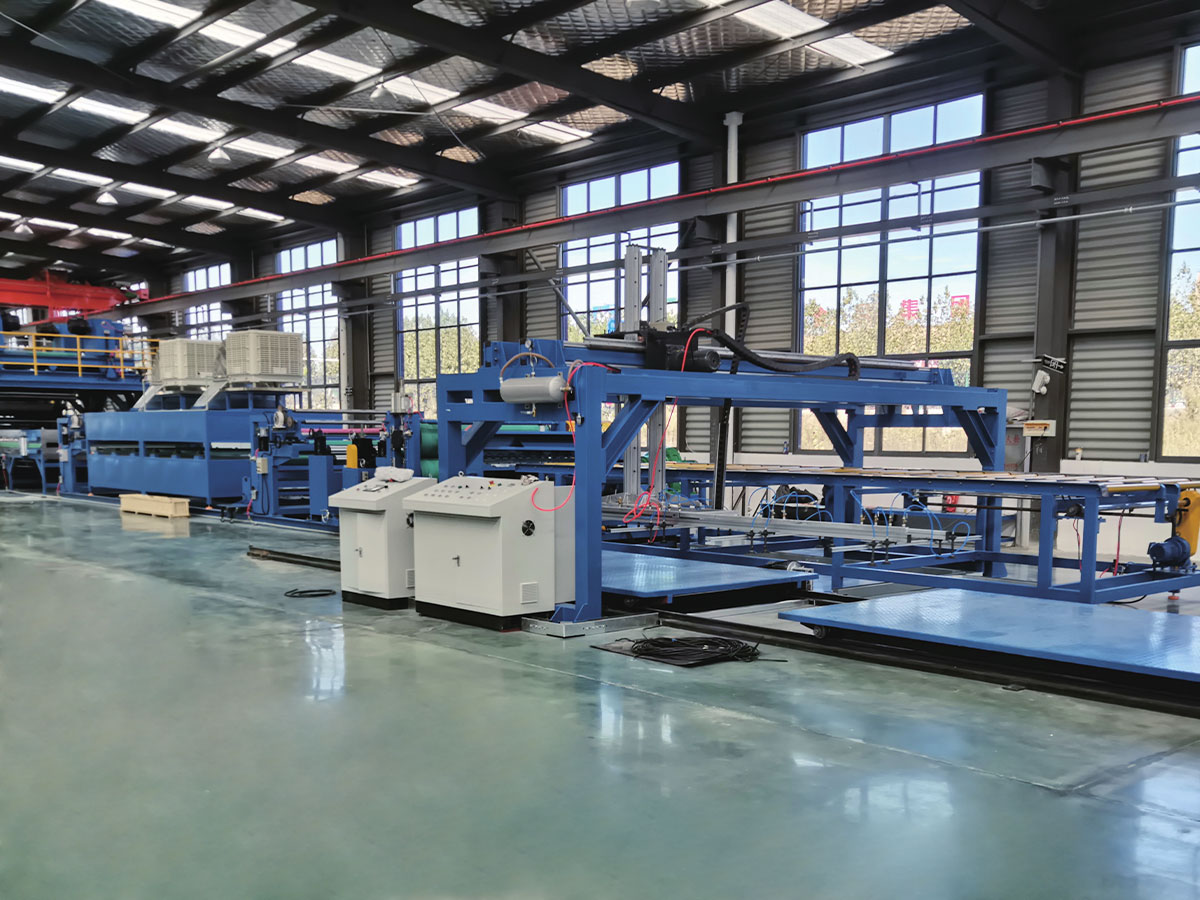
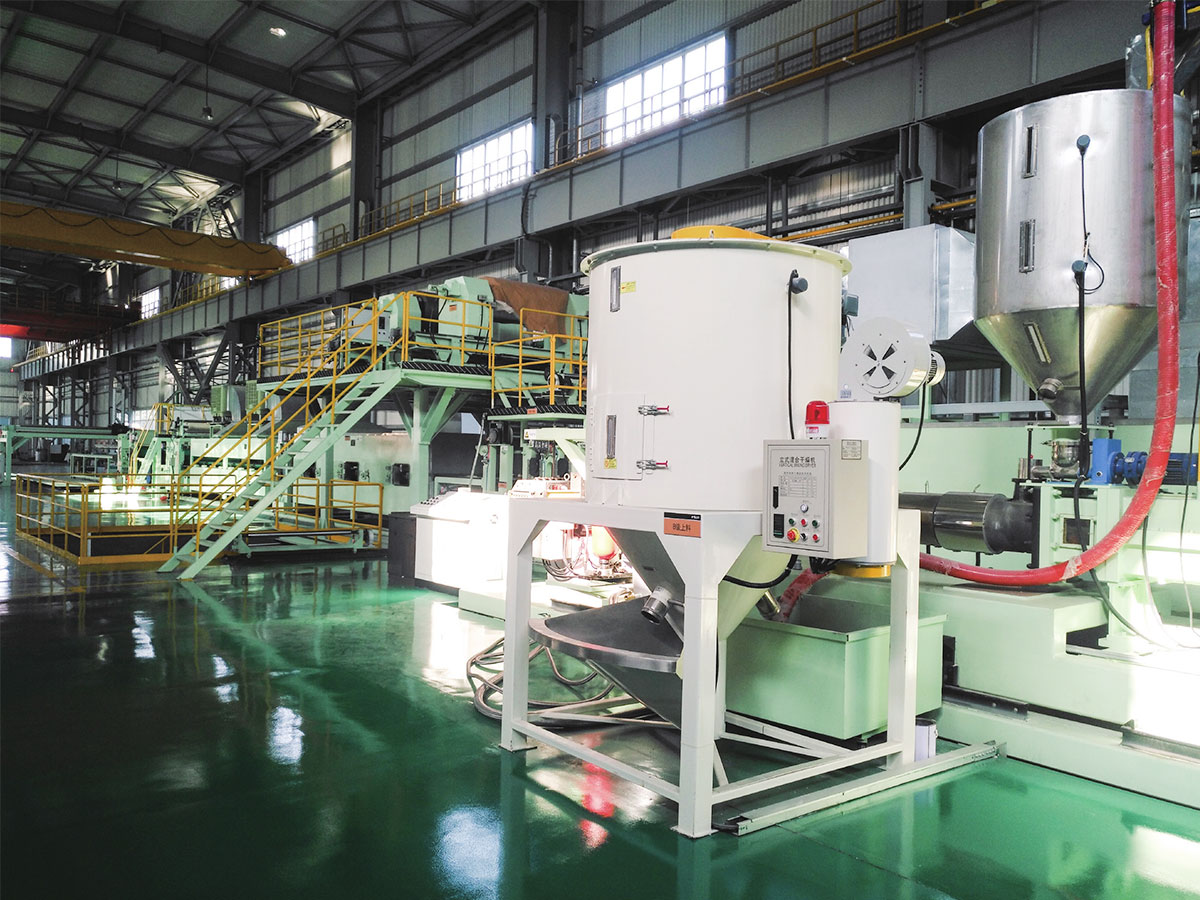
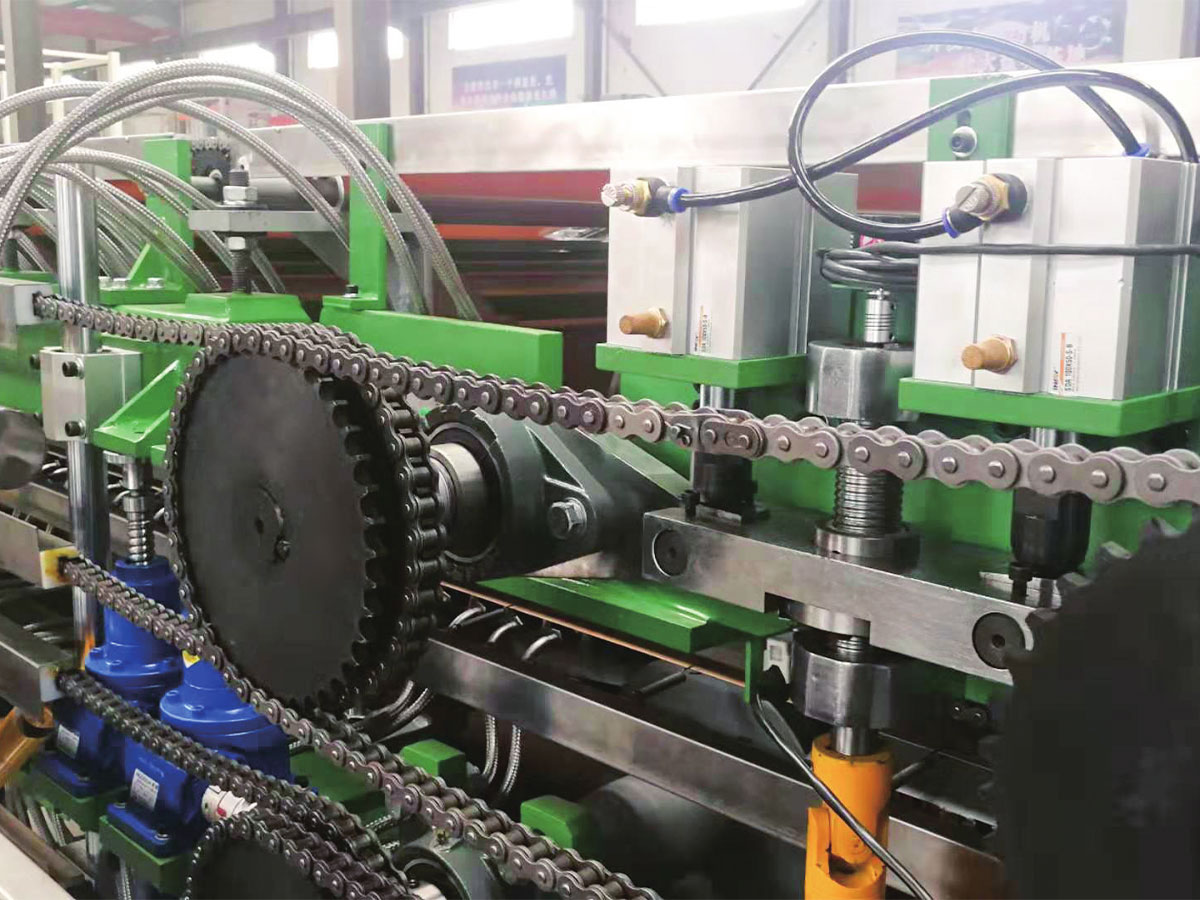
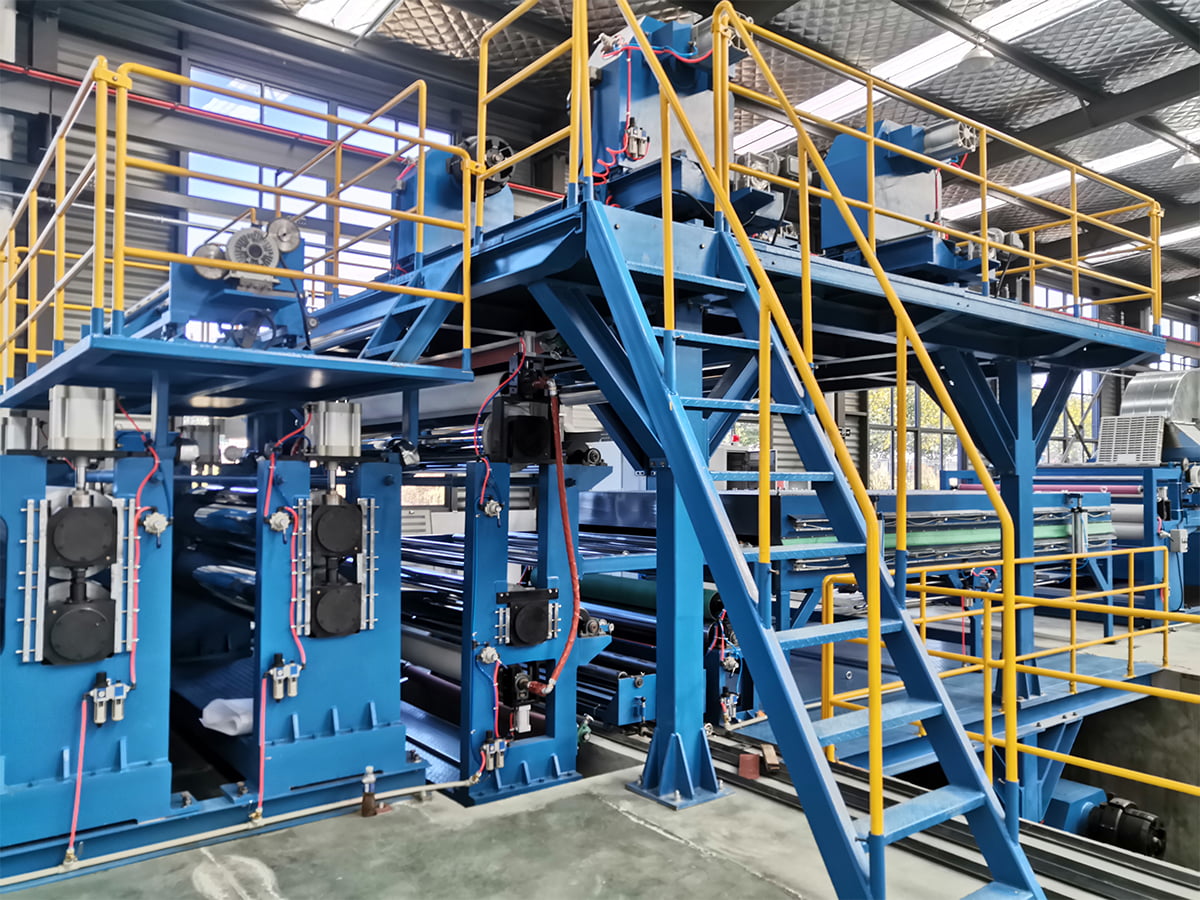
A continuous metal composite panel production line is a sequence of accumulators, heating tunnels, roll laminating stations, belt presses, cooling sections, and shearing or rewinding stations. Each station contributes to final panel quality. The core sheet is first compounded from resin, fillers, and additives and extruded at a controlled thickness. The aluminium coil is cleaned and pretreated so the adhesive can bond chemically to the oxide layer. Then the assembly enters the belt press where heat activates the adhesive, and pressure bonds the layers together without trapping air. If the pressure is not uniform across the width, the panel will develop edge waviness or a pillow effect that fails the flatness tolerance on the job site. If air pockets are trapped, the panel may appear flat at the factory but may blister when exposed to heat in a facade. All of these risks are addressed at the equipment selection stage, not by the panel operator.
The line chart shows the share of A2-rated aluminium composite panels in the global ACP market from 2020 through 2026. The trend line starts at 28 percent in 2020 and rises every year, reaching an estimated 67 percent in 2026. That growth is driven by tightening building regulations in fire-sensitive sectors. In 2022, several European cities raised the minimum fire class for facade materials on buildings above a certain height. In 2024, countries in the Gulf region followed with similar requirements. The result is a clear signal for panel manufacturers: capacity for A2 production is no longer optional. Suppliers that moved to A2-capable lines before 2024 have already recovered part of their investment, while those that wait will face a more crowded market and lower margins.
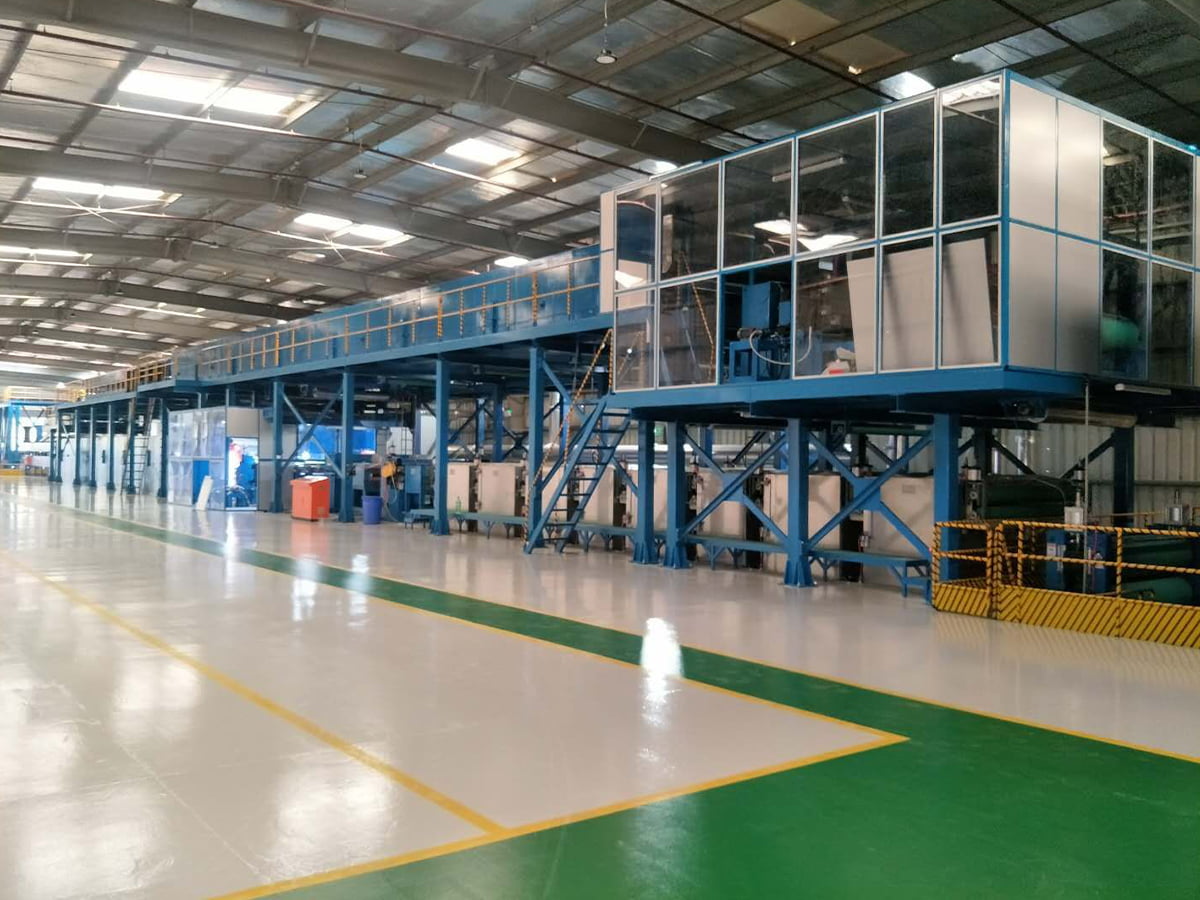
One more factor that affects panel surface quality is the source of the prepainted aluminium coil. Panel producers who bring coil coating in-house can match colours precisely, reduce lead times, and capture additional margin from the sale of prepainted coil.
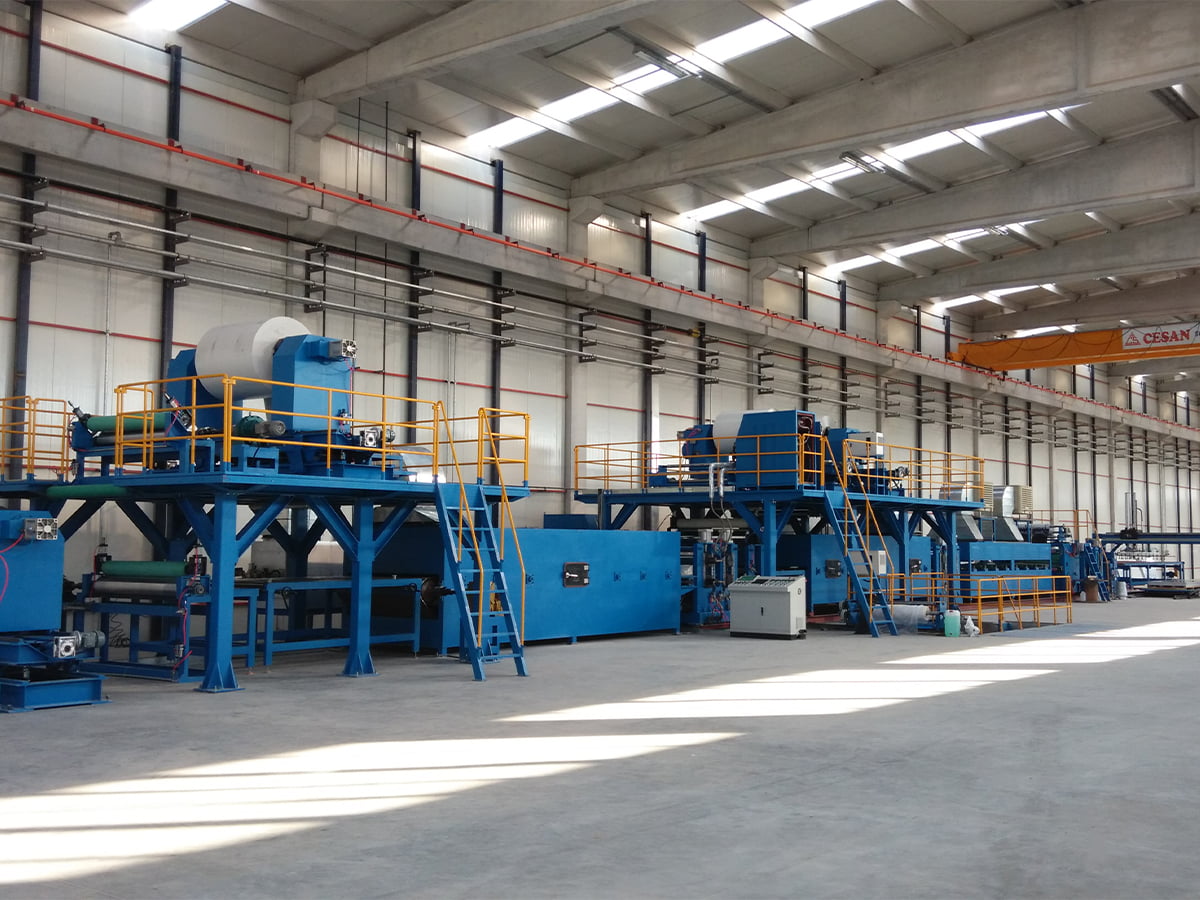
 Color Coating Line for Prepainted Aluminium CoilThis line integrates pre-treatment, automated spraying, and curing to produce durable coated coils. It supports in-house coil coating, enabling precise color matching and shorter lead times for panel manufacturers.View Product →
Three Line Configurations Compared
Three common configurations dominate the market. The choice depends on the fire rating strategy, the target output volume, and the range of products a manufacturer wants to offer.
| Line Configuration | Max Fire Class | Daily Output | Core Change Time | Relative Investment |
|---|---|---|---|---|
| A2/B1 two-way line | A2 | 3,000 panels | 40 min | High |
| A2 coil line | A2 | 4,800 panels | 90 min | Very High |
| PE/B1 FR line | B1 | 3,600 panels | 10 min | Medium |
The first is the A2/B1 two-way metal composite panel production line. It allows a producer to alternate between A2 and B1 products by switching the core feed and adjusting process temperatures. This is the preferred configuration for manufacturers who serve both the facade market and the interior decoration market, because it keeps the equipment occupied even when A2 demand is low.
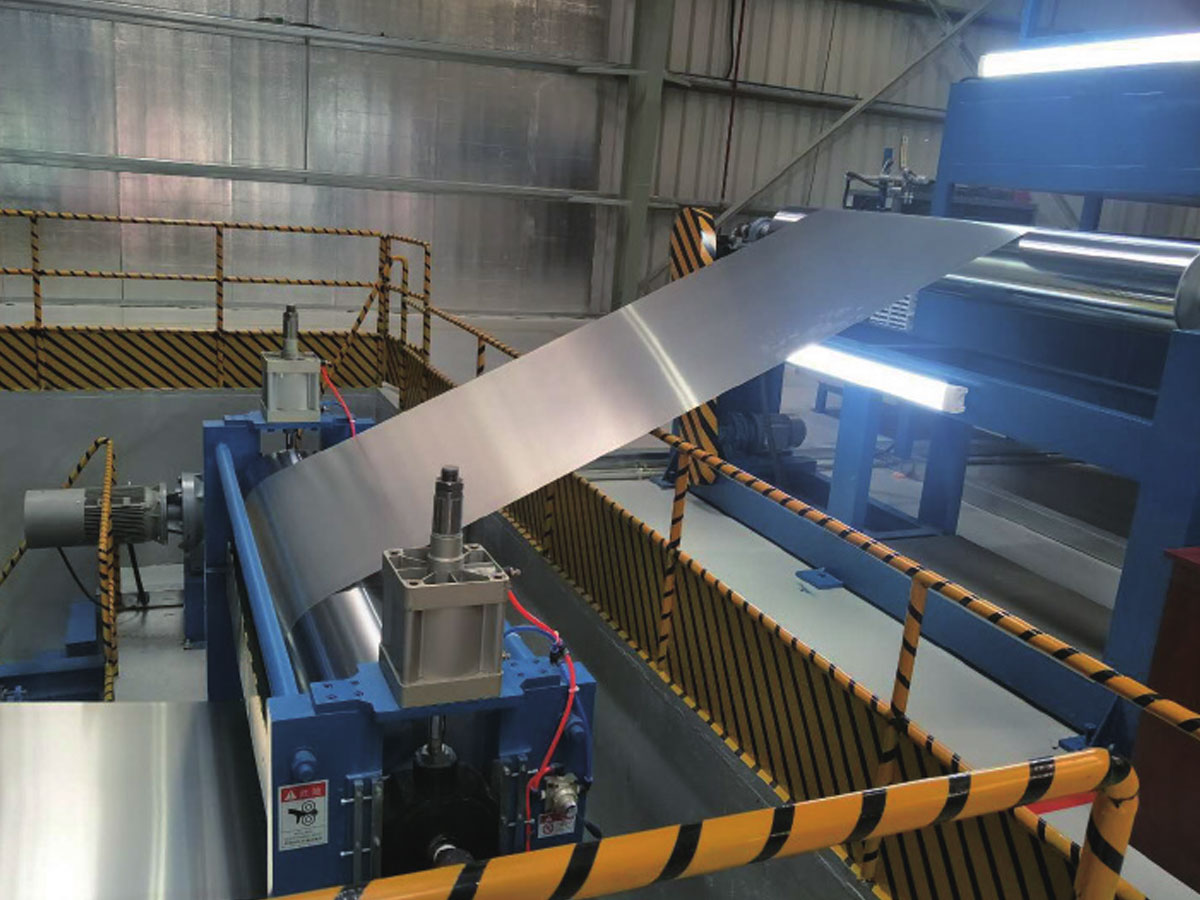
 A2/B1 Dual-Purpose Metal Composite Panel Production LineThis line switches between A2 fire-resistant and PE/B1 cores on one platform, serving both facade and interior markets. It improves equipment utilization and return on investment for producers needing flexibility.View Product →
The second is the A2 coil production line, which produces A2 composite material in continuous coil form. This architecture typically runs at higher speed and lower labour cost per square meter because the bonding and cooling are done in a single continuous pass. The coil format also enables downstream processes such as slitting and blanking to run without panel handling, so the total production cost per finished panel is often the lowest among the three.
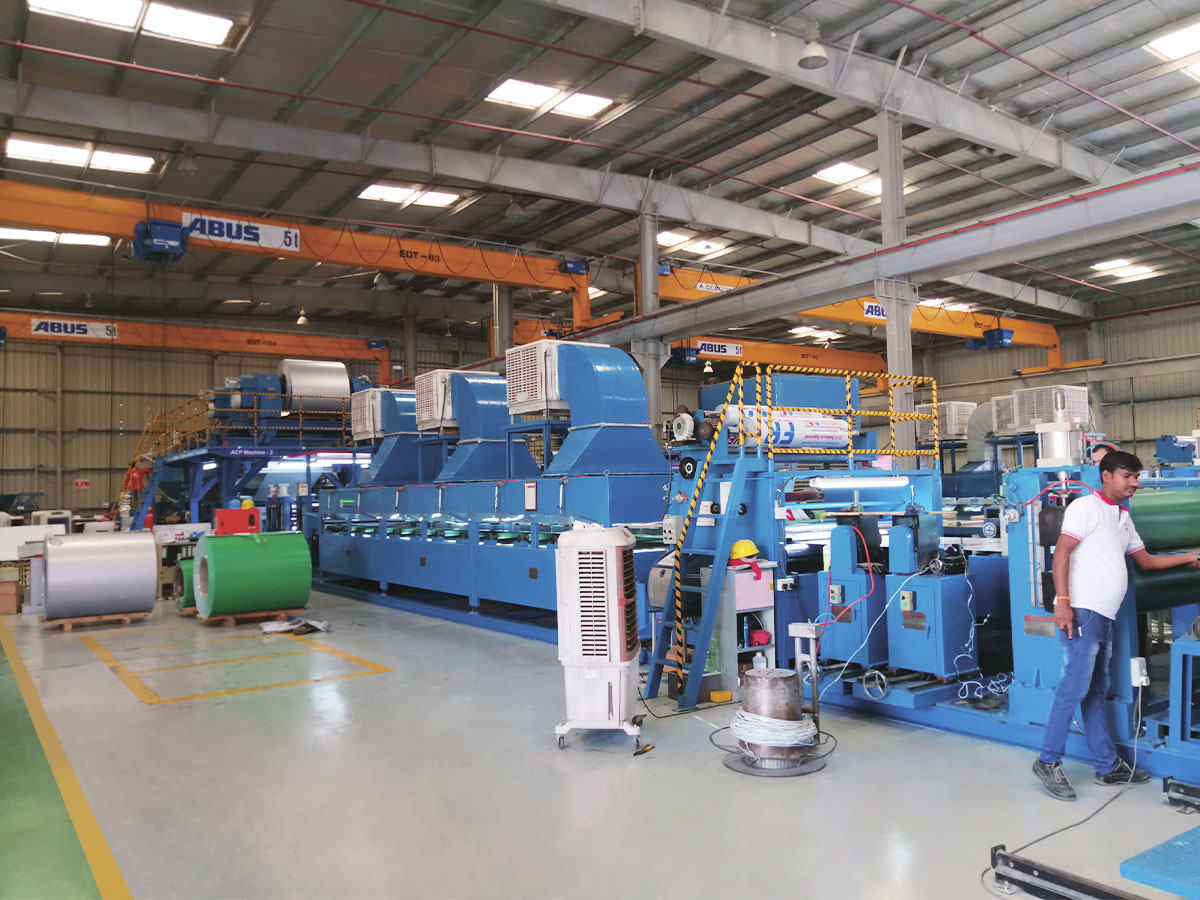
 A2 Coil Production Line for Continuous ACP ManufacturingThis continuous coil line produces A2 composite material at higher speed and lower labor cost per square meter. It enables downstream slitting and blanking without panel handling, often yielding the lowest total production cost.View Product →
The third is a PE or B1 FR ACP composite line. It handles standard PE cores and flame-retardant cores but cannot produce A2 material. Its role in the market is gradually shrinking as building codes tighten, yet it remains a useful entry point for producers focused on interior panels, signage, and decorative cladding where fire requirements are less strict.
The bar chart compares daily panel output for three line configurations. The A2/B1 two-way line produces roughly 3,000 standard panels per day when running in A2 mode, while the A2 coil line reaches about 4,800 panels per day due to continuous reel-to-reel operation. The PE/B1 FR line sits in between at 3,600 panels per day, because its simpler process allows faster roll changes but applies lower thermal load. These numbers represent order-of-magnitude values for a typical 300-meter-long panel line; actual output depends on panel thickness, core density, and the degree of automation. What matters for an investor is that the A2 coil line, while more expensive, delivers about 60 percent more output per day than the entry-level line. The capital cost per panel therefore tends to be lower for the coil line even though the purchase price is higher.
How to Evaluate a Production Line Supplier
When you compare suppliers, you should look beyond the base price and pay attention to four areas. These areas determine whether the equipment will run at advertised capacity and whether the panels will pass the required fire tests.
- Core dosing and mixing accuracy. An A2 core needs a mineral filler share above 90 percent. Ask what kind of weigh feeders and continuous mixers the line uses, and how often they are calibrated.
- Laminating temperature control. The adhesive between aluminium and core activates within a narrow temperature window. If the line uses only on-off heating, the bond strength will vary along the length of the panel.
- Web tension and tracking system. When two aluminium coils are unwound at once, the line needs tension control within 1 percent to avoid wrinkles and slipping.
- After-sales structure. A continuous production line is a high-value asset that runs in three shifts. The supplier should have a documented service network, spare part inventory, and remote diagnostic capability.
The radar chart compares three line configurations across five dimensions: fire rating capability, production output, material flexibility, capital cost, and operational cost. The A2 coil line achieves the highest output and fire rating capability but carries the highest capital cost and the lowest flexibility for quick changeovers between product types. The A2/B1 two-way line offers an even balance of fire rating and flexibility, though output is slightly lower than a dedicated coil line. The PE/B1 FR line remains attractive in capital cost and operational cost, but its low fire rating capability disqualifies it in building projects with strict fire requirements. For most manufacturers planning new capacity, the A2/B1 two-way line is the most rational starting point because it delivers A2 capability without excluding the B1 market. Producers who already hold a mature B1 customer base and want to scale up may find the A2 coil line to be the better upgrade path.
The Bottom Line
"3A composites" is not just a brand name; it is a shorthand for the quality and fire-safety level that the market expects from aluminium composite panels. Choosing the right production line is how a manufacturer translates that expectation into a commercial product. Start with the fire rating strategy, then let the output requirement, raw material availability, and floor space decide the architecture. Talk to a line builder that has already delivered A2-capable equipment, and ask for references in your application area. With A2 demand still growing in 2026, delaying the decision means producing panels that will be rejected from exactly the projects that pay the best margins. If you want to compare your options against a specific product range, contact the manufacturer directly and discuss your intended core materials and annual output.