grammy@cjm.com.cn

 English
 русский
 Español
 عربى
عربى
Content
- 1 How Extrusion Blown Film Works
- 2 Common Blown Film Configurations
- 3 Materials Used in Blown Film Extrusion
- 4 Critical Process Variables That Affect Film Quality
- 5 Applications of Blown Film
- 6 From Blown Film to Lamination and Coating
- 7 Purchasing Considerations for Blown Film and Downstream Lines
- 8 Conclusion
Extrusion blown film is the dominant method for producing plastic films used in packaging, agriculture, and industrial applications. The process is favored because it creates a continuous tubular film with balanced machine-direction and transverse-direction strength, good sealability, and optical clarity. If you are specifying a blown film line or planning downstream converting operations, understanding the core mechanics, equipment configurations, and material behavior will help you avoid costly mismatches. This article explains how blown film extrusion works, what variables matter, and how downstream lamination can extend the film's performance.
How Extrusion Blown Film Works
Blown film extrusion begins with polymer pellets fed into a hopper. A rotating screw inside a heated barrel melts, mixes, and conveys the polymer. The melt passes through a filter to remove contaminants, then enters an annular (circular) die. As the melt exits the die, it forms a thick-walled tube. Air is introduced through the center of the die, inflating the tube into a bubble. The bubble is cooled by an air ring while being drawn upward. At the top, collapsing rollers flatten the bubble into a lay-flat film, which is then wound into rolls.
- Feed and melting: Pellets enter the extruder; heat and shear convert them into a homogeneous melt.
- Filtration: A screen pack or continuous filter removes gels and foreign particles.
- Die extrusion: The melt flows through a spiral mandrel or similar die to form a uniform tube.
- Bubble inflation: Internal air pressure expands the tube; external air ring cools it.
- Collapsing and winding: Guide rolls collapse the bubble; the film is slit if needed and wound.
The blow-up ratio (BUR), the ratio of final bubble diameter to die diameter, typically ranges from 1.5 to 4.0. Frost line height, where the film solidifies, influences crystallinity and optical properties. These two variables are adjusted to balance strength, haze, and output.
Common Blown Film Configurations
Single-layer lines remain cost-effective for simple films, but multilayer coextrusion has become standard for demanding applications. The table below summarizes typical configurations.
| Configuration | Typical Layer Structure | Primary Benefits |
|---|---|---|
| Monolayer | One extruder | Lowest cost, simple operation, suitable for general-purpose bags and liners |
| ABA (three-layer) | Two extruders, one shared | Improved strength and barrier with lower material cost; outer layers can be virgin resin |
| Five-layer | Three to five extruders | Precise control of barrier, seal, and toughness layers; used for food packaging and medical films |
| Mini blown film | Compact single or multilayer | Laboratory and small-batch production; fast changeover for material trials |
Choosing a configuration depends on the required barrier, stiffness, sealing behavior, and budget. More layers add flexibility but also complexity in die design, air ring control, and maintenance.
Materials Used in Blown Film Extrusion
Resin selection determines film performance more than any other single factor. Common grades include:
- LDPE: good melt strength, easy processing, moderate clarity.
- LLDPE: higher toughness and puncture resistance; often blended with LDPE.
- HDPE: high stiffness and moisture barrier; used for thin films and bags.
- mLLDPE: superior strength and sealability at lower thickness.
- EVA: improved flexibility and sealing at low temperatures.
- Ionomer and specialty copolymers: excellent oil and grease resistance for food packaging.
Additives such as slip agents, antiblock, and antioxidants are often compounded into the resin to control friction, blocking, and degradation. For multilayer films, each layer may use a different resin to achieve the target property balance.
Critical Process Variables That Affect Film Quality
Operators adjust several variables to maintain consistent film quality. Small deviations can cause thickness variation, gels, or wrinkles.
- Blow-up ratio (BUR): Higher BUR increases transverse strength but can reduce bubble stability.
- Frost line height (FLH): Lower FLH improves clarity but may reduce tear strength.
- Cooling rate: Faster cooling reduces crystallinity, improving toughness and transparency.
- Take-off speed: Balances output with desired thickness; too high can cause draw resonance.
- Die gap and temperature: Affect melt pressure and film uniformity.
- Internal bubble cooling (IBC): Increases output and stabilizes the bubble for high-speed lines.
Monitoring thickness with a scanner and adjusting air ring geometry are standard practices on modern lines. Without closed-loop control, thickness variation can exceed plus or minus ten percent, wasting resin and causing downstream conversion issues.
Applications of Blown Film
Blown film is used across many industries because it can be tailored for different thickness, clarity, and strength requirements.
- Packaging: carrier bags, liners, food wrap, laminating films.
- Agriculture: greenhouse films, silage bags, mulch films.
- Medical: sterile barrier films, IV bags.
- Construction: vapor barriers, temporary enclosures.
- Industrial: surface protection films, stretch film.
Many of these applications require additional converting steps. Printing, slitting, and lamination transform a basic blown film into a high-performance packaging structure.
From Blown Film to Lamination and Coating
Blown film often serves as a substrate or sealing layer in a multilayer structure. To add barrier properties, print quality, or mechanical strength, converters laminate the film with other materials. Solvent-based, solventless, and water-based adhesives are used, but PUR (polyurethane reactive) lamination has gained attention for its performance and lower environmental impact.
If your operation moves from film production into flexible packaging, you may need a PUR and film lamination line. These lines combine unwinding, adhesive application, drying or curing, and rewind in one continuous process.
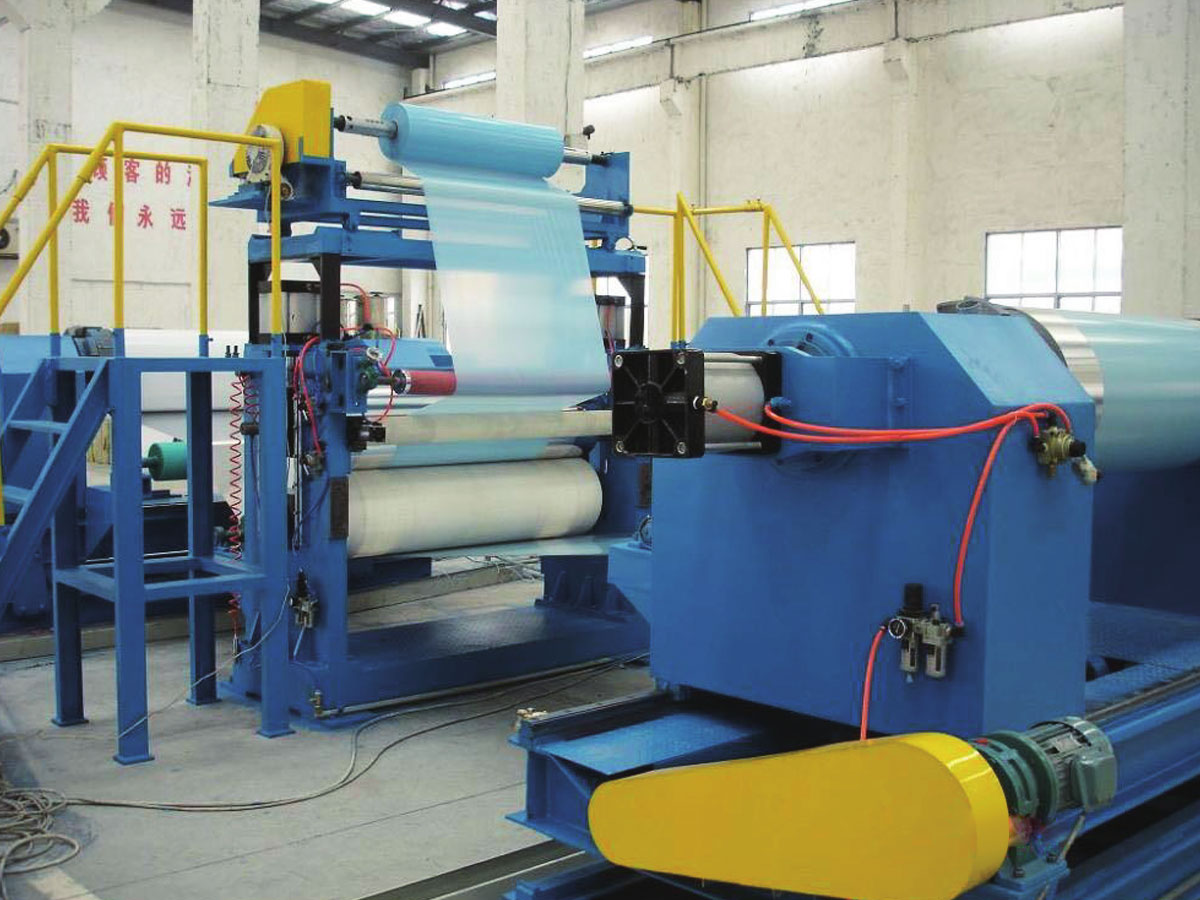
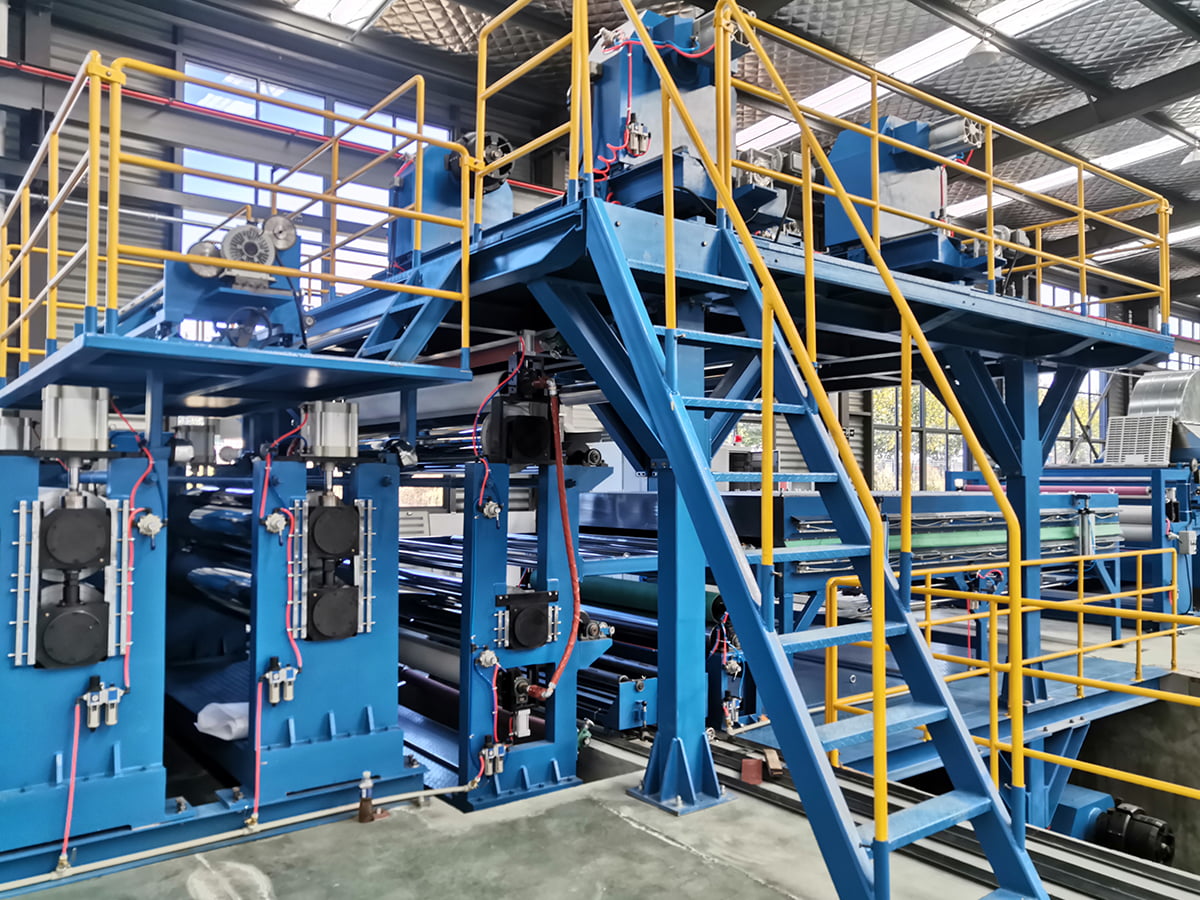
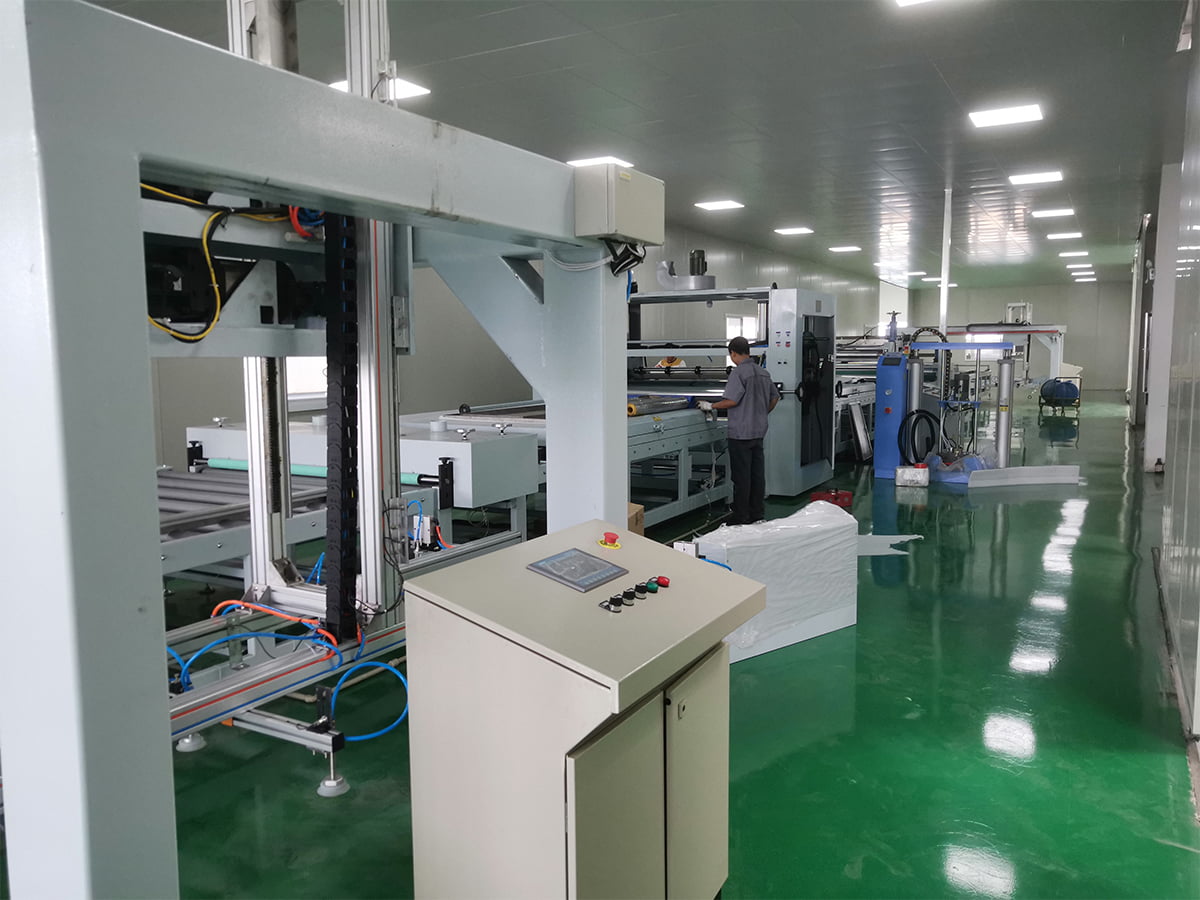 PUR Coating and Film Lamination LineFor durable panel film lamination, this PUR line uses moisture-curing adhesive to bond decorative, protective, or functional films to metal, plastic, wood, or glass.View Product →
For simpler structures, a dedicated film lamination production line can bond two or more films with heat, adhesive, or extrusion coating. The choice depends on adhesive type, speed, and substrate width.
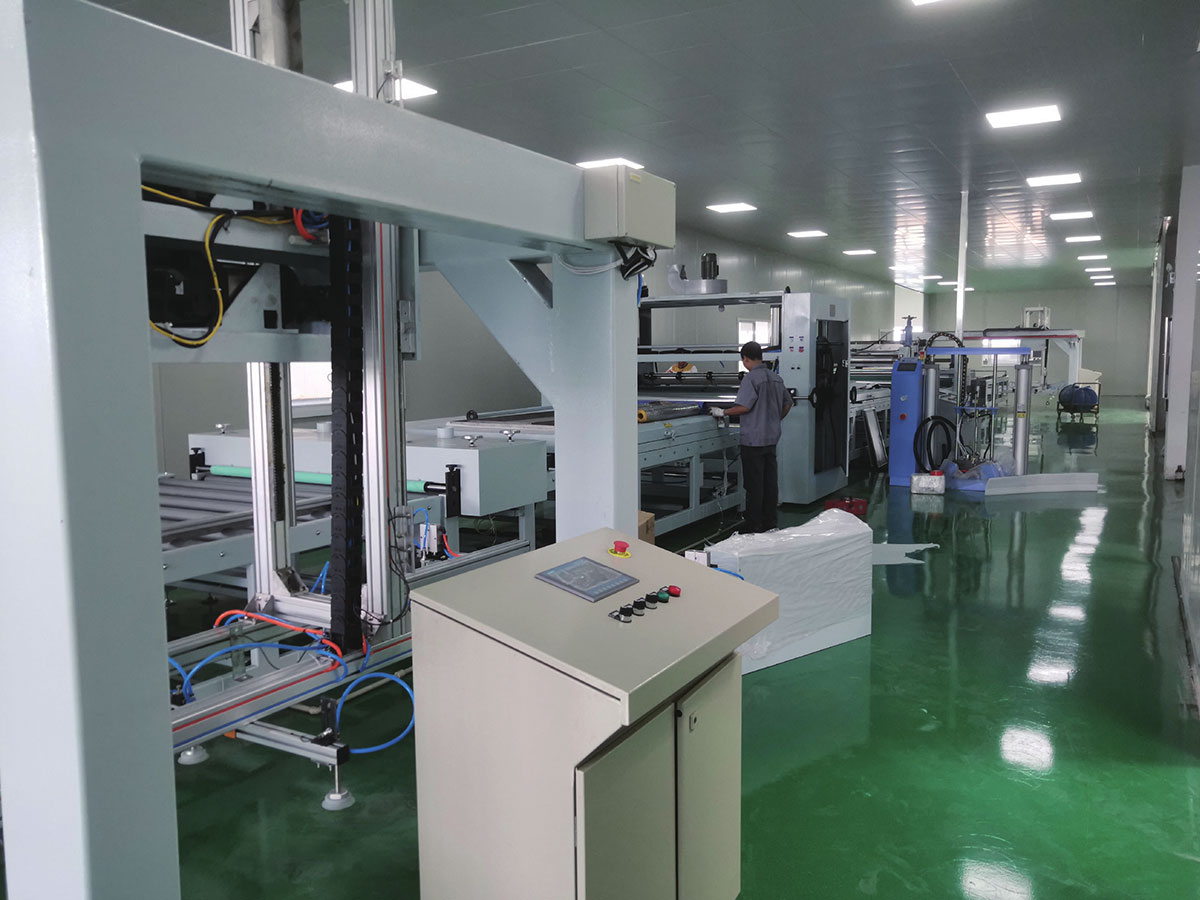
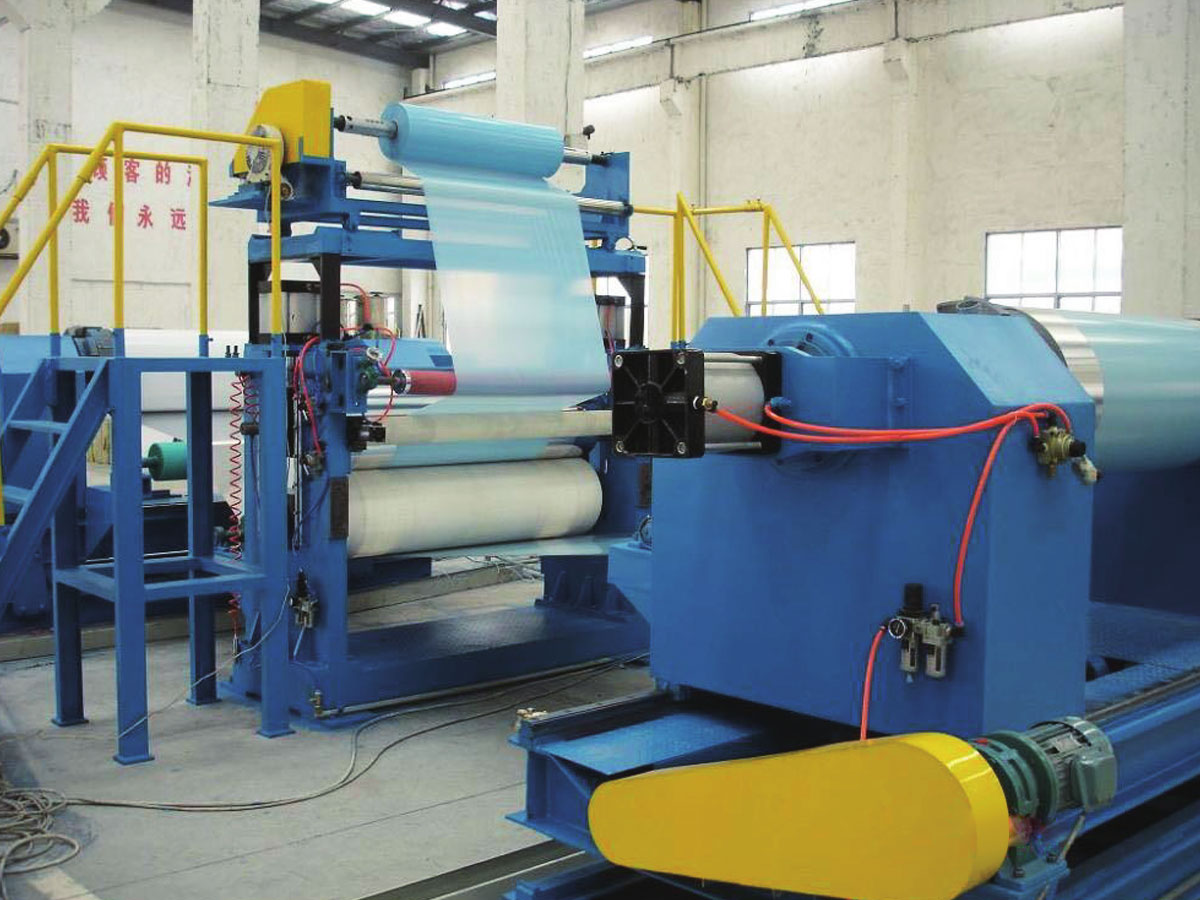 Film Lamination Production LineFor simpler protective-film structures, this line applies PE, PET, and functional films to metal, glass, plastic, and electronic workpieces with precision tension and lamination control.View Product →
These downstream steps are critical because a blown film with excellent tensile properties can still fail if the lamination bond is weak or the adhesive is incompatible. Matching the film surface energy, adhesive chemistry, and line tension is part of the equipment specification.
Purchasing Considerations for Blown Film and Downstream Lines
When evaluating a blown film line, start with the resin you plan to run and the film properties you must achieve. Output rate, film width, layer count, and thickness range define the basic equipment envelope. Here are key questions:
- What is the maximum and minimum thickness you need, and at what width?
- Will you run high levels of LLDPE or mLLDPE? These require different screw designs and cooling capacity.
- Do you need in-line surface treatment such as corona treatment for printing or lamination?
- What level of thickness tolerance is acceptable? Closed-loop gauging adds cost but reduces waste.
- How will the line integrate with downstream lamination, printing, or bag-making equipment?
For downstream lamination, consider adhesive type, curing requirements, and substrate tension control. A line that runs well at 50 meters per minute may struggle at 200 meters per minute if the drying or curing section is undersized. Spare parts availability and local service support also affect total cost of ownership.
If your product roadmap includes composite panels, PVC laminates, or specialty films, a supplier with experience across multiple composite processes can help you avoid isolated equipment decisions. For example, companies that build metal composite panel lines and film lamination lines understand how substrate handling, tension, and heat history interact.
Conclusion
Extrusion blown film remains a reliable and adaptable process for producing plastic films with a wide range of properties. Success depends on understanding the interaction between resin, die design, cooling, and downstream converting. By specifying the right line configuration and controlling critical variables such as BUR and frost line height, you can achieve consistent quality and reduce waste. When your application requires lamination, coating, or composite structures, integrating the right downstream equipment is just as important as the blown film line itself. A partner with experience across multiple composite processes can help you make those connections efficiently.