grammy@cjm.com.cn

 English
 русский
 Español
 عربى
عربى
Content
- 1 What Is an Aluminum Composite Panel and Why Does Its Production Matter?
- 2 Overview of the Complete Production Process
- 3 Stage 1: Unwinding — Feeding Raw Materials into the Line
- 4 Stage 2: Cleaning and Surface Treatment — Preparing Aluminum for Bonding
- 5 Stage 3: Primer and Adhesive Coating — Applying the Bonding Layer
- 6 Stage 4: Laminating — Bringing the Panel Structure Together
- 7 Stage 5: Heat Curing — Developing Full Bond Strength
- 8 Stage 6: Cooling — Stabilizing Panel Geometry
- 9 Stage 7: Finishing and Cutting — Converting the Continuous Strip into Finished Panels
- 10 Automation and Process Control: The Intelligence Behind the Line
- 11 Core Material Variants and Their Effect on Production Parameters
- 12 Quality Control and Testing of Finished ACP Panels
- 13 Applications of Aluminum Composite Panels Produced on These Lines
- 14 Key Technical Advantages of Continuous Production Line Technology
- 15 About JiangSu XieCheng Intelligent Equipment Co., Ltd.
An aluminum composite panel (ACP) production line works by continuously unwinding two aluminum coil sheets and a core material — typically a polyethylene or fire-resistant mineral core — feeding them through a sequence of cleaning, adhesive coating, laminating, heat curing, cooling, and finishing stations to produce a single bonded panel with a precisely controlled structure and surface quality. The entire process is automated, continuous, and capable of producing several million square meters of finished panel per year from a single production line.
The production line integrates mechanical engineering, automated control systems, materials science, and heat treatment processes into a unified continuous flow. Each processing station is governed by precise control parameters — temperature, pressure, line speed, adhesive thickness — that together determine the structural integrity, surface finish, and dimensional consistency of the finished panel. Precise process control at every stage is what distinguishes industrial-grade ACP production from simpler lamination operations and enables the consistent, large-scale output demanded by modern architectural and construction markets.
What Is an Aluminum Composite Panel and Why Does Its Production Matter?
An aluminum composite panel is a flat panel consisting of two thin aluminum sheets permanently bonded to a non-aluminum core material. The standard structure is a 0.3 mm to 0.5 mm aluminum skin on each face, bonded to a core of polyethylene (PE), fire-resistant mineral-filled polyethylene, or aluminum honeycomb, producing a panel with a total thickness of 3 mm to 6 mm — and occasionally up to 10 mm for specialized applications.
The resulting composite material achieves a combination of properties that neither aluminum sheet nor core material can deliver alone: it is lightweight, rigid, flat, weather-resistant, formable, and can be finished with a wide variety of surface coatings — PVDF fluorocarbon, polyester, brushed, anodized, and wood or stone effect prints. These characteristics make ACP the material of choice for building facades, signage, interior decoration, transport vehicle panels, and industrial cladding worldwide.
The production line's importance lies in its ability to combine precious-surface aluminum with a cost-effective core substrate — ensuring product performance while reducing material costs compared to solid aluminum sheet — and to do so at the scale, consistency, and speed required to supply global construction markets. Manual or batch production of composite panels cannot achieve the dimensional precision, adhesive uniformity, or surface quality that continuous production line technology delivers.
Overview of the Complete Production Process
The ACP production line processes raw material coils into finished panels through a defined sequence of integrated stations. Although specific configurations vary by manufacturer and product specification, all industrial ACP lines follow the same fundamental process flow:
| Stage | Process Station | Primary Function | Key Control Parameters |
|---|---|---|---|
| 1 | Unwinding | Feed aluminum coils and core material into the line | Tension, alignment, speed synchronization |
| 2 | Cleaning and Surface Treatment | Remove contaminants; activate surface for bonding | Chemical concentration, temperature, contact time |
| 3 | Primer / Adhesive Coating | Apply adhesive layer to aluminum inner surfaces | Coat weight, uniformity, viscosity, roller gap |
| 4 | Laminating | Bring aluminum skins and core together under pressure | Nip pressure, temperature, line speed |
| 5 | Heat Curing | Activate and cure the adhesive bond under controlled heat | Oven temperature profile, dwell time, airflow |
| 6 | Cooling | Stabilize panel dimensions and surface flatness | Cooling rate, panel tension, roller contact |
| 7 | Finishing and Cutting | Trim edges, cut to length, apply protective film | Cut length tolerance, edge straightness, film tension |
Stage 1: Unwinding — Feeding Raw Materials into the Line
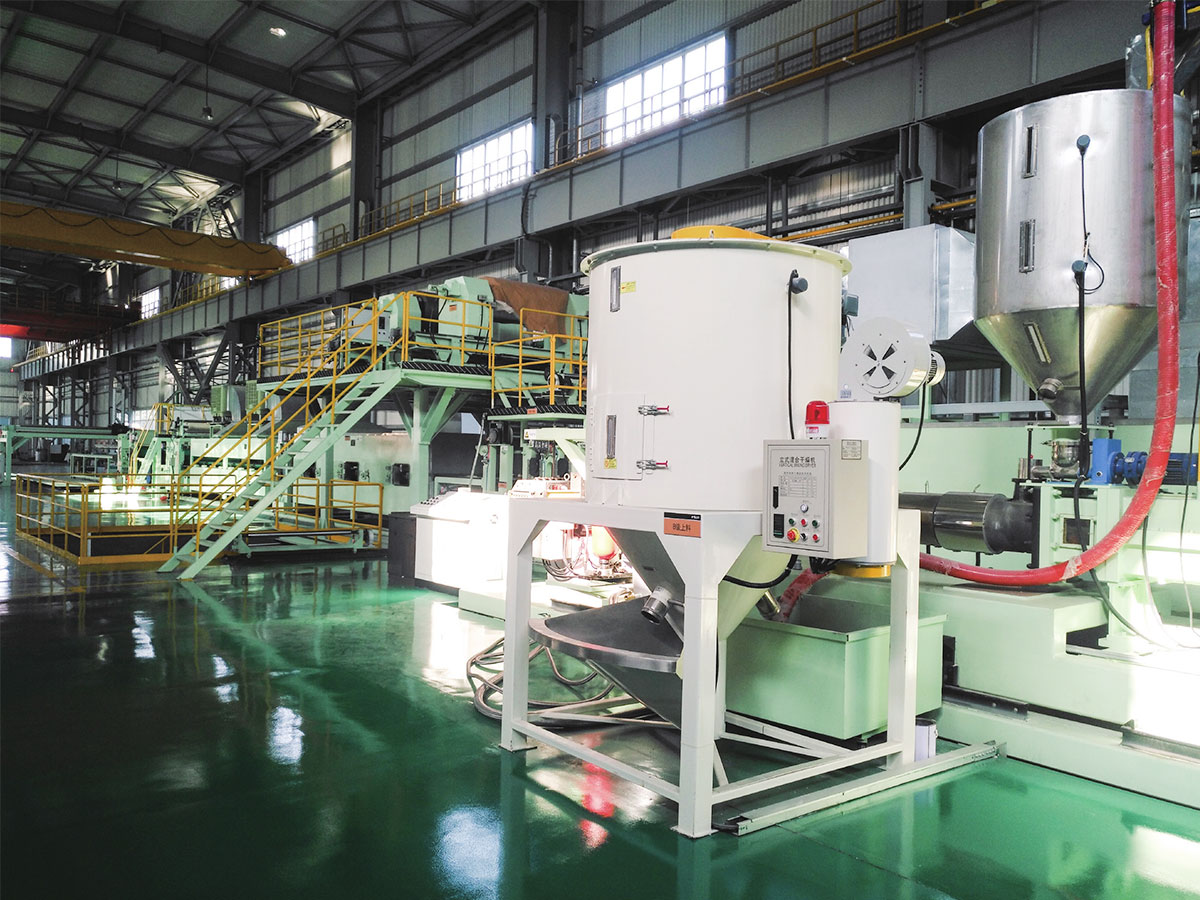
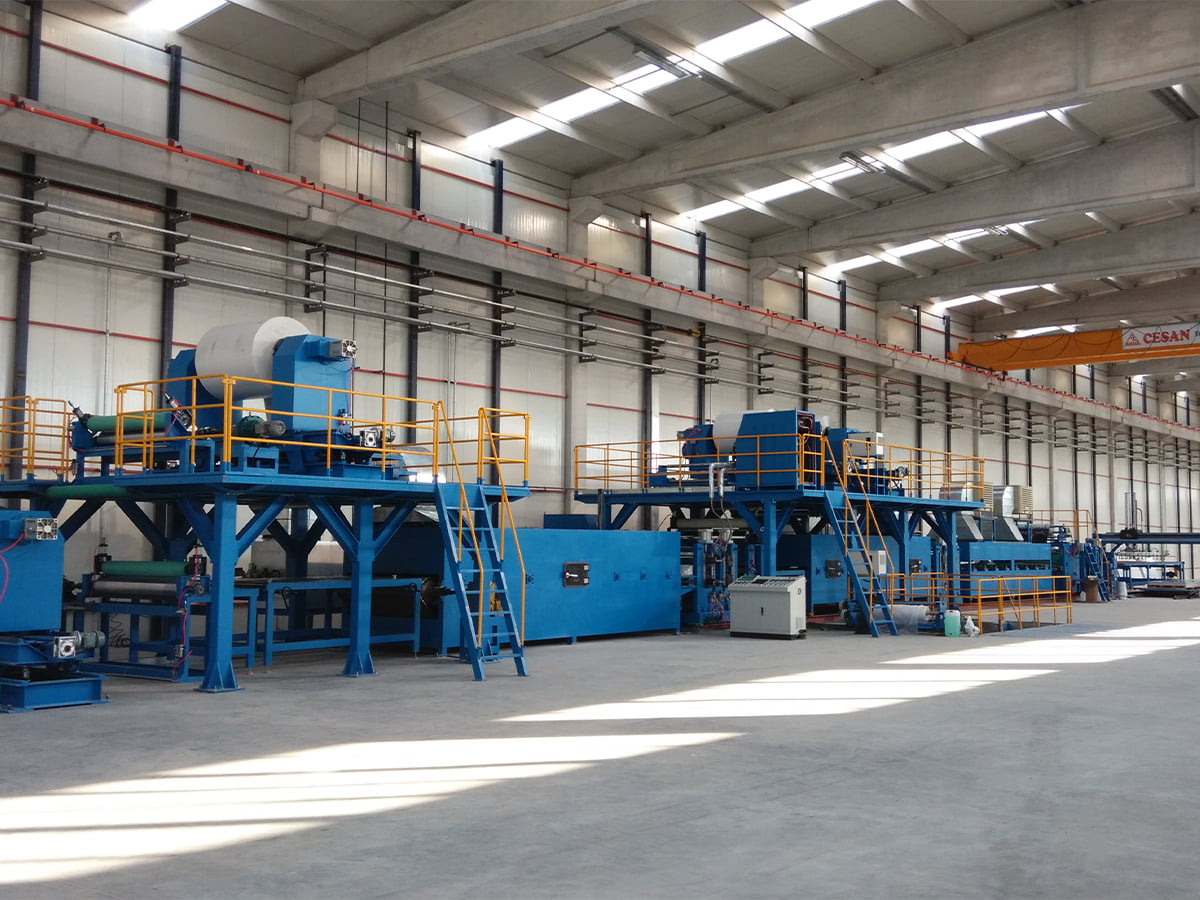
The production process begins at the unwinding stations, where aluminum coil rolls and the core material are mounted on motorized uncoilers and fed into the line simultaneously. A standard ACP production line operates with three unwinding streams in parallel — one for the top aluminum skin, one for the bottom aluminum skin, and one for the core material (typically extruded PE or mineral-filled PE sheet).
Tension control at the unwinding stage is critical. Each material stream must be fed at a precisely controlled tension — consistent enough to maintain flat, wrinkle-free material entry into the cleaning and coating stations, but not so tight that the thin aluminum skin is stretched or permanently deformed. Servo-controlled uncoilers with feedback tension measurement are used to maintain tension within ±5% of the set point across the full range of coil diameter as the roll depletes.
Accumulator (buffer) sections are incorporated between the uncoilers and the processing line to allow coil changes without stopping the production line. When one coil runs out, a new coil is spliced to the tail end of the previous material in the accumulator section while the line continues running from the buffer supply — maintaining continuous production with zero downtime for coil changes.
Stage 2: Cleaning and Surface Treatment — Preparing Aluminum for Bonding
The inner surface of each aluminum skin — the surface that will be bonded to the core — must be chemically clean and surface-active before adhesive is applied. The aluminum coil surface as received from the rolling mill carries residual rolling oils, oxide layers, dust, and handling contamination that would severely compromise adhesive bond strength if not removed.
Cleaning Process
The aluminum strip passes through a multi-stage cleaning system consisting of alkaline degreasing, rinsing, acid etching or chromate/non-chromate conversion coating treatment, and final rinsing. The alkaline degreasing stage removes oils and organic contamination, while the conversion coating step — typically a chromate or zirconium-based treatment — chemically modifies the aluminum oxide layer to create a surface that forms strong covalent bonds with the adhesive primer applied in the next stage.
Chemical concentration, bath temperature, and contact time in each cleaning tank are continuously monitored and automatically adjusted by the process control system. Precise control of these parameters is essential because under-treatment leaves residual contamination that weakens the bond, while over-treatment can etch the aluminum surface excessively, affecting its mechanical properties and surface quality.
Drying After Treatment
After the final rinse, the treated aluminum strip passes through a drying oven to remove all residual moisture before the adhesive coating stage. Any moisture remaining on the aluminum surface will interfere with adhesive wetting and curing, leading to voids, delamination, or reduced long-term bond durability. The drying section uses controlled hot air circulation to achieve complete surface drying without overheating the aluminum.
Stage 3: Primer and Adhesive Coating — Applying the Bonding Layer
After surface treatment and drying, each aluminum strip passes through a precision coating station where the adhesive or primer is applied to the inner face. The coating system is typically a roll coater — consisting of a metering roller, applicator roller, and back-up roller — that deposits a precisely controlled, uniform layer of adhesive across the full width of the strip at line speed.
Adhesive coat weight is typically in the range of 5 to 20 grams per square meter, depending on the adhesive system used and the bond strength specification. The coat weight is controlled by the gap between the metering roller and the applicator roller, and by the viscosity of the adhesive — which is maintained within a tight range by temperature-controlled adhesive supply systems.
Coating uniformity across the strip width is critical. Non-uniform adhesive application results in bond strength variation across the panel surface — creating weak zones that may delaminate under thermal cycling, impact, or sustained mechanical load in service. Modern coating stations use laser or optical coat weight measurement systems to provide real-time feedback and automatic roller gap adjustment to maintain coating uniformity within tight tolerances.
In some production lines, a two-component reactive adhesive system is used — where part A and part B are mixed immediately before the coating head and react during the curing stage to form a cross-linked bond with superior peel strength, heat resistance, and chemical resistance compared to single-component thermoplastic adhesives.
Stage 4: Laminating — Bringing the Panel Structure Together
The laminating station is the heart of the ACP production line — the point at which the three material streams (top aluminum skin, core material, and bottom aluminum skin) are brought together and combined into a single bonded structure under controlled temperature and pressure.
The Laminating Press or Roller Nip
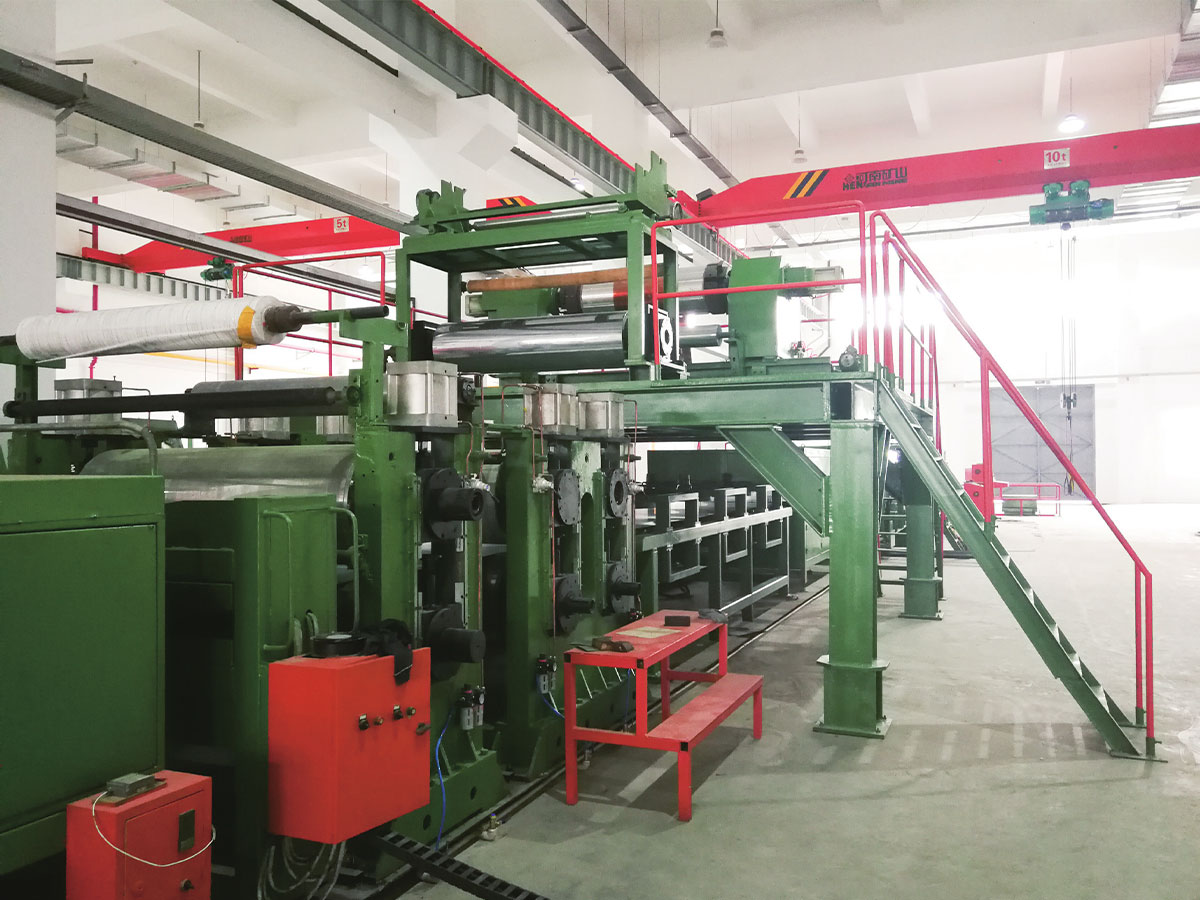
The three material streams converge at a heated laminating press or roller nip system. The nip applies a controlled compressive pressure — typically 0.5 to 3.0 MPa depending on the panel specification and adhesive system — across the full width of the composite structure. The combination of heat (typically 100°C to 180°C at the nip) and pressure ensures intimate contact between the adhesive-coated aluminum surfaces and the core material, displacing air from the interface and maximizing the contact area available for adhesive bonding.
Controlling Thickness and Flatness
The thickness of the finished panel is determined at the laminating nip by the gap between the laminating rollers and the combined thickness of the three input material streams. Panel thickness tolerance in industrial ACP production is typically ±0.2 mm on a 4 mm nominal thickness — achieved through precision roller gap control and consistent input material thickness. Flatness is equally critical: any bow, wave, or twist introduced at the laminating stage will be locked into the panel structure by the adhesive cure that follows, making flatness control at this stage essential.
Line speed through the laminating station must be synchronized precisely with the unwinding speeds of all three input material streams and with the downstream curing oven conveyor speed. Speed mismatch — even small differences in surface speed between rollers — causes the aluminum skin to buckle, wrinkle, or stretch relative to the core, producing surface defects that cannot be corrected downstream.
Stage 5: Heat Curing — Developing Full Bond Strength
After lamination, the panel structure — now physically assembled but with the adhesive bond not yet fully developed — passes through a heat curing oven. The curing stage is where the adhesive reaches its design bond strength through a controlled thermal treatment.
The curing oven is a temperature-zoned tunnel through which the panel passes on a controlled conveyor system. Typical curing temperatures range from 120°C to 200°C, with the panel spending 2 to 10 minutes at peak temperature depending on the adhesive chemistry and panel specification. The oven temperature profile — the rate of heating, peak temperature, and dwell time — is programmed and monitored by the production control system and is critical to achieving consistent bond strength without overheating the PE core (which begins to soften above 90°C) or causing thermal bow in the panel.
For fire-resistant ACP panels using a mineral-filled core, the curing parameters differ from standard PE-core panels because the mineral-filled core material has a different thermal conductivity and heat capacity. The production line's control system stores multiple curing profiles — one for each panel specification in the product range — allowing operators to switch between product types by recalling the appropriate profile rather than manually adjusting oven settings for each change.
The peel strength of the aluminum-to-core bond after full curing is a key quality specification. Industrial ACP panels typically achieve peel strengths of 40 to 120 N per 25 mm width, depending on adhesive type and panel grade, tested according to ASTM D903 or equivalent standards. This peel strength determines the panel's resistance to delamination under wind load, thermal movement, and mechanical forming during fabrication.
Stage 6: Cooling — Stabilizing Panel Geometry
Immediately after the curing oven, the hot panel must be cooled in a controlled manner before it is cut and stacked. The cooling section is a critical stage that directly affects panel flatness — one of the most important quality attributes of a finished ACP panel.
As the panel exits the curing oven at elevated temperature, the aluminum skins and PE core have different thermal expansion coefficients — aluminum expands at approximately 23 × 10⁻⁶ /°C while polyethylene expands at 100 to 200 × 10⁻⁶ /°C. If the panel is cooled too rapidly or unevenly, differential thermal contraction between the skins and core induces internal stresses that bow or wave the panel surface. These stresses are locked in as the adhesive cools below its glass transition temperature.
The cooling section uses a combination of water-cooled rolls, air knife cooling, and tensioned conveyor systems to cool the panel uniformly from both faces simultaneously while maintaining the panel under controlled tension. Controlled cooling rates and uniform heat extraction from both faces are the two factors that determine whether the finished panel meets the flatness specification — typically a maximum bow of 0.5% of panel length for architectural-grade ACP.
Stage 7: Finishing and Cutting — Converting the Continuous Strip into Finished Panels
The final stage of the production line converts the continuous composite strip into individual finished panels ready for quality inspection, packaging, and shipment.
Edge Trimming
The longitudinal edges of the composite strip are trimmed by rotary slitting blades to produce clean, straight edges at the specified panel width. Edge trim quantity is typically 5 to 15 mm per side, removing any edge irregularities introduced during the laminating stage and ensuring the finished panel meets width tolerances of ±1.0 mm or better.
Cross Cutting to Length
A flying shear or rotary cutting system cuts the panel to the specified length while the line continues moving — without stopping the production process. The cut length is controlled by an encoder measuring the strip travel distance and an automated signal to the cutter. Standard ACP panels are produced in lengths of 2,000 mm to 6,000 mm, with cut length tolerances of ±2.0 mm achievable with precision flying shear systems.
Protective Film Application
Before or after cutting, a protective polyethylene film is laminated to the outer face of both aluminum skins to protect the pre-painted or coated surface from scratching, contamination, and UV exposure during transport, storage, and fabrication. The protective film is specified to adhere firmly enough to stay in place through handling but to peel cleanly without residue when removed by the end fabricator before installation.
Stacking and Packaging
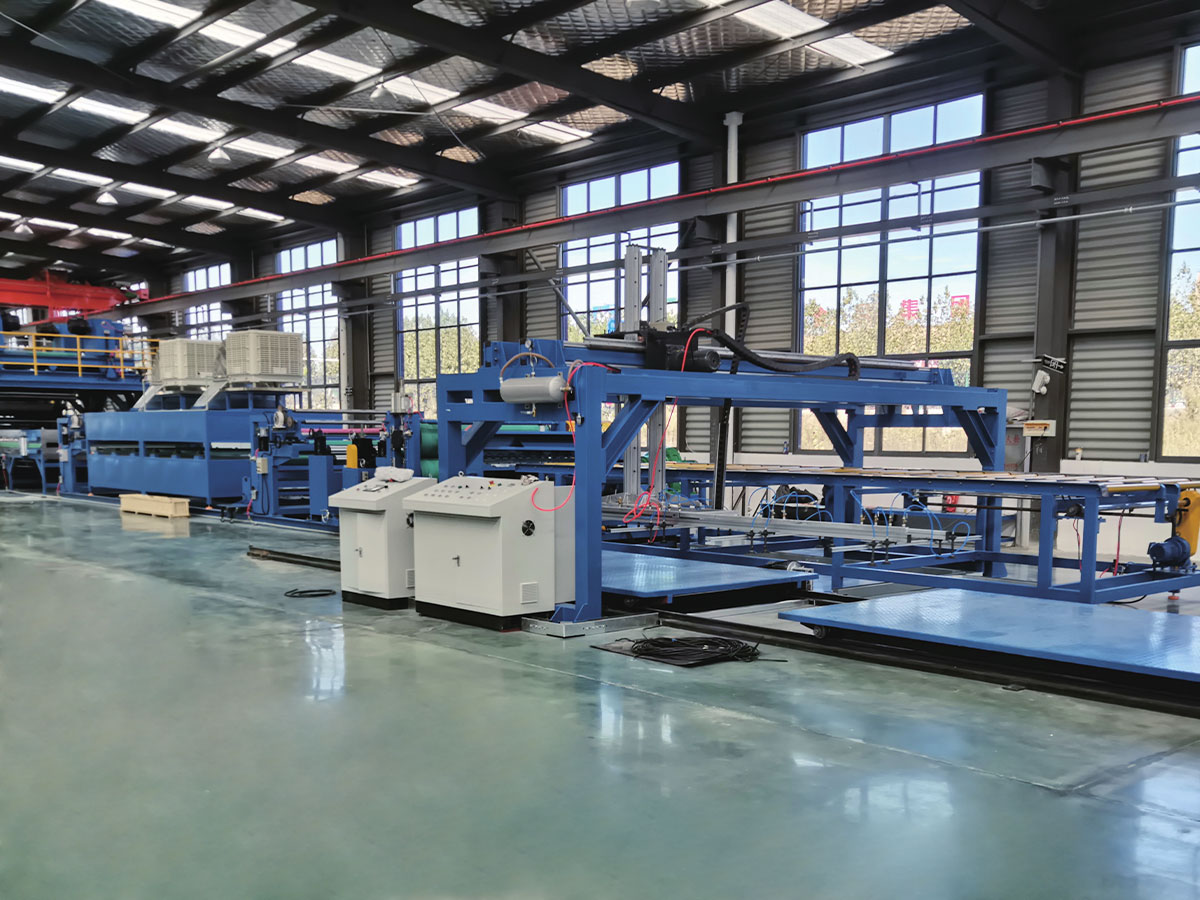
Cut panels are automatically stacked by robotic or conveyor stacking systems onto pallets or timber dunnage, with interleaving material between panels to prevent surface contact damage. Stacked packs are banded, wrapped, and labeled for shipment. Typical production line output speeds of 8 to 25 meters per minute, depending on panel specification, allow a single line to produce thousands of square meters of finished ACP per shift.
Automation and Process Control: The Intelligence Behind the Line
What distinguishes a modern ACP production line from earlier-generation equipment is the degree of automation and process intelligence integrated into every station. The production line is not simply a sequence of independent machines — it is a fully integrated system governed by a central process control architecture that coordinates all stations in real time.
- PLC and SCADA control: Programmable logic controllers (PLCs) at each station execute the precise motion, temperature, pressure, and chemical dosing commands defined by the production recipe. A supervisory SCADA system provides a unified operator interface displaying real-time process data, alarm status, and production statistics for the entire line from a single workstation.
- Recipe management: Each panel specification — thickness, width, core type, adhesive system, surface coating — is stored as a named production recipe in the control system. Changing from one product to another requires only the selection of the appropriate recipe, which automatically sets all station parameters simultaneously, minimizing changeover time and eliminating manual setting errors.
- Inline quality monitoring: Optical inspection systems, thickness gauges, coat weight sensors, and flatness measurement systems provide continuous real-time data on product quality throughout the line. Out-of-specification readings trigger automatic alerts and, in advanced systems, automatic corrective adjustment of the relevant process parameter.
- Speed synchronization: All driven rollers, conveyor sections, and cutting systems across the entire line are speed-synchronized through a master speed reference, ensuring zero relative speed between adjacent stations — eliminating the tension imbalances and surface defects that would otherwise result from speed mismatches.
- Data logging and traceability: Modern production lines log all process parameters — time-stamped against the panel serial number or coil batch — providing full production traceability. If a quality issue is identified in the field, the production data for the specific panel batch can be retrieved to identify any process anomaly that may have contributed.
Core Material Variants and Their Effect on Production Parameters
The type of core material used in the composite panel has a direct influence on several production line parameters and on the performance characteristics of the finished panel. The main core material types used in ACP production are summarized below.
| Core Material | Composition | Fire Classification | Curing Temperature | Primary Applications |
|---|---|---|---|---|
| Standard PE | Polyethylene (unmodified) | Class B / C (combustible) | 100–140°C | Interior decoration, signage, low-rise facades |
| FR (Fire-Resistant) PE | PE + mineral fire retardants | Class B1 / B-s2,d0 | 120–160°C | Mid-rise building facades, transport |
| Mineral / A2 Core | Inorganic mineral fill (>90%) | Class A2 (limited combustibility) | 140–200°C | High-rise facades, airports, hospitals |
| Aluminum Honeycomb | Aluminum foil honeycomb cell | Class A1 (non-combustible) | 120–180°C | Aerospace, premium facades, structural panels |
Switching between core material types requires the production control system to recall the appropriate process recipe — adjusting curing oven temperature profiles, laminating nip pressure, line speed, and cooling rates to the values optimized for each core material. The ability to produce multiple panel grades on a single production line, through recipe management rather than hardware changes, is a key operational advantage of modern automated ACP production systems.
Quality Control and Testing of Finished ACP Panels
The production line's process control systems provide the first layer of quality assurance — maintaining process parameters within specification throughout production. However, finished panel quality is confirmed through a structured program of offline quality testing on samples taken from production.
Dimensional Checks
- Overall thickness: Measured at multiple points across the panel surface using calibrated digital calipers or ultrasonic thickness gauges. Typical specification: ±0.2 mm on nominal thickness.
- Aluminum skin thickness: Measured separately to confirm both skins meet their individual thickness specification — critical because skin thickness directly affects the panel's bending stiffness and surface dent resistance.
- Flatness (bow and twist): The panel is laid on a surface plate and bow measured at the four corners and center. Maximum bow for architectural-grade panels is typically 0.5% of panel length, equivalent to 15 mm over a 3,000 mm panel length.
Mechanical and Bond Strength Tests
- Peel strength test: A strip of aluminum skin is peeled from the core at a controlled rate and angle using a tensile testing machine. The measured peel force per unit width confirms the adhesive bond meets the specification minimum.
- Bending stiffness: A panel specimen is supported at two points and loaded at the center, measuring deflection under a defined load. Bending stiffness is a key structural performance parameter for facade applications subject to wind load.
- Impact resistance: A weighted drop test or ball impact test is performed to confirm the panel surface resists denting and that the aluminum skin does not crack or separate from the core under impact.
Surface and Coating Quality
- Coating thickness: The pre-painted or PVDF coating on the outer aluminum surface is measured using an electromagnetic coating thickness gauge. Minimum dry film thickness for PVDF coatings is typically 25 microns per AAMA 2605 specification.
- Color consistency: Spectrophotometric measurement of the panel surface color confirms it falls within the specified color tolerance (typically ΔE less than 1.0) compared to the approved color standard.
- Surface defect inspection: Visual inspection under standardized lighting confirms the absence of scratches, pinholes, coating streaks, surface contamination, or delamination visible to the naked eye.
Applications of Aluminum Composite Panels Produced on These Lines
The panels produced on industrial ACP production lines serve a wide range of end markets, each with specific performance requirements that the production line must be capable of meeting consistently.
- Architectural building facades: The largest single application globally. ACP cladding systems on commercial buildings, hotels, airports, and high-rise residential towers require panels with consistent flatness, color uniformity, weather resistance, and — increasingly — fire classification to A2 or better under standards such as EN 13501 or GB 8624.
- Signage and advertising structures: Lightweight, rigid, and easily routed or folded, ACP is the primary substrate for large-format signage panels, billboards, and display structures. Standard PE-core panels are used for signage applications where fire classification is not a requirement.
- Interior decoration: ACP panels are used for interior wall cladding, reception area feature walls, ceiling panels, column covers, and shopfitting in commercial interiors. A wide range of decorative surface finishes — wood grain, stone effect, brushed metal, mirror, and solid color — are available from production lines equipped with pre-printed or pre-coated aluminum coil.
- Transportation vehicles: Truck body panels, railway carriage interiors, recreational vehicle cladding, and container lining panels use ACP for its combination of low weight, rigidity, and impact resistance relative to equivalent solid sheet materials.
- Industrial equipment cladding: Machine housings, clean room wall panels, and industrial facility cladding use ACP for its smooth, cleanable surface, dimensional stability, and ease of cutting and forming.
Key Technical Advantages of Continuous Production Line Technology
The continuous production line approach to ACP manufacturing delivers a set of technical and economic advantages over batch or semi-continuous production methods that justify the capital investment required for a full-scale line.
- Consistent bond quality across the full panel area: Continuous processing with constant pressure, temperature, and adhesive coat weight produces a bond of uniform strength across every square millimeter of the panel — something that batch press lamination cannot reliably achieve in large panel formats.
- High production volume: A single continuous production line operating at 15 meters per minute on a 1,500 mm wide strip produces approximately 3.2 million square meters of panel per year at 80% line availability — a scale that batch production systems cannot match at equivalent quality.
- Minimal material waste: Continuous production with precise process control and automated trim minimizes scrap rates. Steady-state scrap rates of less than 1% of output are achievable on well-optimized production lines, compared to 3 to 8% on batch systems where each batch requires setup and edge-loss material.
- Scalable product range: The recipe management approach allows a single production line to produce panels in multiple thicknesses, widths, core types, and surface finishes without significant hardware modification — giving manufacturers the flexibility to serve diverse market segments from a single asset.
- Traceability and quality documentation: Automated data logging provides a full production record for every panel batch, supporting quality certification, warranty claims, and regulatory compliance documentation required by construction industry customers.
About JiangSu XieCheng Intelligent Equipment Co., Ltd.
JiangSu XieCheng Intelligent Equipment Co., Ltd. is located in the Jinhu Economic Development Zone, Huai'an City, Jiangsu Province, China. Established in 2004, the company is a wholly owned machinery and equipment subsidiary of Jiangsu Aludeco New Materials Co., Ltd., specializing in the research and development, design, manufacturing, and sales of production lines for various new composite materials — including aluminum composite panel production lines and related metal composite material processing equipment.
With more than two decades of engineering experience in composite material production line technology, JiangSu XieCheng Intelligent Equipment delivers complete turnkey production line solutions that integrate the full process — from unwinding and surface treatment through laminating, curing, and finishing — into a single automated system with comprehensive process control and after-sales technical support. The company's production lines serve customers in the building materials, decoration, signage, transportation, and industrial sectors across global markets.