grammy@cjm.com.cn

 English
 русский
 Español
 عربى
عربى
Content
- 1 Raw Material Preparation and Compounding
- 2 Extrusion: Forming the Panel Substrate
- 3 Lamination: Applying the Decorative Film Layer
- 4 UV Coating and Surface Finishing
- 5 Click Profiling and Edge Machining
- 6 Cutting, Inspection, and Automatic Packing
- 7 Performance Properties Enabled by the Production Process
- 8 Comparison: PVC Laminate Panel Line vs. SPC/WPC/LVT Flooring Line
- 9 Automation and Control Systems
- 10 Selecting a Full Production Line Solution
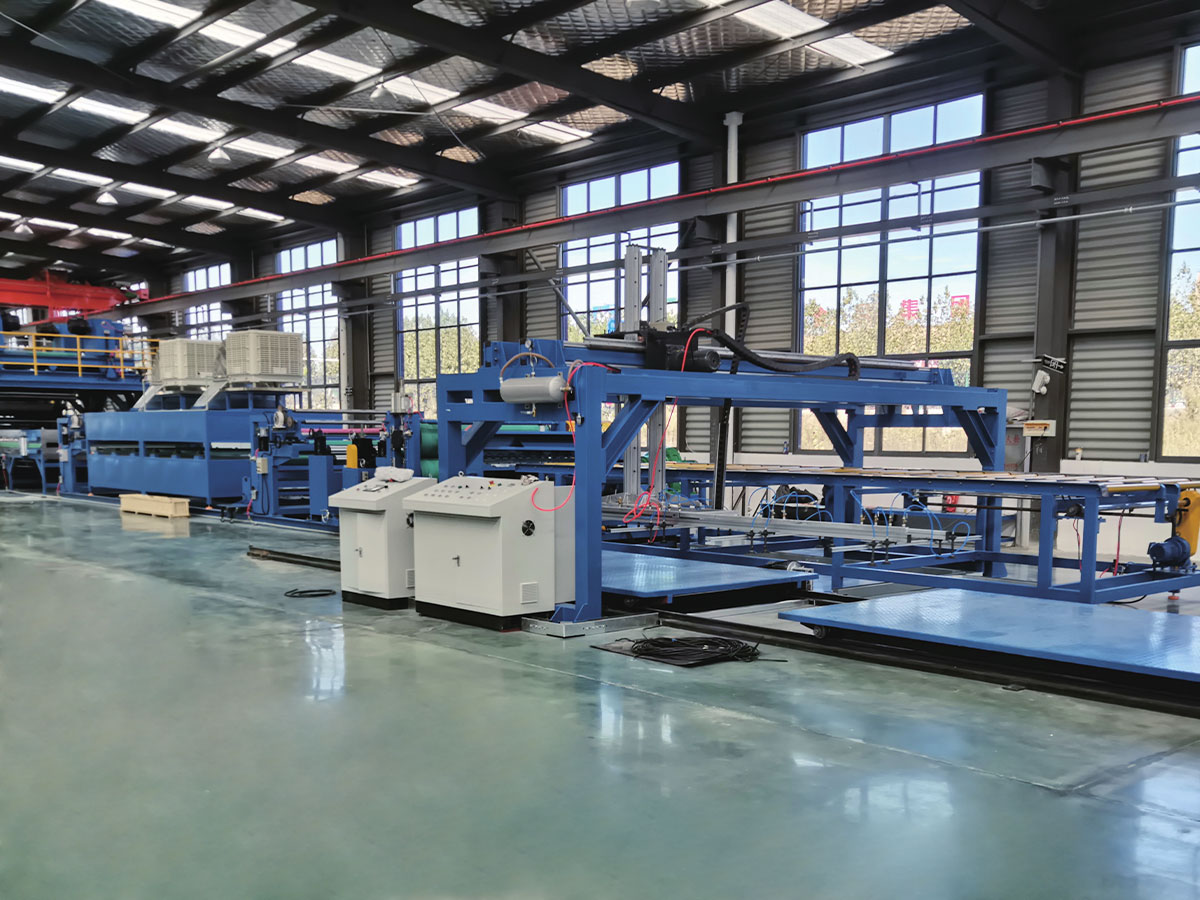
A PVC laminate panel production line is an integrated manufacturing system that transforms raw PVC resin and additives into finished decorative wall or ceiling panels through a continuous sequence of compounding, extrusion, lamination, surface finishing, and cutting. The entire process is highly automated, enabling consistent panel dimensions, vivid surface patterns, and outstanding physical properties — all at industrial-scale output rates. Understanding each stage helps manufacturers, facility planners, and buyers evaluate equipment capability and end-product quality.
Raw Material Preparation and Compounding
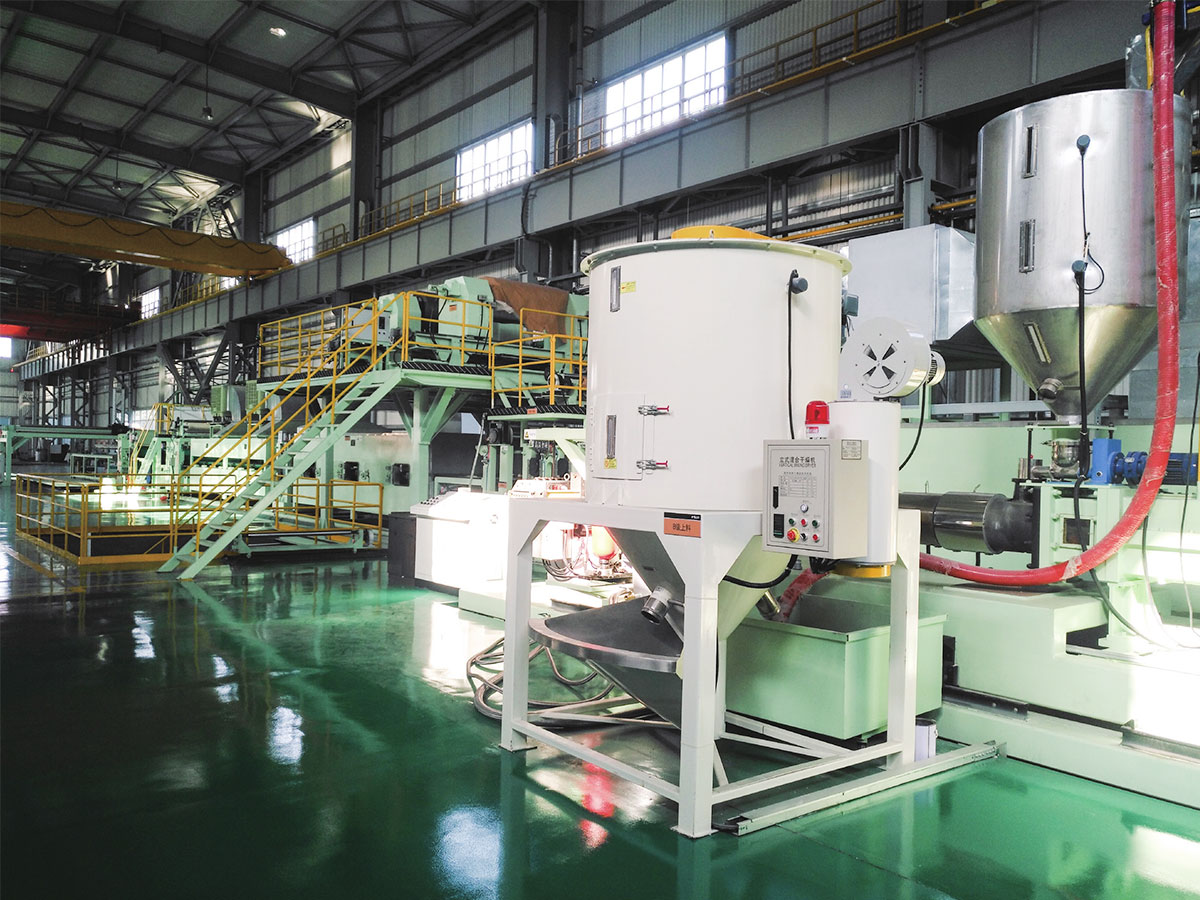
The production process begins with precise formulation of the PVC compound. An automated compounding system weighs and blends PVC resin (typically suspension-grade, K-value 65–68) with stabilizers, plasticizers, fillers (commonly calcium carbonate at 30–50 phr), lubricants, and pigments. Accurate dosing at this stage directly controls panel density, flexibility, and color consistency downstream.
Modern auto-compounding units use gravimetric feeders with ±0.1% accuracy, and hot/cold mixing sequences that bring the blend to a homogeneous melt temperature of approximately 110–120 °C before cooling to a free-flowing powder or pellet. This pre-mixed compound is then conveyed automatically to the extruder hoppers, eliminating manual handling errors and reducing material waste.
Extrusion: Forming the Panel Substrate
The compounded PVC material is fed into a twin-screw or single-screw extruder, where it is melted, pressurized, and pushed through a precision die to form a continuous flat sheet or profiled substrate. The die gap, temperature zones (typically 160–195 °C across 5–8 barrel zones), and screw speed are all digitally controlled via PLC systems.
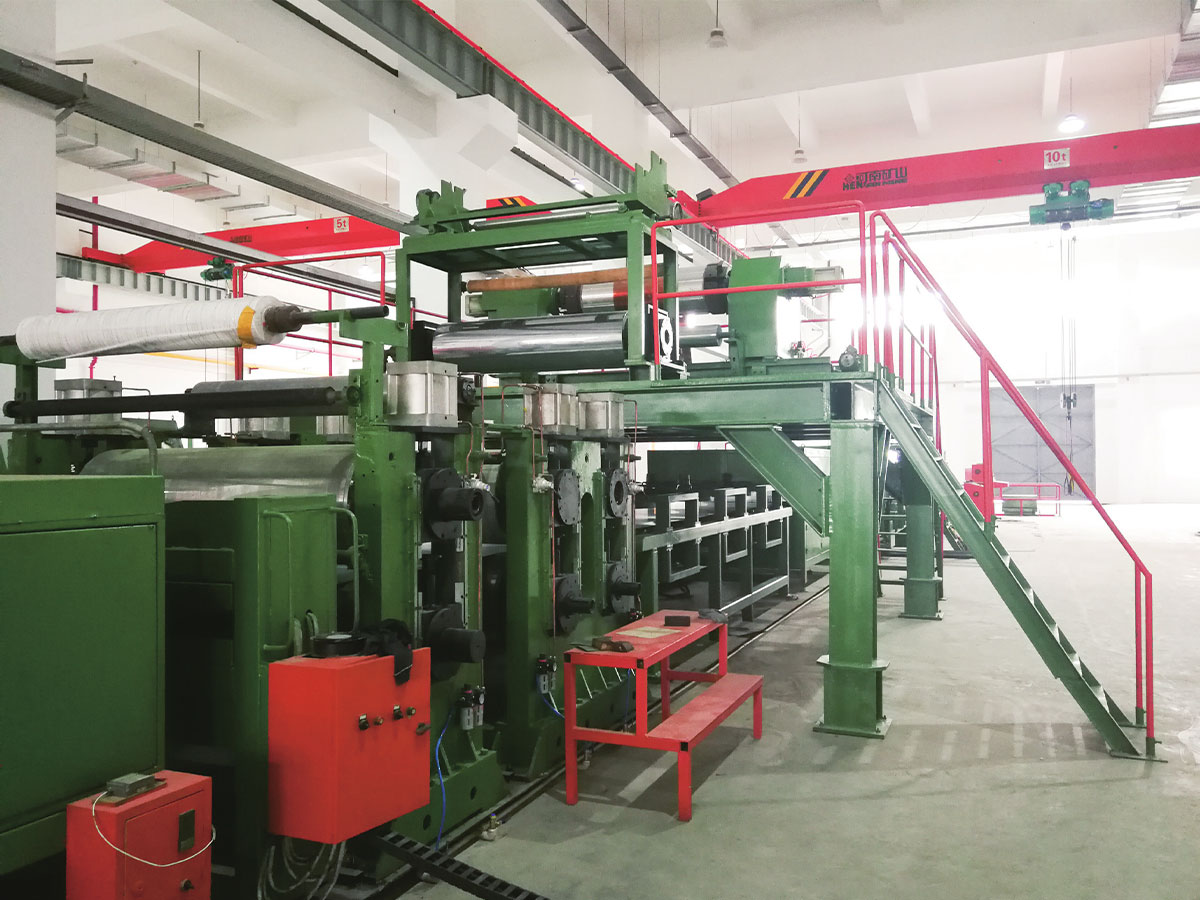
After the die, the hot substrate passes through a three-roll or multi-roll calendering and sizing unit that sets the final panel thickness (commonly 5 mm to 12 mm for wall panels) and surface planarity. Cooling water circuits embedded in the rolls maintain dimensional stability. Thickness tolerance at this stage is typically held within ±0.1 mm, which is critical for click-lock or tongue-and-groove assembly systems used in installation.
Key Extruder Parameters
| Parameter | Typical Range | Effect on Panel Quality |
|---|---|---|
| Barrel Temperature | 160–195 °C | Melt homogeneity, surface smoothness |
| Screw Speed | 20–45 rpm | Output rate, shear heat |
| Die Gap | 5–12 mm | Panel thickness |
| Calendering Roll Temp | 30–60 °C (cooling) | Dimensional stability, flatness |
| Line Speed | 3–10 m/min | Throughput, cooling adequacy |
Lamination: Applying the Decorative Film Layer
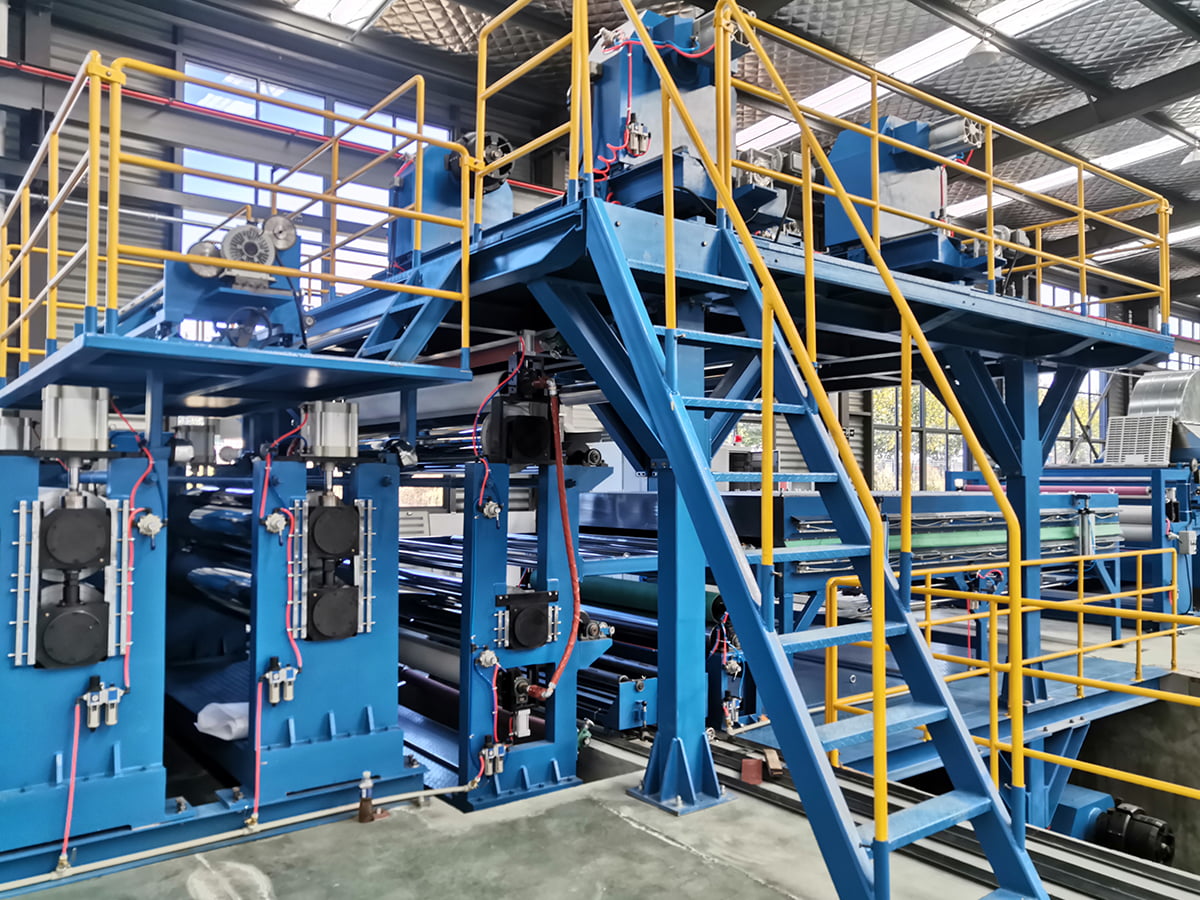
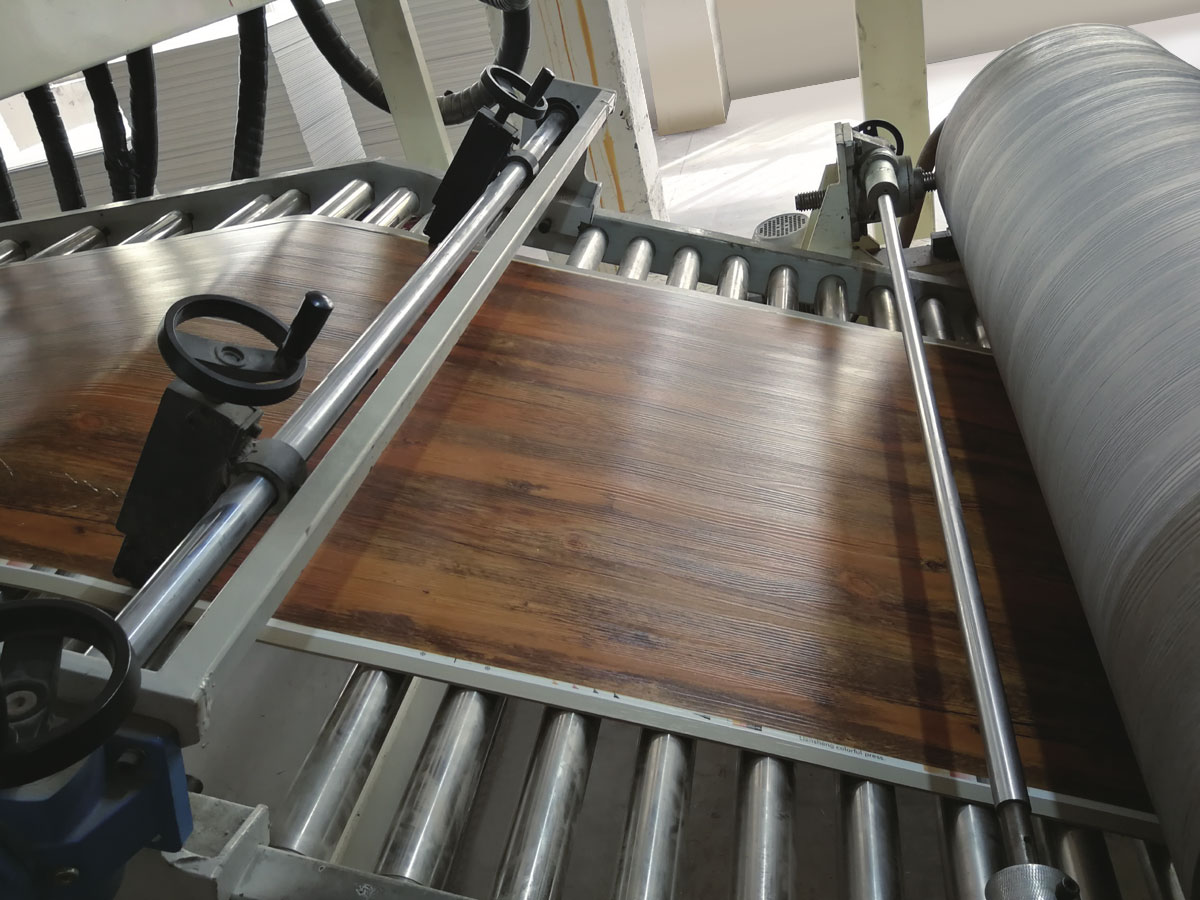
Once the substrate is formed and cooled, it enters the lamination station, where a decorative PVC film or paper-based foil is bonded to the top surface. The film — which can replicate wood grain, marble, stone, or solid colors — is unwound from a roll and pressed onto the substrate using heated laminating rollers operating at 80–130 °C, with line pressures of 2–6 MPa.
Adhesive systems used include hot-melt EVA glue, polyurethane reactive adhesives, or co-extrusion bonding, depending on the end-use specification. Proper adhesion is critical: peel strength standards commonly require values above 3 N/cm to ensure the film does not delaminate under temperature cycling or mechanical stress in real-world installations such as hotels, hospitals, or residential interiors.
For high-performance applications, an additional IXPE or EVA soft-film laminator can be integrated at the back of the panel to provide cushioning, moisture barrier, and additional sound-dampening properties — similar to the underlayer used in SPC and LVT flooring products.
UV Coating and Surface Finishing
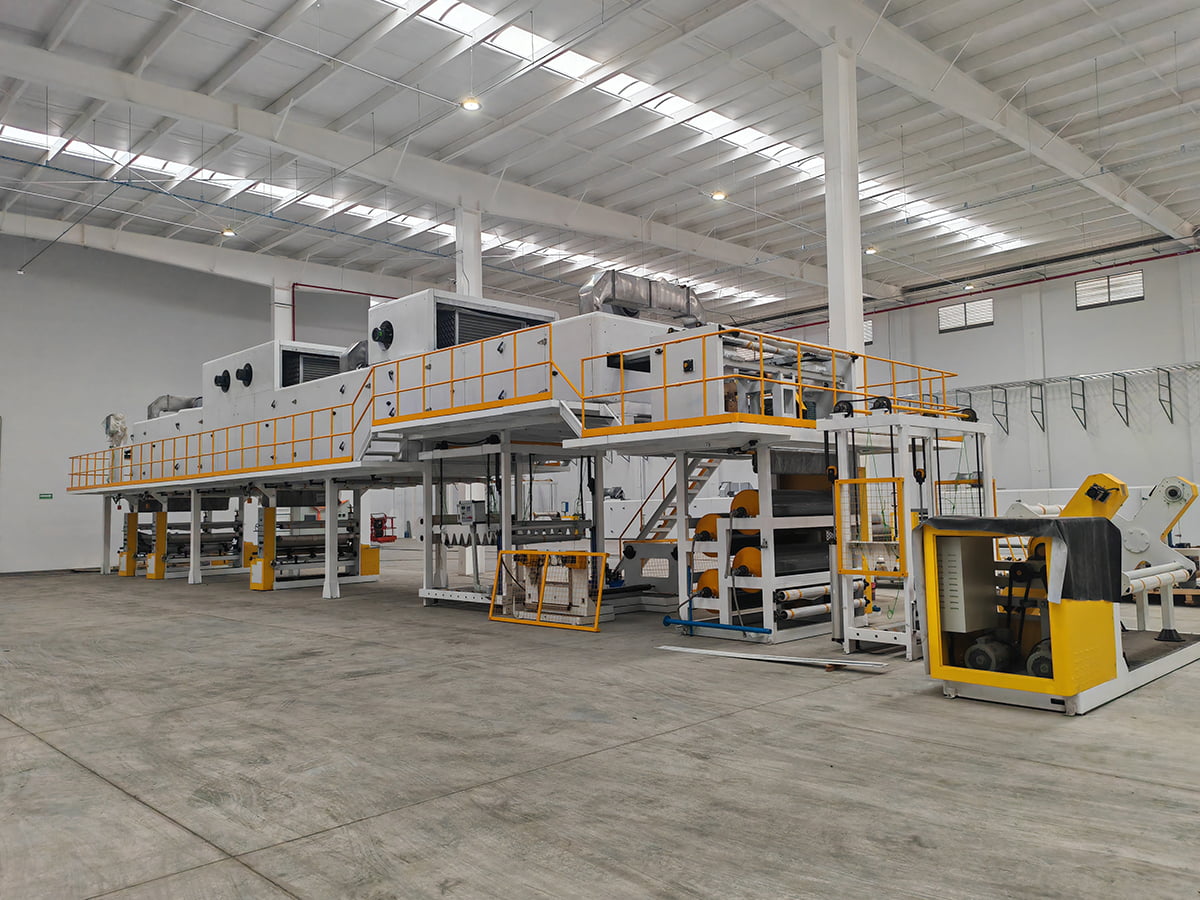
After lamination, the panel surface typically receives a UV finishing treatment. In the UV coating unit, a liquid wear-layer coating (often UV-curable polyurethane or acrylic at 5–25 g/m²) is applied by roller and then cured almost instantly by high-intensity UV lamps at wavelengths of 365 nm. The cured wear layer provides:
- Scratch resistance — Taber abrasion values typically reach 4,000–6,000 cycles at AC3–AC4 rating
- Stain resistance — protection against household chemicals, oils, and cleaning agents
- Gloss control — selectable matte, satin, or high-gloss finishes by switching UV coating formulations or embossing rolls
- Antibacterial performance — optional silver-ion additives support hygienic environments in hospitals and food-service areas
Some production lines add an embossing roller immediately before or after UV curing to impart tactile textures (e.g., registered emboss-in-register wood grain that aligns with the printed pattern), enhancing the visual realism of the decorative surface.
Click Profiling and Edge Machining
If the panels are designed for tool-free click installation — a popular requirement for residential, hotel, and commercial renovations — the continuous sheet is fed into a click-profiling unit equipped with multi-head CNC milling stations. These stations machine the four edges of each panel into a precision tongue-and-groove or Uniclic-style locking profile.
Profile tolerances are held within ±0.05 mm to guarantee tight joint assembly with no visible gaps or lipping. The same principle is applied in the production of SPC, WPC, and LVT flooring, where a full set of equipment — extruder, UV finishing line, click profiler, and IXPE/EVA laminator — operates in an integrated, in-line configuration to maximize throughput and minimize handling.
Cutting, Inspection, and Automatic Packing
The finished panel strip is crosscut to the specified length by a flying saw or guillotine cutter synchronized to line speed, ensuring square, burr-free ends at rates of 10–30 cuts per minute. Standard panel lengths range from 1,200 mm to 2,400 mm, with widths of 150 mm to 400 mm.
Inline vision inspection systems check for surface defects, dimensional non-conformance, and lamination voids, automatically diverting out-of-spec panels before packing. Accepted panels are transferred to an automatic case packer, which stacks, wraps in protective film, and boxes panels for shipment — eliminating manual labor at the end of line and maintaining cosmetic integrity during transport.
Performance Properties Enabled by the Production Process
The combination of precise compounding, controlled extrusion, robust lamination, and UV finishing delivers a product portfolio with measurable performance advantages:
- Fire resistance: PVC formulations with appropriate flame-retardant additives achieve Class B1 or Class 1 fire ratings under EN 13501-1 or ASTM E84.
- Moisture resistance: Water absorption below 0.5% after 24-hour immersion, making panels suitable for bathrooms, commercial kitchens, and hospital corridors.
- Insect and mold resistance: PVC substrate does not provide nutrition for mold or insects, unlike wood-based boards.
- Dimensional stability: Linear thermal expansion typically below 0.08 mm/(m·°C), preventing gap formation or buckling under temperature changes of 30–40 °C.
- Design versatility: Decorative film library can include hundreds of wood, stone, abstract, and solid-color SKUs on the same production line, switched by roll change within minutes.
These properties make PVC laminate panels applicable across a broad range of projects — from residential living rooms and hotel lobbies to hospital wards and retail fitouts — where easy installation, long service life, and low maintenance are prioritized.
Comparison: PVC Laminate Panel Line vs. SPC/WPC/LVT Flooring Line
While PVC laminate panel lines share many engineering modules with SPC, WPC, and LVT flooring lines, there are key differences in substrate composition, thickness range, and surface processing:
| Feature | PVC Laminate Panel | SPC Flooring | WPC Flooring |
|---|---|---|---|
| Core Material | PVC + CaCO3 | PVC + stone powder | PVC + wood flour + foaming agent |
| Typical Thickness | 5–12 mm | 3.5–8 mm | 6–12 mm |
| Primary Application | Walls, ceilings | Floors | Floors |
| Soft Film Backing | Optional (IXPE/EVA) | Common (IXPE) | Common (EVA) |
| Click Profile | Yes (optional) | Yes (standard) | Yes (standard) |
Because of these shared modules — auto compounding, extrusion, UV finishing, click profiling, IXPE/EVA laminator, and automatic case packer — a manufacturer specializing in composite material production lines can supply a complete equipment solution covering both panel and flooring product types from a unified engineering platform.
Automation and Control Systems
State-of-the-art PVC laminate panel production lines rely on centralized PLC and SCADA control architectures to coordinate each module in real time. Operators interact through HMI touchscreens, where recipe management allows instant switching between product specifications — changing thickness, line speed, and UV dose — by loading a stored program rather than manually adjusting each station.
Data acquisition systems log process variables including temperature profiles, motor loads, adhesion line pressures, and UV lamp intensity continuously. This data supports:
- Predictive maintenance alerts that reduce unplanned downtime by flagging bearing wear, heater degradation, or UV lamp aging before failures occur
- Statistical process control (SPC) charts to identify dimensional drift and correct it before reject rates rise
- Full traceability of each production batch, linking raw material lot numbers to finished panel boxes for quality assurance audits
These capabilities are particularly important for manufacturers supplying premium hospitality or healthcare projects, where documented quality records and consistent batch-to-batch color matching are contractual requirements.
Selecting a Full Production Line Solution
When evaluating a complete PVC laminate panel production line, manufacturers should consider the following factors to ensure the equipment matches their capacity targets and product roadmap:
- Output capacity: Line speeds of 5–10 m/min on a 200 mm-wide substrate can yield 600–1,200 m² of finished panel per shift. Verify that the extruder screw diameter (typically 65–92 mm) and motor power (30–75 kW) align with the target throughput.
- Product width range: A flexible die and adjustable calendering rolls allow production of panels from 150 mm to 600 mm wide on a single line, maximizing SKU coverage without capital duplication.
- Film and coating compatibility: Confirm that the laminator handles both PVC film and paper-based décor foils, and that the UV system is configurable for different coating weights and gloss levels.
- After-sales support: Availability of remote diagnostics, spare parts inventory, and on-site commissioning service significantly reduces the risk of extended downtime during startup or routine maintenance.
- Certifications: CE marking, ISO 9001 quality management, and compliance with relevant material standards (EN 15102, ASTM F2169) are benchmarks of an equipment supplier with traceable manufacturing quality.
Companies such as JiangSu XieCheng Intelligent Equipment Co., Ltd., established in 2004 and located in the Jinhu Economic Development Zone, Huai'an City, Jiangsu Province, China, exemplify suppliers that have built their expertise around R&D, design, manufacturing, and sales of production lines for new composite materials — including full-set solutions covering auto compounding, extrusion, UV finishing, click profiling, IXPE/EVA lamination, and automatic case packing for both panel and flooring product families. Their parent group, Jiangsu Aludeco New Materials Co., Ltd., provides direct application feedback that strengthens equipment design based on real production experience.