grammy@cjm.com.cn

 English
 русский
 Español
 عربى
عربى
Content
- 1 How Non-Standard Customized Equipment Differs from Standard Equipment
- 2 Common Types of Non-Standard Customized Equipment
- 3 Industries That Most Frequently Commission Non-Standard Equipment
- 4 The Design and Development Process for Custom Equipment
- 5 Key Advantages of Non-Standard Customized Equipment
- 6 Challenges and Risks in Non-Standard Equipment Projects
- 7 Key Technical Specifications Defined in Custom Equipment Projects
- 8 Selecting the Right Custom Equipment Builder
- 9 When to Choose Custom Equipment Over Standard Solutions
Non-standard customized equipment refers to machinery, production lines, tooling systems, and industrial apparatus that are purpose-designed and built to a specific customer's requirements rather than manufactured to a universal catalogue specification. Unlike standard off-the-shelf equipment — which is mass-produced to fixed dimensions, capacities, and functions — non-standard customized equipment is engineered from concept to delivery around a particular production process, workspace constraint, material type, or performance requirement that no existing standard product can satisfy. It is widely used in manufacturing, automation, semiconductor production, pharmaceutical processing, aerospace assembly, and any industry where unique process demands exceed what commercially available equipment can deliver.
How Non-Standard Customized Equipment Differs from Standard Equipment
The distinction between standard and non-standard equipment is not merely a matter of size or complexity — it reflects a fundamentally different design and procurement process. Understanding this distinction helps manufacturers and engineers make informed equipment decisions.
| Characteristic | Standard Equipment | Non-Standard Customized Equipment |
|---|---|---|
| Design origin | Manufacturer's catalogue | Customer's specific requirements |
| Production volume | Mass-produced, identical units | Single unit or small series |
| Lead time | Days to weeks (from stock) | Weeks to months (design + build) |
| Fit to process | Process adapted to equipment | Equipment designed to fit the process |
| Unit cost | Lower (economies of scale) | Higher (engineering + one-off build) |
| Performance match | Approximate | Exact |
| Competitive advantage | Available to all buyers | Proprietary to the commissioning company |
Common Types of Non-Standard Customized Equipment
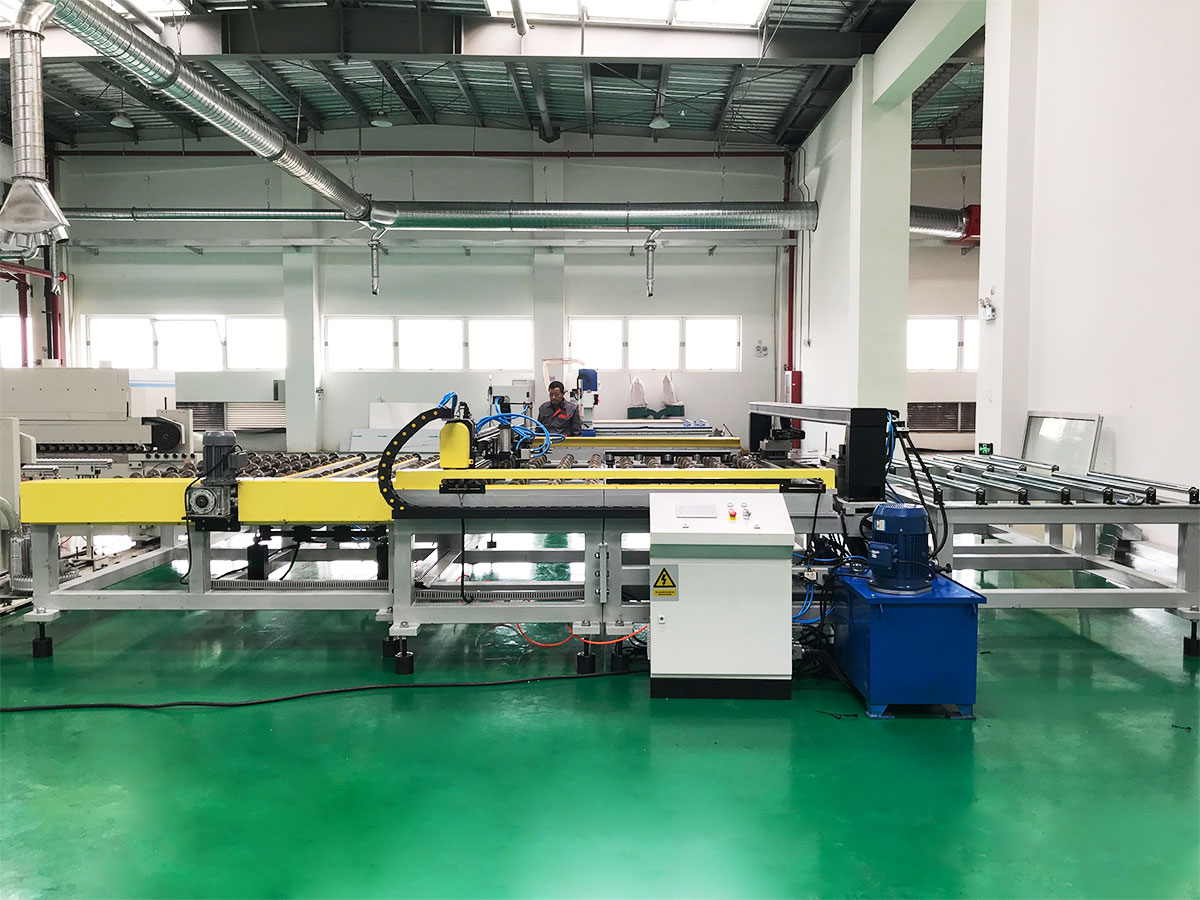
Non-standard customized equipment spans a broad spectrum of industries and functions. The most frequently encountered categories include:
Custom Automated Assembly Lines
Purpose-built assembly lines integrating robotic arms, conveyor systems, vision inspection cameras, press units, and test stations into a single continuous production flow. These systems are engineered to match a specific product's assembly sequence, cycle time target, and quality control requirements. A custom automotive sub-assembly line, for example, might be designed to produce 120 units per hour at a floor footprint of under 80 m² — a combination no standard conveyor catalogue can deliver.
Special Purpose Machines (SPMs)
Special purpose machines perform a single defined manufacturing operation — drilling, pressing, welding, cutting, forming, or testing — on a specific component at a specified cycle time and accuracy level. SPMs are common in high-volume manufacturing where a standard machine tool would require unacceptable setup time between parts or could not achieve the required positional accuracy. A custom multi-spindle drilling SPM might simultaneously drill 24 precisely positioned holes in a single cycle time of 8 seconds, replacing four separate standard drilling operations.
Custom Jigs, Fixtures, and Tooling
Jigs and fixtures are work-holding devices that locate and secure components during machining, welding, assembly, or inspection. Every jig is inherently non-standard because it is designed around the specific geometry of a particular part. Complex aerospace assembly fixtures — which must locate airframe structures to tolerances of ±0.1 mm over spans of several metres — represent some of the most technically demanding non-standard equipment produced.
Custom Conveying and Material Handling Systems
While standard conveyors are available in catalogue widths and speeds, many manufacturing and logistics environments require conveyor systems with non-standard dimensions, inclines, load capacities, or integration with other process equipment. Custom conveying systems may include unusual geometries, specialty surface materials for high-temperature or hygienic applications, or integration with weighing, labelling, and sorting functions designed around a specific product stream.
Custom Test and Inspection Equipment
End-of-line test rigs, leak test stations, electrical function testers, and dimensional inspection systems are almost always non-standard because they must interface precisely with the specific product being tested. A custom end-of-line test rig for an automotive electronic control unit might simultaneously verify 47 distinct functional parameters within a 12-second cycle — a capability that cannot be assembled from standard test equipment catalogue items.
Custom Handling and Lifting Equipment
Manipulators, vacuum lifting devices, tilt tables, and ergonomic assist devices designed for a specific component shape, weight, and handling operation. In aerospace and heavy engineering, custom lifting beams and spreader frames are engineered for individual aircraft fuselage sections or turbine modules where standard equipment would not provide the required lift point geometry or load distribution.
Industries That Most Frequently Commission Non-Standard Equipment
While virtually any manufacturing operation may require custom equipment at some point, certain industries commission non-standard equipment as a routine part of their capital investment cycle:
- Automotive manufacturing: Body assembly, powertrain assembly, and end-of-line testing all rely heavily on purpose-built SPMs, assembly fixtures, and test rigs specific to each vehicle platform.
- Aerospace and defence: Tight tolerances, exotic materials, low production volumes, and strict quality certification requirements make standard equipment rarely adequate. Custom assembly jigs, NDT equipment, and handling systems are fundamental to aerospace manufacturing.
- Semiconductor and electronics: Wafer handling, chip bonding, and circuit board assembly require process equipment tailored to specific component geometries and contamination control requirements that no standard machine addresses.
- Pharmaceutical and medical device manufacturing: GMP compliance, sterile environment requirements, and product-specific filling, sealing, and packaging processes drive extensive use of custom-built processing and packaging equipment.
- Food and beverage processing: Non-standard equipment is required for handling unusually shaped or fragile products, integrating into existing lines at specific throughput rates, or meeting hygiene standards that off-the-shelf equipment cannot achieve.
- Energy and heavy industry: Power generation, oil and gas, and mining operations regularly require one-off custom fabrications — pressure vessels, heat exchangers, and process skids — designed to specific process and site conditions.
The Design and Development Process for Custom Equipment
Non-standard customized equipment follows a structured development process that typically involves close collaboration between the customer and the equipment builder. Understanding this process helps commissioning teams set realistic expectations and contribute effectively at each stage.
- Requirements definition (User Requirement Specification — URS): The customer documents the process to be performed, the parts to be handled, the required cycle time, accuracy, throughput, environmental conditions, safety requirements, and interface constraints. A well-written URS is the foundation of a successful custom equipment project and prevents scope misalignment between customer and builder.
- Concept design and feasibility: The equipment builder produces one or more design concepts that could meet the URS, evaluates the technical risks, and identifies any areas requiring prototype testing or supplier development. This stage typically results in a Functional Design Specification (FDS).
- Detailed engineering design: Full 3D CAD modelling of mechanical structures, electrical schematics, pneumatic and hydraulic circuit diagrams, control system architecture, and safety function design. Modern custom equipment builders use simulation software to validate machine kinematics, cycle times, and structural loads before any metal is cut.
- Manufacture and assembly: Structural fabrication, machining of custom components, procurement of proprietary sub-systems (servo drives, vision systems, pneumatic actuators), and progressive assembly at the equipment builder's facility.
- Factory Acceptance Testing (FAT): The completed machine is tested at the builder's facility against the agreed acceptance criteria — typically including cycle time verification, accuracy measurement, safety function testing, and a production run with sample parts. FAT is a formal contractual milestone before delivery.
- Installation, commissioning, and Site Acceptance Testing (SAT): The equipment is installed at the customer's facility, connected to services, integrated with upstream and downstream processes, and re-tested in the production environment. SAT confirms that the machine performs to specification in its actual operating context.
- Training and documentation handover: Operator and maintenance training, complete technical documentation (drawings, parts lists, software source code, maintenance schedules), and spare parts handover complete the project.
Key Advantages of Non-Standard Customized Equipment
Despite higher upfront costs and longer lead times, non-standard customized equipment delivers advantages that standard solutions fundamentally cannot match in demanding applications:
- Exact process fit: Custom equipment is built around the specific product, material, cycle time, and quality requirements of the user — eliminating the compromises and workarounds inherent in adapting standard equipment to a non-standard process.
- Competitive differentiation: A purpose-built machine that produces a unique product or achieves a process performance level that no competitor can replicate with standard equipment is a direct source of competitive advantage. This is why technology-intensive manufacturers routinely invest in non-standard equipment.
- Space and integration optimisation: Custom equipment can be designed to fit precisely within existing floor layouts, connect directly to upstream and downstream systems, and utilise available utilities — eliminating the installation compromises common with standard equipment.
- Higher productivity per unit area: By combining multiple process steps into a single integrated custom machine, manufacturers can reduce floor space, work-in-progress inventory between operations, and overall cycle time compared to a sequence of standard single-function machines.
- Optimised safety and ergonomics: Custom equipment can incorporate ergonomic design and machine safety features (CE/OSHA compliance) that are specifically matched to the operator tasks and hazards of the particular process, rather than generic safety provisions on a standard machine.
Challenges and Risks in Non-Standard Equipment Projects
Non-standard customized equipment projects carry risks that are absent from standard equipment purchases. Recognising these challenges allows commissioning teams to manage them proactively.
Specification Risk
Incomplete, ambiguous, or evolving requirements are the leading cause of custom equipment project overruns. When the URS is not sufficiently detailed at contract award, scope changes during engineering design or build consume budget and schedule. Every major parameter — throughput, accuracy, interface dimensions, environmental conditions, and regulatory compliance requirements — must be fully defined before design work begins.
Technical Risk
Some non-standard equipment projects involve genuinely novel technology — new sensing techniques, untested material combinations, or unprecedented process parameters. Where technical risk is high, a phased approach including proof-of-concept prototyping before committing to full machine build reduces the probability of a specification being found unachievable after significant capital has been spent.
Lead Time Risk
Custom equipment lead times of 16–52 weeks are common for complex systems, and delays in design approval, long-lead-time components, or FAT failures can push delivery significantly beyond initial estimates. Commissioning teams must plan production ramp schedules that include realistic contingency for equipment delivery delays, and should avoid tying new product launch dates to first-time custom equipment delivery milestones without buffer.
Maintenance and Spare Parts Risk
Unlike standard equipment where replacement parts are stocked by the manufacturer or distributor, non-standard equipment may contain custom machined components that must be re-manufactured from drawings when they wear out. Establishing a critical spare parts list, procuring initial spares at the time of equipment build, and ensuring all custom component drawings are held by the customer (not only the equipment builder) are essential risk mitigation steps.
Key Technical Specifications Defined in Custom Equipment Projects
A complete non-standard equipment specification typically covers the following technical parameters, all of which must be agreed between customer and builder before design commences:
| Parameter Category | Typical Specification Elements | Example Requirement |
|---|---|---|
| Throughput / cycle time | Units per hour, seconds per cycle, OEE target | 120 parts/hour at 85% OEE |
| Dimensional accuracy | Positional tolerance, repeatability, gauge R&R | ±0.05 mm position, Cpk ≥ 1.67 |
| Physical envelope | Maximum footprint (L × W), height restriction, access clearances | Max 4,000 mm × 2,500 mm footprint |
| Utilities and services | Electrical supply, compressed air, cooling water, vacuum, exhaust | 400V 3-phase, max 15 kW installed power |
| Environmental conditions | Temperature range, humidity, cleanliness class, vibration | ISO Class 6 cleanroom, 18–22°C |
| Safety and compliance | Machinery Directive, CE marking, OSHA requirements, risk category | CE marked, PLd / Cat 3 safety functions |
| Control and data interface | PLC type, HMI requirement, MES/ERP integration, traceability data | OPC-UA interface to factory MES, per-part data logging |
Selecting the Right Custom Equipment Builder
The choice of equipment builder is as important as the technical specification in determining project success. Key criteria for evaluating non-standard equipment suppliers include:
- Relevant technical experience: Prior projects in the same industry sector and with similar process types provide confidence that the builder understands the application domain, material behaviour, and regulatory context. Request references and, where possible, visit completed installations.
- In-house design and build capability: Builders who control the full design-to-build process in-house — mechanical design, electrical engineering, software, fabrication, and assembly — carry lower sub-contractor coordination risk and can respond faster to design changes than those who outsource major elements.
- Project management maturity: Custom equipment projects require formal project management — defined milestones, regular design reviews, change control, and risk registers. Assess the builder's project management process, not just their engineering capability.
- FAT and validation capability: The builder must have sufficient floor space, services, and test equipment to conduct a meaningful FAT with the customer's parts. Facilities for full load testing, accuracy measurement, and safety function testing at the builder's site are essential.
- After-sales support: Custom equipment requires responsive after-sales support — remote diagnostics, rapid spare parts supply, and on-site service capability. Confirm the builder's geographic service coverage and average response time commitments before contract award.
When to Choose Custom Equipment Over Standard Solutions
Non-standard equipment is justified when one or more of the following conditions apply — and the business case demonstrates that the additional cost and lead time deliver sufficient return:
- No standard product exists that can perform the required process operation — the function is genuinely novel or the product geometry is unique.
- Standard equipment would require multiple machines where a single custom machine achieves the same output — reducing floor space, operator headcount, and work-in-progress handling costs.
- Standard equipment cannot meet the required accuracy — the process demands positional tolerances, repeatability, or process capability levels that catalogue machines cannot achieve.
- The process is a source of competitive advantage that the company wishes to protect — investing in proprietary equipment that competitors cannot easily replicate differentiates the product or lowers its cost sustainably.
- Space or integration constraints eliminate standard options — the available floor footprint, ceiling height, or connection requirements to adjacent systems cannot be satisfied by any standard equipment configuration.
- Regulatory or certification requirements mandate specific equipment design — pharmaceutical, medical device, food safety, and defence applications sometimes require equipment designed and documented to standards that standard products do not meet.