grammy@cjm.com.cn

 English
 русский
 Español
 عربى
عربى
Content
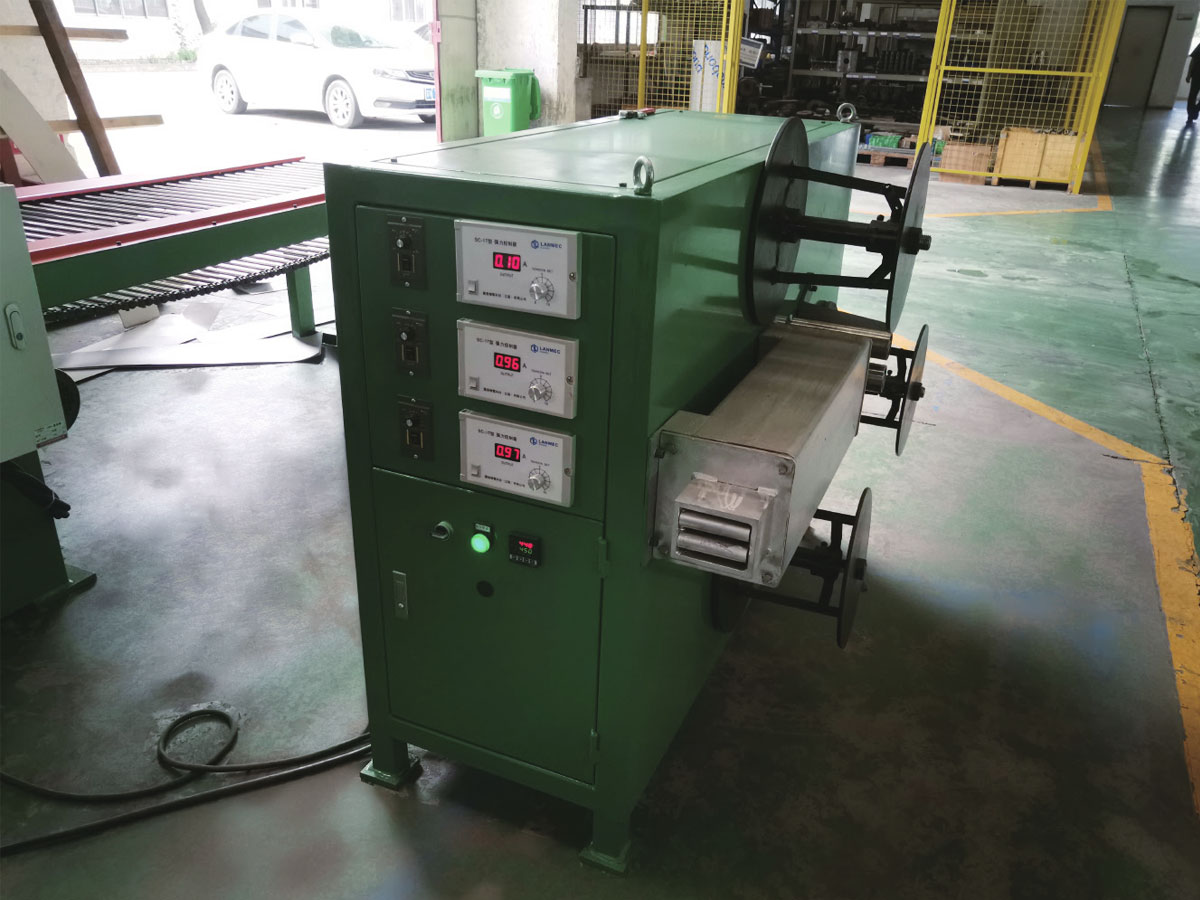
An online trimming and delamination machine is an automated inline processing system that continuously removes and separates the waste edge strips generated on both sides of composite board or laminated material during the forming or lamination process — without interrupting the main production line. The machine simultaneously trims the overhanging edge waste and separates (delaminates) the composite layers within that waste strip — typically splitting aluminum skin from polymer core — enabling 100% real-time recovery of high-value materials such as aluminum in their pure, recyclable form.
These machines are most commonly deployed in aluminum composite panel (ACP) production lines, aluminum foil and strip lamination lines, and cable manufacturing operations — anywhere that a composite edge strip is generated continuously and prompt removal and material recovery is commercially valuable.
Why Edge Strip Removal Cannot Wait for Offline Processing
The edge strips generated on composite board production lines are not merely cosmetic waste — they represent an active production risk if left in place:
- Surface damage risk: Unseparated edge strips — typically composed of overflowing adhesive film, excess metal edge seal, or projecting protective film edges — contact adjacent board surfaces in downstream rolling and rewinding operations, causing scratches and delamination that degrade the finished product.
- Equipment jamming: Edge strips that are not removed can fold, curl, and feed into drive rollers, nip points, and tension control mechanisms — causing equipment jams, unplanned stops, and potentially damaging expensive production machinery.
- Dimensional inaccuracy: Excess edge material affects the measured width of the finished product if not trimmed — causing parts to fall outside specification for downstream fabrication or customer requirements.
- Material value loss: Composite edge strips containing aluminum skins accumulate rapidly on a high-speed production line. Without inline recovery, this mixed material must be disposed of at low scrap value or processed inefficiently in a separate offline step — losing the value differential between pure aluminum and mixed composite scrap.
How an Online Trimming and Delamination Machine Works
Stage 1: Inline Edge Detection and Strip Feeding
As the composite board exits the lamination or forming station, sensors detect the board's edge position and width. The machine's trimming blades — typically rotating circular knives or guided knife assemblies — are automatically positioned to the trim line. The waste edge strip, freed from the main board, is guided into the delamination section by tensioned feed rollers that maintain a consistent strip tension synchronized with the main line speed.
Stage 2: Layer Separation (Delamination)
The composite edge strip — consisting of bonded layers such as aluminum skin, adhesive film, and polymer core — enters the delamination mechanism. Precision mechanical peeling rollers or pneumatic separation heads apply controlled peel force at the interface between layers, progressively separating the aluminum skin from the core material at the bond line. The peel angle, force, and speed are calibrated to achieve clean separation without tearing or contaminating either material stream.
Stage 3: Separated Material Collection
Separated aluminum skin and core material are directed to independent collection systems — typically winding reels, shredders, or conveyor chutes that feed into collection bins. The aluminum output is sufficiently pure (typically 99%+ aluminum purity) to be returned directly to the aluminum smelting furnace or sold as prime secondary aluminum without further processing. The polymer core material is separately collected for classification and recycling.
Key Advantages Over Offline Edge Strip Processing
| Factor | Online Machine | Offline Processing |
|---|---|---|
| Production line interruption | None — synchronized inline operation | Requires line stops or buffer accumulation |
| Aluminum recovery purity | High (direct furnace-grade quality) | Lower (mixed scrap if not separated) |
| Labor requirement | Minimal (PLC-controlled automation) | Higher (manual handling and sorting) |
| Surface protection | Immediate — no downstream scratch risk | Risk until manually removed |
| Processing speed | Matches line speed continuously | Batch-limited; creates inventory |
Industries and Applications
- Aluminum composite panel (ACP) production: The primary application — ACP panels have aluminum skins bonded to a polymer core. Edge strips from trimming operations are the most common waste stream requiring inline delamination for aluminum recovery.
- Aluminum foil and strip lamination: Edge strips from aluminum foil laminated to paper, film, or polymer backing are processed inline for foil skin recovery.
- Cable manufacturing: Aluminum-plastic composite tape used as cable shielding generates edge trim during production. Inline delamination recovers the aluminum shielding material cleanly from the polymer backing.
- Specialty composite processing: Any production line generating continuous composite edge waste — metal-plastic, metal-paper, or multi-layer film laminates — where layer separation and material value recovery are commercially viable.