grammy@cjm.com.cn

 English
 русский
 Español
 عربى
عربى
Content
- 1 Raw Material Inputs and Material Handling Requirements
- 2 Process Sequence and Machine Architecture
- 3 Operating Parameters Side by Side
- 4 Energy Consumption and Environmental Footprint
- 5 Product Output and Application Scope
- 6 Capital Investment, Footprint, and Staffing
- 7 Quality Control Priorities on Each Line
- 8 Choosing Between HPL and ACP Production Based on Market Strategy
High-Pressure Laminate (HPL) and Aluminum Composite Panel (ACP) production lines share almost no process overlap, despite both producing flat decorative panels used in construction and architecture. HPL lines rely on a batch or continuous paper impregnation and thermoset resin curing process, operating at pressures exceeding 5 MPa and temperatures above 120 degrees Celsius to chemically cross-link resin into a dense, rigid sheet. An Aluminum Composite Panel Production Line by contrast is a continuous metalworking and extrusion process that bonds two pre-coated aluminum skins to a lightweight polymer or mineral core through thermal lamination, with line speeds of 5 to 30 metres per minute and annual output ranging from 500,000 to several million square metres per line. The raw materials, energy demands, machine architectures, quality control points, capital requirements, and downstream applications of the two processes are fundamentally different, and understanding those differences is essential before choosing which production platform to invest in. The sections below compare both technologies across every major production dimension.
Raw Material Inputs and Material Handling Requirements
The starting materials define the entire machine architecture of each line, and they are almost entirely different between the two technologies.
HPL Raw Materials
HPL production depends on two categories of paper and two categories of thermosetting resin. The structural core is built from kraft paper, which is a thick, high-tensile brown paper impregnated with phenol-formaldehyde resin. According to the International Committee of the Decorative Laminates Industry (ICDLI), more than 60 percent of the finished HPL panel by weight consists of paper, with the remaining 30 to 40 percent being cured resin. The decorative surface layer is a thinner decor paper impregnated with melamine-formaldehyde resin, which forms the visible, wear-resistant face of the panel. These impregnated sheets must be dried to a precise residual moisture content, stacked in exact sequence, and pressed in large batch presses before they can be trimmed and inspected. Handling and conditioning paper stock at scale requires dedicated humidity-controlled storage, impregnation tanks, drying ovens, and sheet-counting automation, all of which sit upstream of the press itself.
ACP Raw Materials
ACP production starts with rolls of aluminum strip, typically 0.15 to 0.5 mm thick and 1,000 to 1,600 mm wide, and with polymer resin pellets for the core. The aluminum coils arrive pre-coated from a separate coil-coating process, already carrying primer, color coat, and optional PVDF or polyester topcoat. Core materials are polyethylene (LDPE or HDPE), fire-retardant mineral-filled compound, or in premium applications, aluminum honeycomb. Polyethylene pellets are fed directly into the extruder barrel on the production line itself, so no separate core preparation facility is needed in the basic PE-core configuration. The coil handling system must manage heavy metal reels, typically up to 5,000 kg per coil, which requires hydraulic uncoilers with tension control rather than the paper-roll handling systems used in HPL lines.
| Input Material | HPL Production Line | ACP Production Line |
| Structural core material | Phenol-formaldehyde impregnated kraft paper | Polyethylene or mineral-filled core, extruded on line |
| Surface material | Melamine-impregnated decor paper | Pre-coated aluminum coil, 0.15 to 0.5 mm thick |
| Bonding chemistry | Thermoset resin cured under heat and pressure | Hot-melt adhesive or co-extrusion bond under roller pressure |
| Typical coil or roll weight | Relatively light paper rolls | Aluminum coils up to 5,000 kg each |
| On-line core preparation | Not required, sheets are pre-impregnated | PE extruded on line in real time |
Process Sequence and Machine Architecture
How an HPL Production Line is Structured
The HPL process begins in the impregnation station, where continuous rolls of kraft and decor paper are drawn through resin baths and then through drying ovens to reach the specified resin content and residual moisture. Once impregnated, sheets are cut to press format, stacked in a precise layup sequence, and loaded into a multi-daylight press. The multi-daylight press is the defining machine of an HPL line: it can hold up to 45 platens, with each platen loaded with up to 24 individual laminate layers of approximately 0.5 to 1.9 mm each, all pressed simultaneously in a single batch. According to ICDLI technical guidance, the complete press cycle including the reverse cooling stage can take up to 100 minutes, making throughput per press cycle, rather than line speed, the main productivity variable. After pressing, panels are unloaded, release material is stripped, and each panel is trimmed to final dimensions and sanded on the back face to accept adhesive for downstream bonding.
A continuous-press variant (CPL) does exist, where layers are pressed between two heated steel belts at 25 to 50 bar and 150 to 170 degrees Celsius, with feed rates of 8 to 25 metres per minute. CPL typically produces thinner laminates in the range of 0.1 to 1.2 mm, while standard batch HPL can reach 25 mm for compact grades.
How an ACP Production Line is Structured
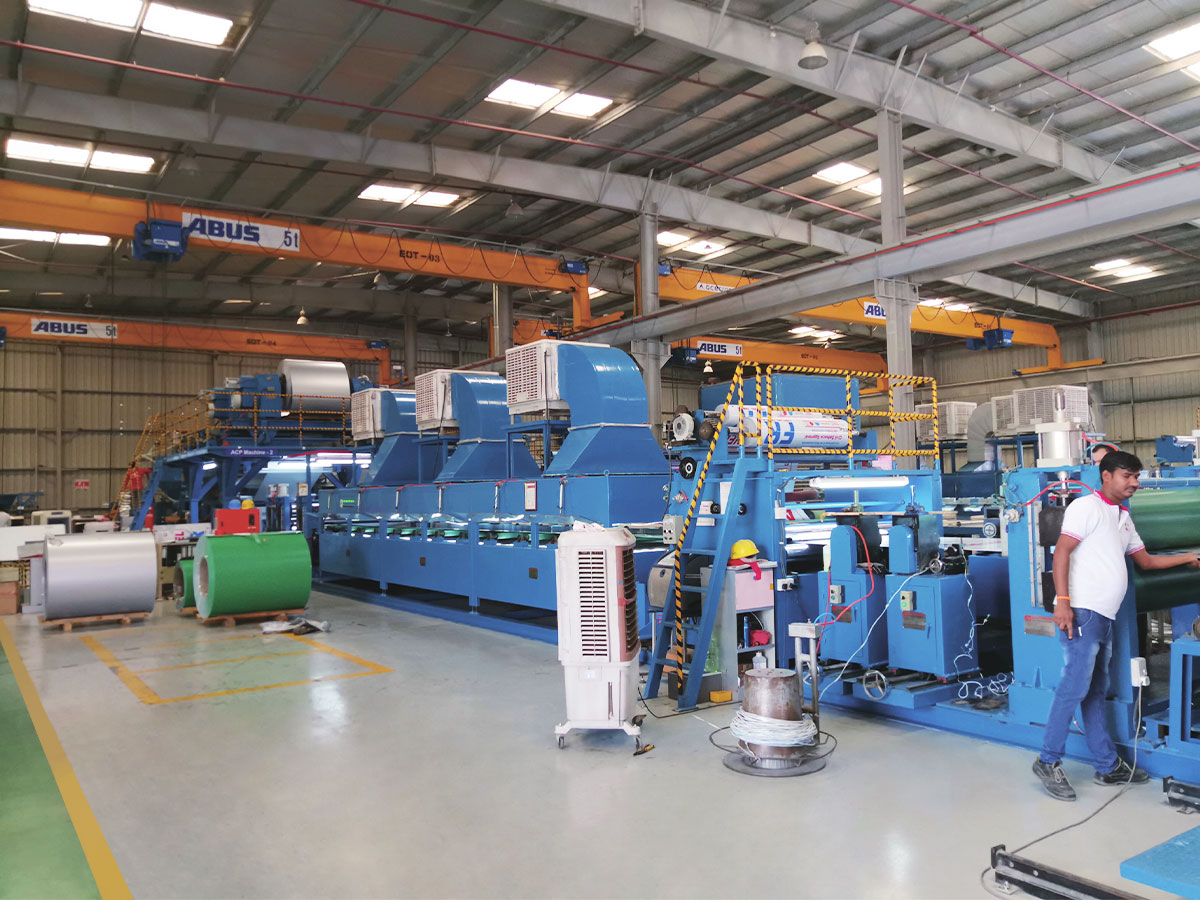
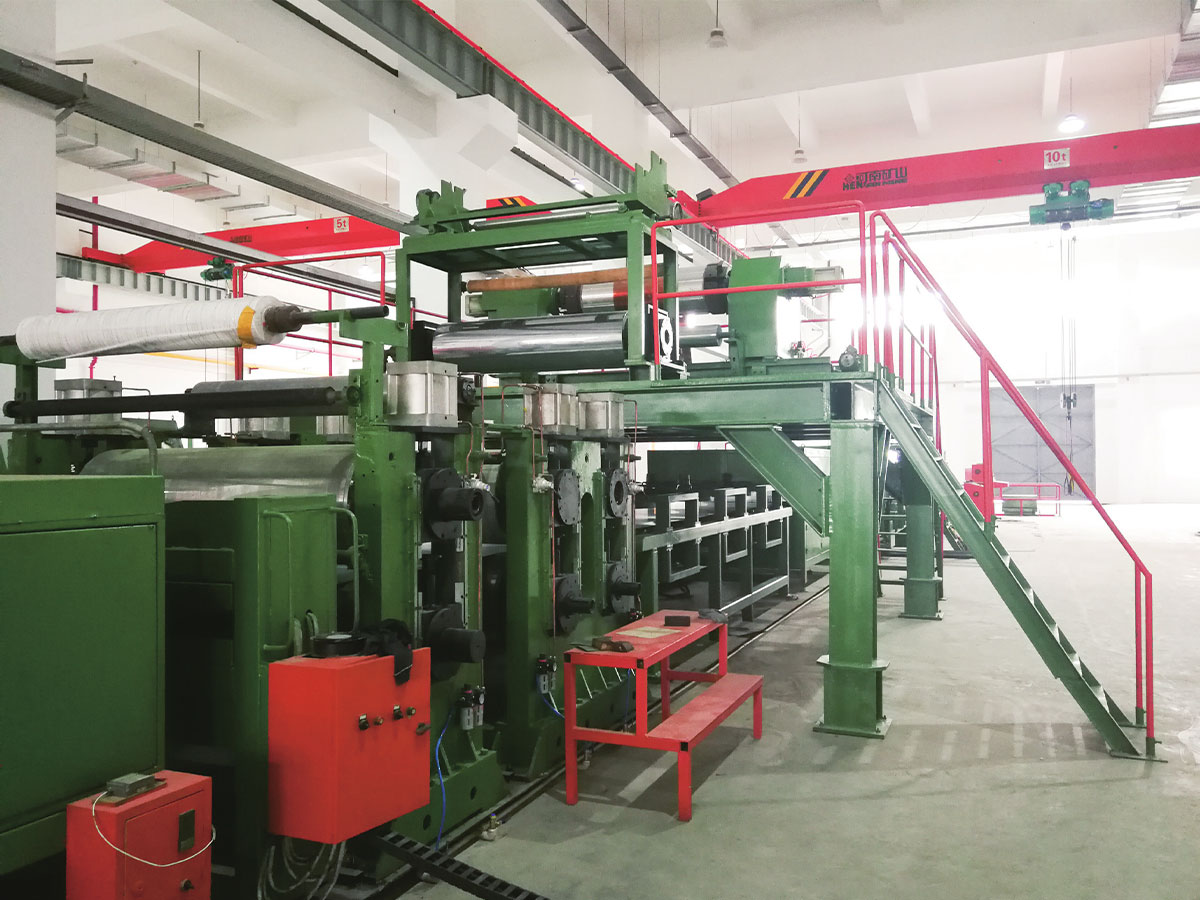
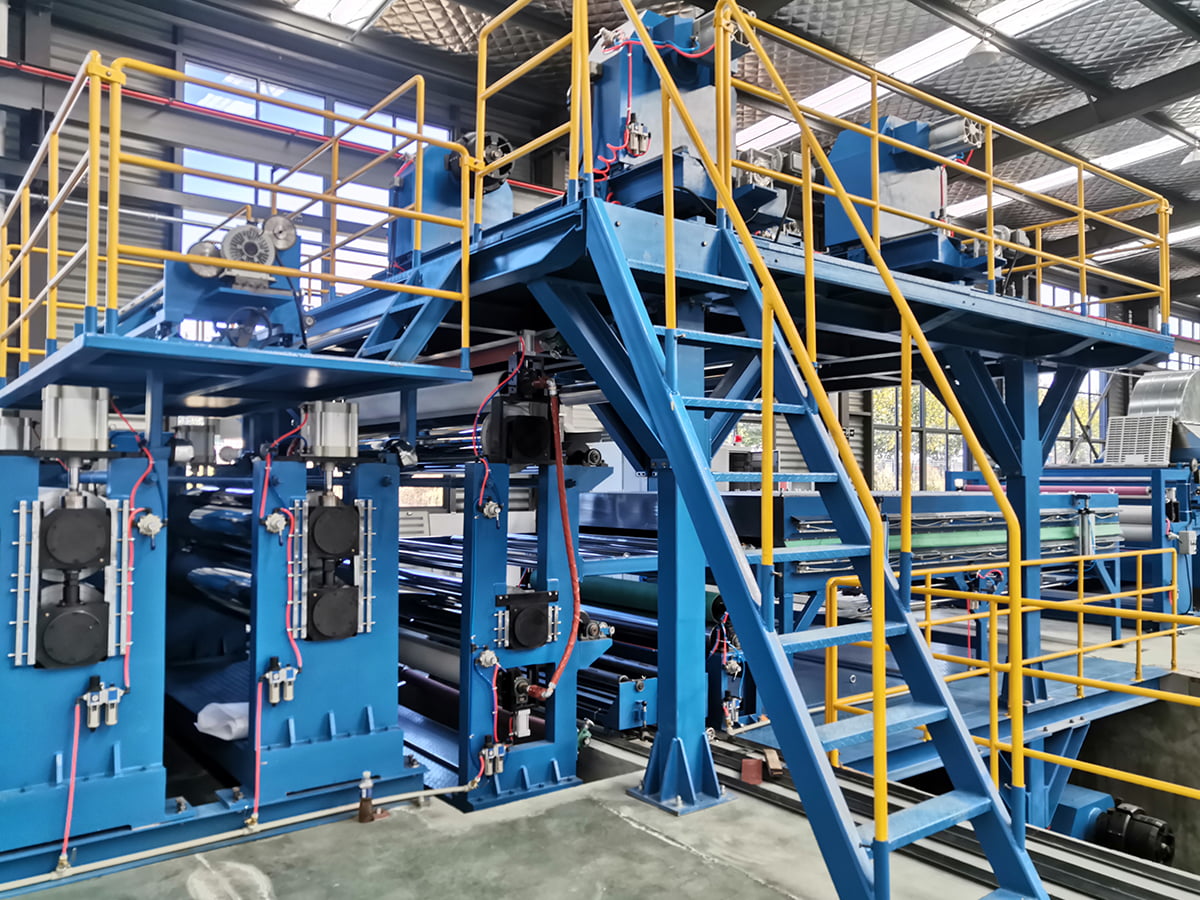
An ACP line operates as a fully integrated, continuous in-line process where raw material enters one end and finished cut-to-length panels emerge from the other without any batch interruption. The sequence of stations is as follows:
- Dual or multiple aluminum coil unwind stands with hydraulic tension control feed the upper and lower aluminum skins simultaneously
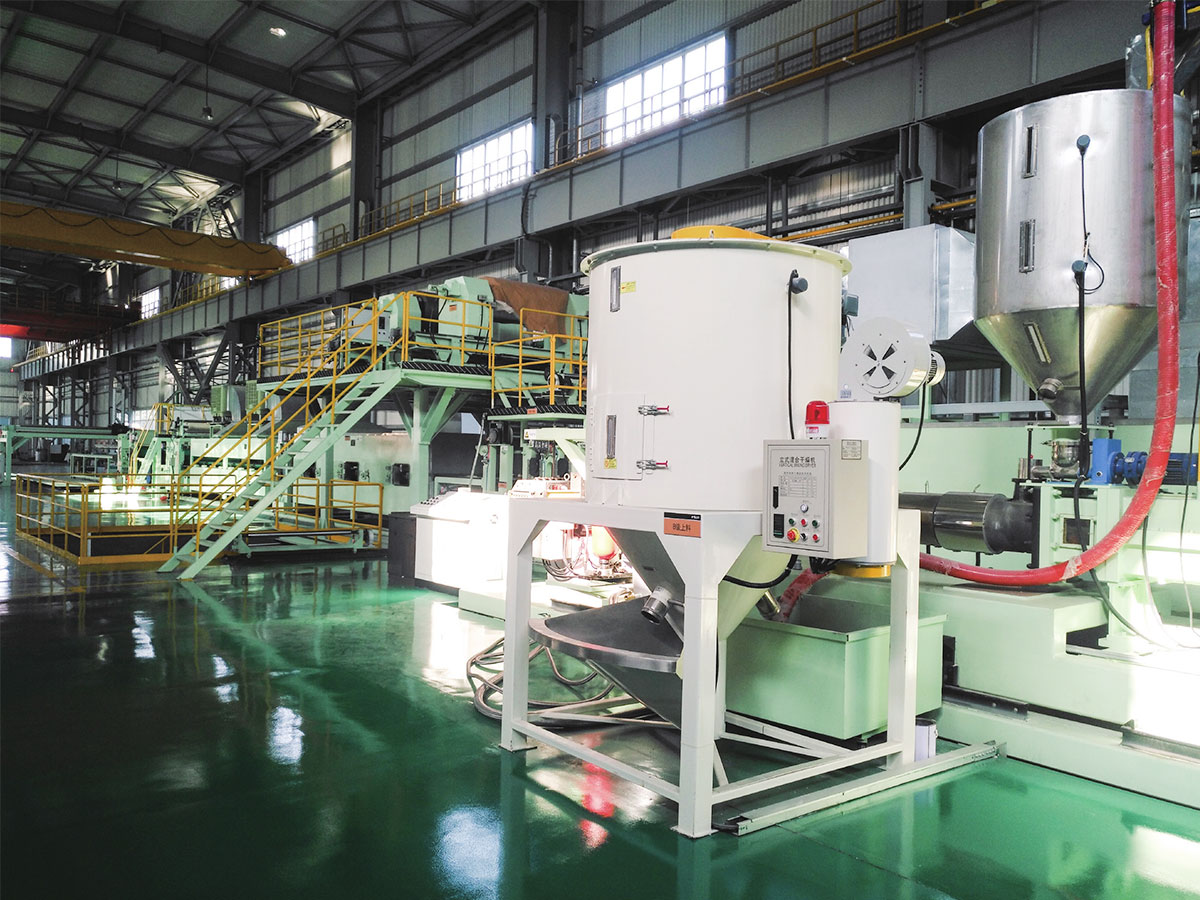
- The extruder barrel melts PE resin pellets and forces the melt through a T-die to form a continuous flat core sheet of controlled thickness
- A calender unit cold-presses the extruded core to the required thickness and surface flatness before it enters the composite lamination zone
- In the compound machine unit, the upper and lower aluminum coils are brought together with the core sheet at the correct temperature, then bonded through hot-press rolling and finish rolling
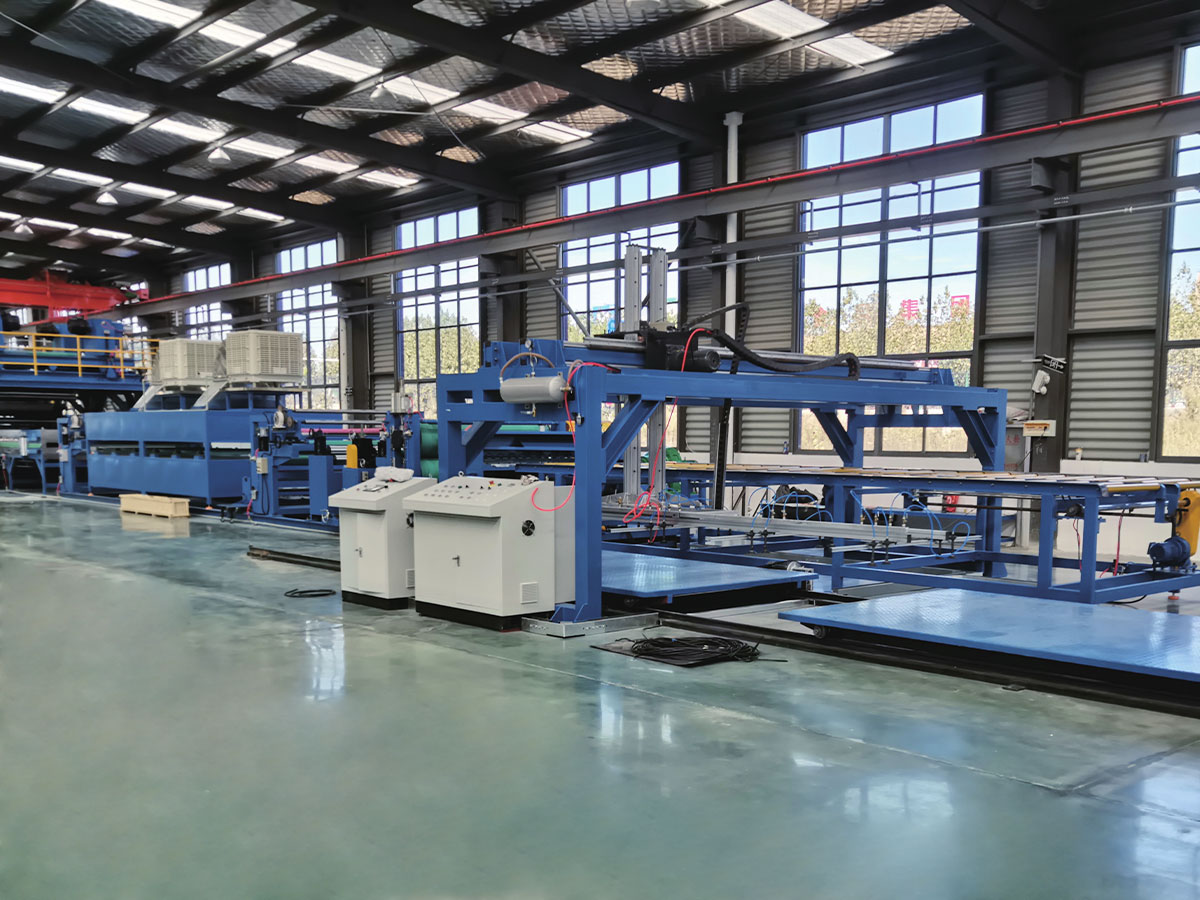
- The air-cooled cooling unit reduces panel temperature in a controlled curve to stabilize the bond and prepare the surface for protective film application
- The protective film laminator applies a PE carrier film to both faces to protect the coating during downstream cutting, routing, and installation
- A cut-to-length unit with a flying shear cuts panels to the specified length on the fly, allowing continuous line operation without stopping
The entire sequence from coil to cut panel runs continuously, with PLC systems monitoring temperature, roller pressure, and tension at each station. Modern automated ACP systems achieve defect rates below 1 percent under normal operating conditions (source: industry technical review, 2024).
Operating Parameters Side by Side
The specific process numbers for pressure, temperature, speed, and output are perhaps the clearest illustration of how different these two technologies are from an engineering standpoint.
| Parameter | HPL (Batch Press) | HPL (Continuous CPL) | ACP Production Line |
| Operating pressure | 70 to 80 bar (5 to 8 MPa), above 1,000 psi | 25 to 50 bar | Roller press, no hydraulic batch pressure |
| Operating temperature | 120 to 150 degrees Celsius | 150 to 170 degrees Celsius | Core extrusion at polymer melt temp, lamination roller at controlled lower temp |
| Cycle or line speed | Up to 100 minutes per press cycle | 8 to 25 metres per minute | 5 to 30 metres per minute, up to 10 m/min for high-fill FR grades |
| Panel width range | Up to 1,300 mm typical | Up to 1,300 mm | 800 to 1,600 mm, depending on model |
| Panel thickness range | 0.8 mm to 25 mm | 0.1 mm to 1.2 mm | 1 mm to 8 mm total panel thickness |
| Output process type | Batch (multi-daylight) or continuous belt | Continuous belt | Fully continuous, in-line extrusion and lamination |
Sources: ICDLI Technical Leaflet on HPL Manufacturing; pro-hpl.org product data sheet; industry ACP machine specifications from published manufacturer technical documents.
Energy Consumption and Environmental Footprint
Energy is one of the most significant variable costs on either line, and the two technologies consume it very differently.
HPL batch presses are thermally intensive because the entire press load, which may include dozens of thick platens and hundreds of kilograms of steel caul plates, must be heated to curing temperature and then cooled under pressure in every cycle. The press cycle itself can run up to 100 minutes, during which the press is drawing heating energy continuously. Resin impregnation also requires solvent management or water vapor removal in drying ovens, adding to the overall energy budget. Fire safety for resin vapors and formaldehyde emissions management are standard engineering requirements on HPL lines, adding ventilation and treatment equipment to the facility footprint.
ACP lines consume energy primarily in the extruder barrel, which runs continuously but converts electrical energy directly to polymer melt heat with relatively little waste. The lamination rollers use process heat from the aluminum and core rather than requiring a separate thermal chamber. Cooling is done by air convection, which is lower in energy intensity than the pressure-cooling cycle of an HPL batch press. However, ACP lines involve aluminum, which is energy-intensive to produce upstream, and PVDF or polyester coatings on the aluminum coil involve VOC management in the coil-coating process that sits upstream of the ACP line itself.
Key Environmental Comparison Points
- HPL lines require formaldehyde emission management systems for phenol and melamine resin processes, regulated under occupational health and environmental standards in most markets
- ACP lines generate aluminum trim scrap, which is generally recyclable but requires a collection and segregation system to recover value
- PE core waste from ACP extrusion startups and edge trim can be re-pelletized for reuse in the core compound if a granulation system is included
- Modern ACP lines can switch from standard PE core to fire-retardant mineral-filled core on the same machine by adjusting extruder parameters, avoiding a full separate production line for FR grades
Product Output and Application Scope
The panels produced by the two lines target different end markets, which directly shapes the production requirements and quality control priorities of each process.
What HPL Panels Are Used For
HPL sheets are used primarily as surface cladding materials bonded to a substrate such as MDF, particleboard, or plywood. Their density exceeds 1.35 g per cubic centimetre after curing (source: ICDLI pro-hpl.org), and their primary value is surface hardness, scratch resistance, and decorative pattern fidelity. Typical applications include kitchen furniture, countertops, laboratory surfaces, commercial flooring, exterior facade cladding in compact HPL form, and wall panelling in high-traffic public spaces. Compact HPL at 4 to 25 mm thickness is self-supporting and can be used structurally, but standard thin HPL at 0.8 to 3 mm always needs a substrate. HPL panels produced with PVDF or special overlay systems can achieve 15 to 25 years of exterior service life in facade applications.
What ACP Panels Are Used For
ACP panels are lightweight, self-supporting composite sheets that do not need a substrate for most applications. At a standard 4 mm total thickness with 0.3 mm aluminum skins and a PE core, an ACP panel weighs roughly 5 to 7 kg per square metre, far less than equivalent solid aluminum or compact HPL. An Aluminum Composite Panel Production Line producing panels with PVDF coating can deliver exterior panels rated for 15 to 25 years of service (source: industry technical review, 2024), and interior PE-coated grades typically carry a 10-year or longer service expectation. Applications include curtain wall cladding, shopfront fascias, architectural signage, interior ceiling systems, column covers, and exhibition structures. The ability of ACP to be easily cut, routered, bent, and roll-formed on site is a major advantage over HPL compact in this category.
| Attribute | HPL Panel | ACP Panel |
| Typical panel weight | High, driven by resin-paper density above 1.35 g/cm3 | 5 to 7 kg per square metre at 4 mm total thickness |
| Self-supporting | Only compact HPL above 4 mm; thin HPL needs substrate | Yes, at standard 3 to 6 mm thicknesses |
| Surface finish options | Wide range of paper-printed decors, textures, solid colors | Aluminum-based, PVDF, polyester, brushed, anodized look |
| Primary outdoor application | Compact HPL facade panels, window frames | Curtain wall cladding, signage, architectural facades |
| Field fabrication | Can be cut and sanded; limited forming | Cut, routed, bent, roll-formed on site |
| Fire performance upgrade | Requires dedicated FR-core formulation in press | Switch extruder to mineral-filled core on same ACP line |
Capital Investment, Footprint, and Staffing
The investment profile of the two production lines differs substantially, and these differences carry through to facility design, staffing, and payback horizon.
An HPL batch press line requires a large floor area to accommodate the multi-daylight press structure, which can be several metres tall and may occupy 400 to 800 square metres of press hall alone when handling equipment, cooling racks, and sheet stacking areas are included. Impregnation lines add further length upstream, and the combination means a complete HPL facility from impregnation to finished panel typically requires a floor area measured in thousands of square metres. The multi-daylight press itself is a precision hydraulic structure that requires foundation engineering and specialist commissioning. Staffing requirements include press operators, paper handling technicians, and chemistry management personnel for the resin systems.
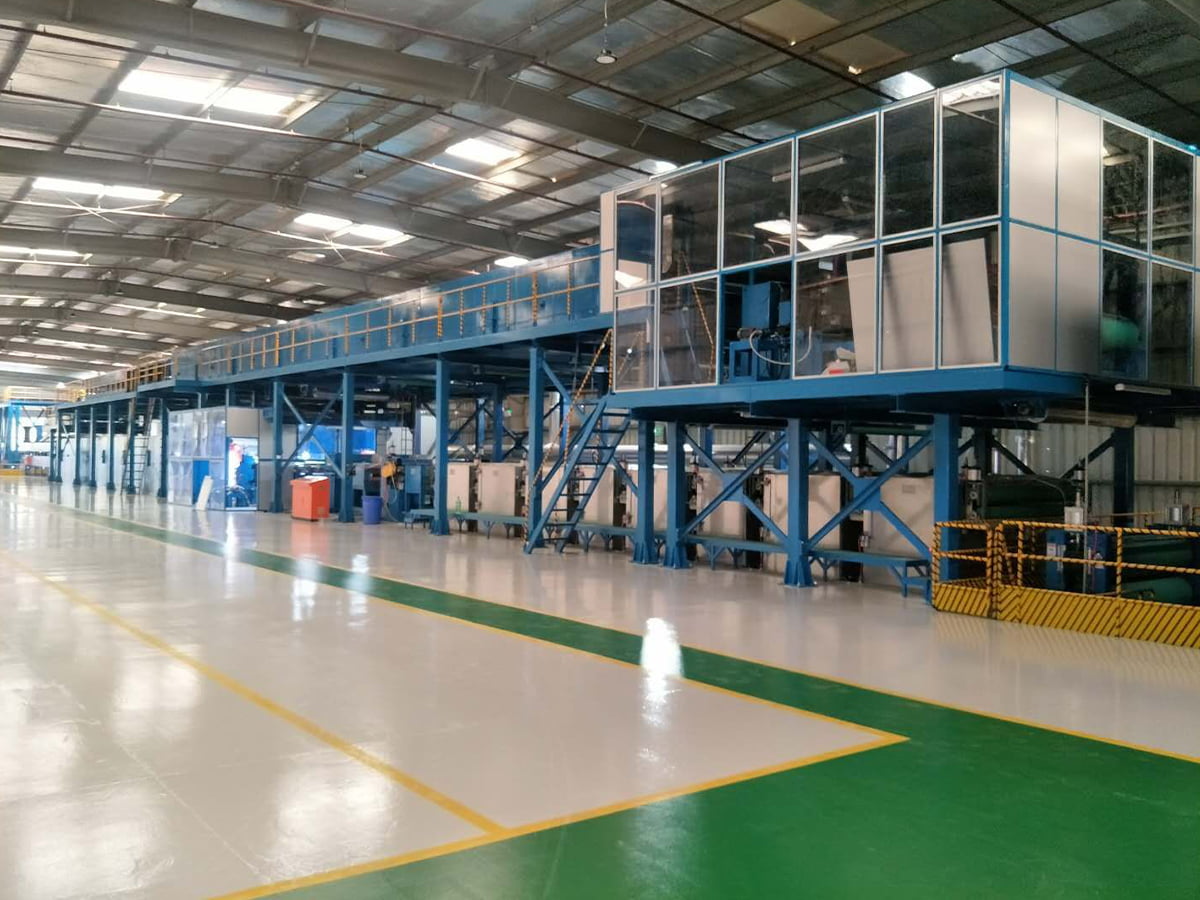
An ACP production line is long but narrow. A full line including uncoilers, extruder, calender, compound press, cooling section, film laminator, and flying shear can span 40 to 50 metres in length but occupies a relatively contained footprint in width. The line is highly automated, with PLC control covering all key process variables, and typically operates with a smaller crew than a fully staffed HPL press room. Line change-overs between panel widths or core types are managed through parameter adjustment rather than physical die changes in most configurations, which supports product flexibility. Output capacity for a single ACP line can reach 500,000 to several million square metres of finished panel per year depending on line speed and shift pattern (source: published ACP line technical literature, 2024).
Quality Control Priorities on Each Line
The failure modes of the two panel types are different, which means the quality control programs are structured around different inspection priorities.
HPL Quality Control Focus Areas
- Resin content and residual moisture in impregnated paper, since incorrect values at this stage lead to surface blistering or weak inter-layer bonding after pressing
- Press temperature profile and dwell time, which determine whether the thermoset resin fully cures to the required density and surface hardness
- Surface finish uniformity, checked against gloss, texture, and color standards under standardized lighting
- Delamination resistance, tested by cross-cut adhesion or peel tests according to EN 438 or ISO 4586
ACP Quality Control Focus Areas
- Bond strength between aluminum skin and core, measured by 180-degree peel test, since delamination in service is the primary structural failure mode of ACP
- Panel flatness and bow, since uneven cooling or pressure across the width can produce oil-canning or waviness that is visible on installed facades
- Core thickness consistency, monitored in real time through the T-die gap control system on the extruder
- Coating adhesion and color consistency on the aluminum skins, typically measured against the incoming coil test certificate and spot-checked during production
- Fire performance verification for mineral-core FR panels, requiring batch sample testing against the relevant national or international fire classification standard
Choosing Between HPL and ACP Production Based on Market Strategy
A manufacturer entering either market needs to match the production platform to a clear customer segment, since the two products rarely compete directly for the same specification. HPL dominates in furniture, laboratory, and interior high-wear applications where surface hardness, chemical resistance, and decor variety are the primary purchase drivers. ACP dominates in architectural cladding, signage, and lightweight facade applications where weight, field fabricability, large-panel availability, and long exterior coating life drive the specification. A facility investing in an Aluminum Composite Panel Production Line is positioning for the construction and architecture sector, where the global ACP market has been projected to exceed USD 10 billion in value by 2028 (source: market review cited in industry technical publications, 2024), driven by urbanization and demand for curtain wall and facade systems in commercial construction. An HPL line serves a more fragmented but deeply established market in furniture and surfaces, where relationships with panel distributors and furniture manufacturers are the primary commercial channel. Both lines reward high utilization and consistent product quality, but the ACP line's continuous operation model and lower per-cycle downtime generally translate to a more predictable output schedule once the line is commissioned and stabilized.