grammy@cjm.com.cn

 English
 русский
 Español
 عربى
عربى
Content
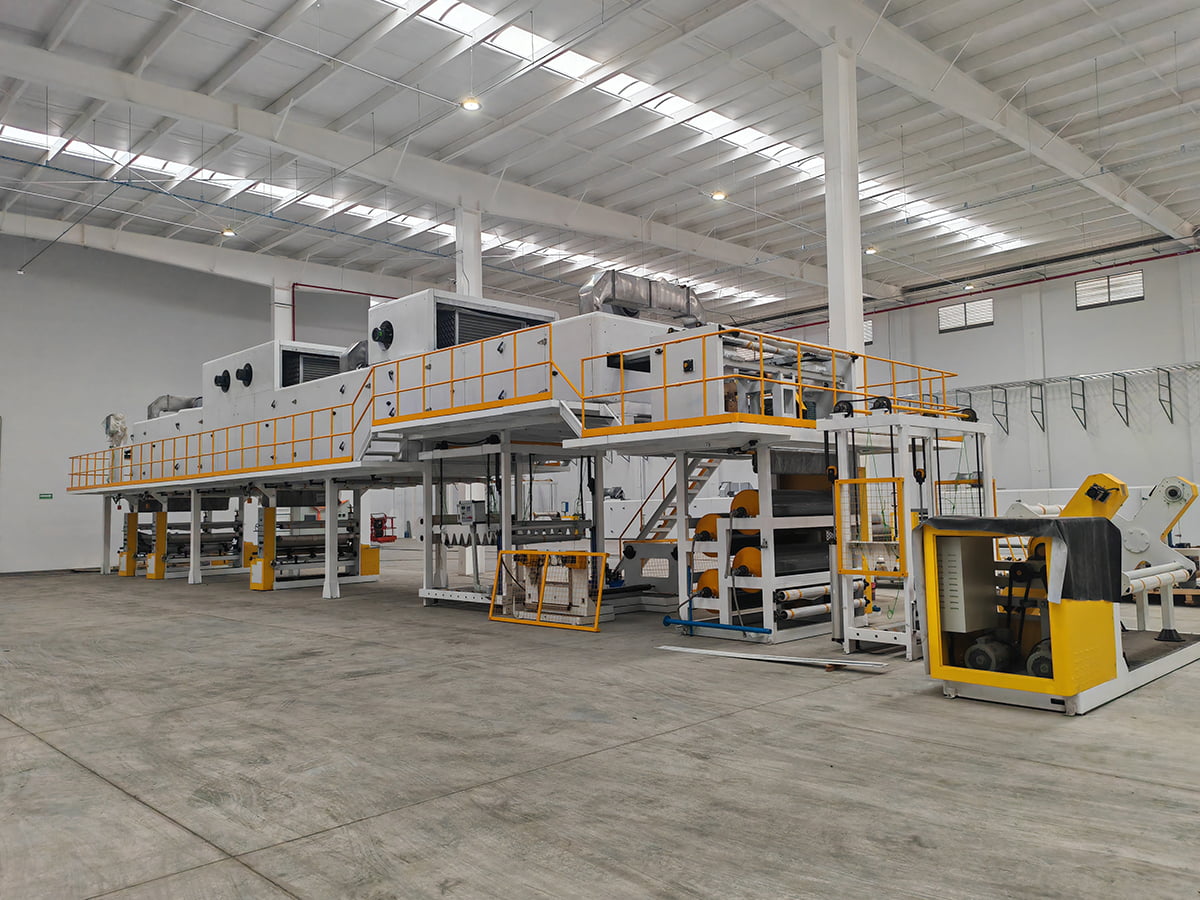
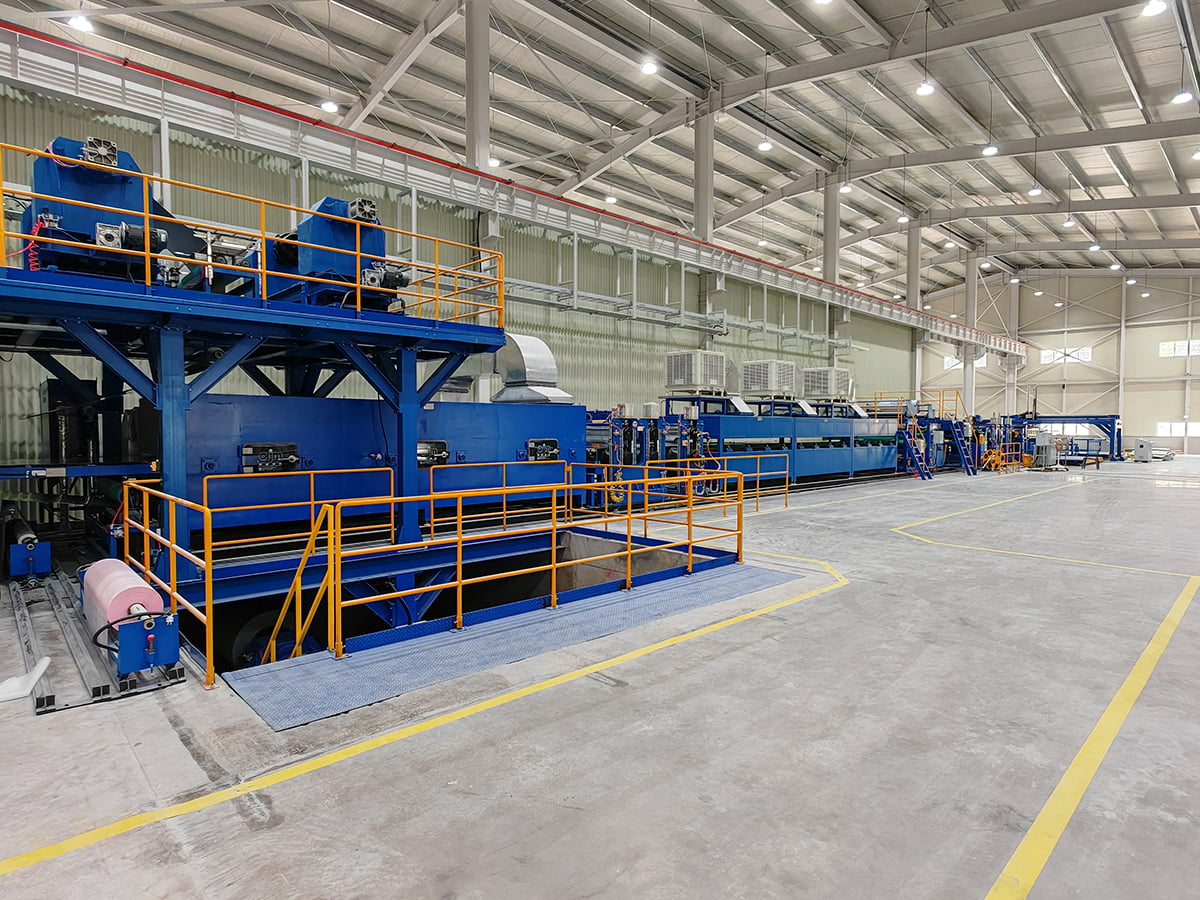
A coil rerolling production line is a specialized industrial system designed to rewind, reorganize, slit, and inspect coiled materials — whether metal, plastic film, paper, textiles, or composites — to produce finished coils that meet precise dimensional, surface quality, and winding geometry specifications. The line takes a large-format "mother coil" as input and converts it into one or more finished rolls with accurate width, diameter, length, and internal tension profiles suitable for downstream fabrication or direct application.
Unlike a rolling mill that reduces material thickness, a rerolling line performs post-processing and finishing operations: correcting winding defects, slitting to width, trimming edges, removing surface defects, and producing rolls with the consistent mechanical properties that downstream converting or stamping operations require.
Core Functions of a Coil Rerolling Line
Rewinding and Winding Quality Improvement
The primary function is rewinding — transferring material from the payoff reel to the take-up reel while applying controlled tension throughout. A precision tension control system maintains consistent taper tension (gradually reducing tension from core to outer wrap) to produce coils with uniform hardness and tightness from inside to outside. Poorly wound coils — those with loose wraps, telescoping, or coil set — cause feeding problems in downstream stamping, slitting, or coating operations. Rerolling corrects these defects systematically.
Modern lines support multiple winding methods — center winding, surface winding, or gap winding — selectable based on material characteristics. Center winding applies torque directly to the core shaft and is standard for rigid materials like metal strip. Surface winding drives the roll from its outer surface and is preferred for delicate or easily deformable materials like thin films.
Slitting to Width Specification
A key value-adding operation on most rerolling lines is slitting — dividing a wide mother coil into multiple narrower strips simultaneously. The slitting station uses circular knife sets (rotary shear slitters) for clean straight cuts on metal, or razor blade or score-and-break stations for film and paper. Width tolerances achievable on precision slitting systems are typically ±0.1 mm to ±0.5 mm, depending on material and knife condition. Each slit strip is simultaneously rewound onto individual mandrels at the exit.
Surface Inspection and Defect Detection
As the material passes through the line at full process speed, surface inspection systems — optical cameras, laser profilometers, or ultrasonic sensors depending on material type — scan both faces of the strip continuously. Identified defect zones are marked, and the line can be programmed to automatically cut and separate defective sections, producing only prime-quality coils for dispatch. This inline quality gate eliminates the manual inspection step that would otherwise be required after rewinding.
Edge Trimming
Edge trimming stations remove the outer edge bands of the mother coil — areas that often carry mill-induced edge wave, burr, or thickness variation — producing a coil with clean, straight, burr-free edges. This is particularly important for materials destined for high-precision stamping or forming operations where edge condition directly affects tool life and part quality.
Typical Line Configuration and Equipment Sequence
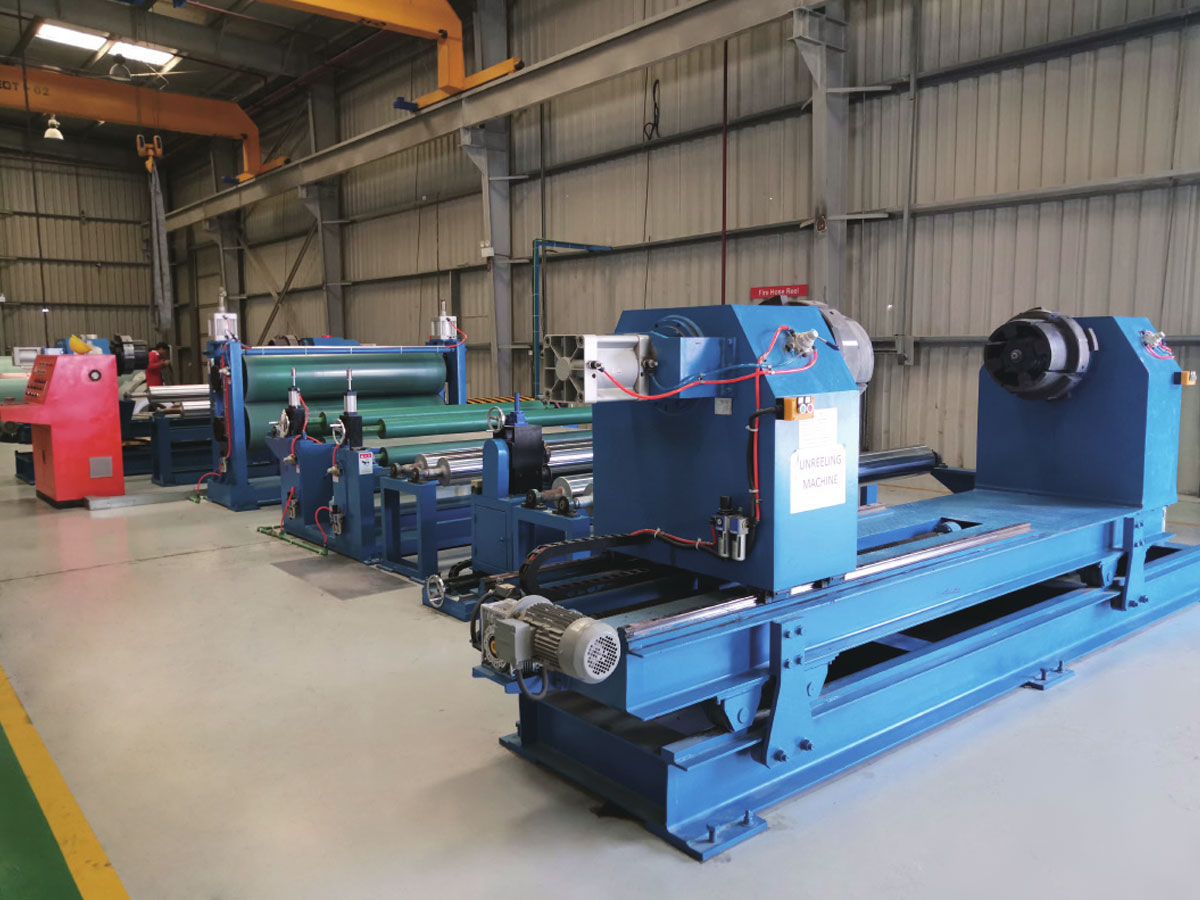
- Payoff reel (decoiler): Holds and unwinds the input mother coil at controlled torque. Mandrel expansion locks the coil; a pneumatic brake controls back-tension.
- Straightener / flattener: A multi-roll leveler removes coil set and corrects longitudinal curvature before the strip enters the slitting or inspection section.
- Edge guide and centering system: Steers the strip laterally to maintain correct alignment through the slitting station.
- Slitting station: Circular knife arbor assembly with upper and lower knife sets. Spacers between knives define slit widths. Scrap chopper handles trimmed edge material.
- Separator / spreader: Separates individual slit strips laterally to prevent rewound coils from contacting each other on the mandrel.
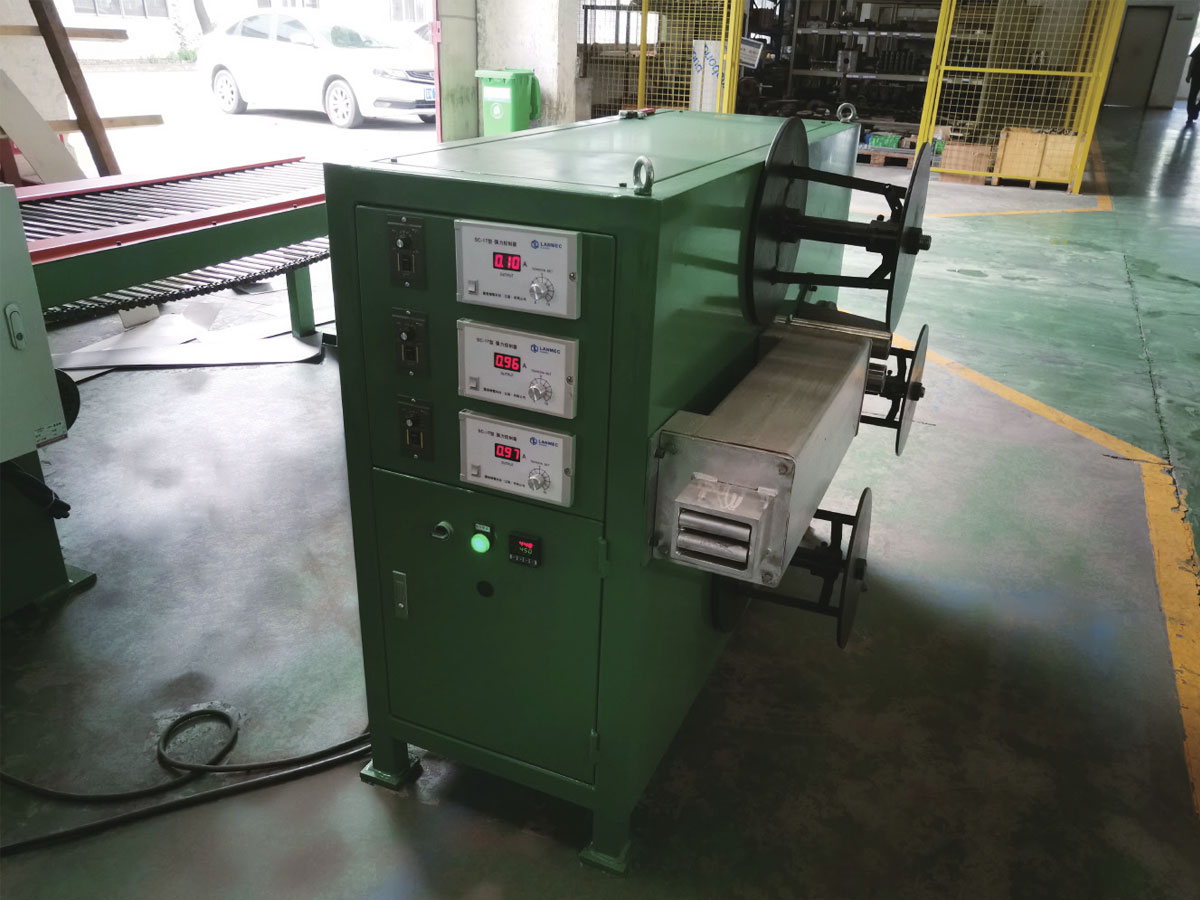
- Tension measurement and control: Load cells at payoff and take-up measure actual tension; a closed-loop drive system adjusts motor torque to maintain setpoints.
- Take-up recoiler: Winds the finished strip onto cores at controlled taper tension. Automatic unloading arms remove finished coils for strapping and packaging.
Materials Processed on Coil Rerolling Lines
| Material Category | Typical Substrates | Key Downstream Applications |
|---|---|---|
| Metals | Steel, aluminum, copper, brass, stainless steel | Stamping, roll forming, coil coating, tube welding |
| Plastic films | PET, PE, PP, PVC, CPP, OPP | Flexible packaging, lamination, printing |
| Paper and board | Kraft, release liner, coated paper, tissue | Printing, label production, corrugating |
| Composites | Laminated foils, coated fabrics, nonwovens | Automotive interiors, medical packaging, insulation |
Automation Features That Drive Production Efficiency
Modern coil rerolling lines are highly automated to minimize operator intervention, reduce setup time, and maximize uptime:
- Automatic threading: The strip leader is automatically fed from decoiler through the slitter to the recoiler mandrel without manual handling — critical for thin or sharp-edged materials.
- Recipe-based setup: Slit widths, target tensions, winding diameters, and speed profiles are stored as recipes in the PLC. Changeover to a new product specification requires only recipe selection and tooling change, not parameter re-entry.
- Automatic length and diameter measurement: Encoders and diameter sensors track produced coil parameters in real time, triggering automatic cuts when target length or weight is reached.
- Automatic coil unloading and strapping: Finished coils are transferred from the mandrel by automated unloading arms and conveyed to strapping and labeling stations without manual lifting.
- Integrated quality data logging: Tension profiles, speed logs, defect positions, and dimensional data are recorded per coil and linked to the finished coil's identity label for full traceability.
When a Coil Rerolling Line Is Necessary
A rerolling line becomes essential in any of the following operational situations:
- Width conversion: When the purchased or produced coil width does not match the width required for downstream tooling or processing — the most common driver for slitting line investment.
- Winding quality correction: When coils from the mill or supplier have telescoping, loose outer wraps, or excessive coil set that causes feeding problems in downstream equipment.
- Surface quality sorting: When full inspection of coil surface is required before material enters a high-value production process — separating prime from non-prime material inline.
- Length and weight standardization: When customer orders require specific coil weights or lengths rather than full mill coils — the rerolling line cuts and rewinds to exact specification.