grammy@cjm.com.cn

 English
 русский
 Español
 عربى
عربى
Content
- 1 What Is an Aluminum Composite Panel and Why Manufacture It on a Dedicated Production Line?
- 2 The Complete Process Sequence of an ACP Production Line
- 2.1 Stage 1 — Aluminum Coil Unwinding
- 2.2 Stage 2 — Surface Cleaning and Chemical Pre-Treatment
- 2.3 Stage 3 — Adhesive Application
- 2.4 Stage 4 — Core Material Preparation and Feeding
- 2.5 Stage 5 — Lamination (Bonding Press)
- 2.6 Stage 6 — Cooling and Panel Consolidation
- 2.7 Stage 7 — Online Quality Inspection
- 2.8 Stage 8 — Cutting, Edge Trimming, and Panel Finishing
- 3 Core Material Types and Their Impact on Production Line Configuration
- 4 Key Technical Specifications of an ACP Production Line
- 5 Automation and Control Systems in Modern ACP Lines
- 6 Quality Standards and Certifications That ACP Production Lines Must Support
- 7 Market Applications of ACP Produced on Dedicated Production Lines
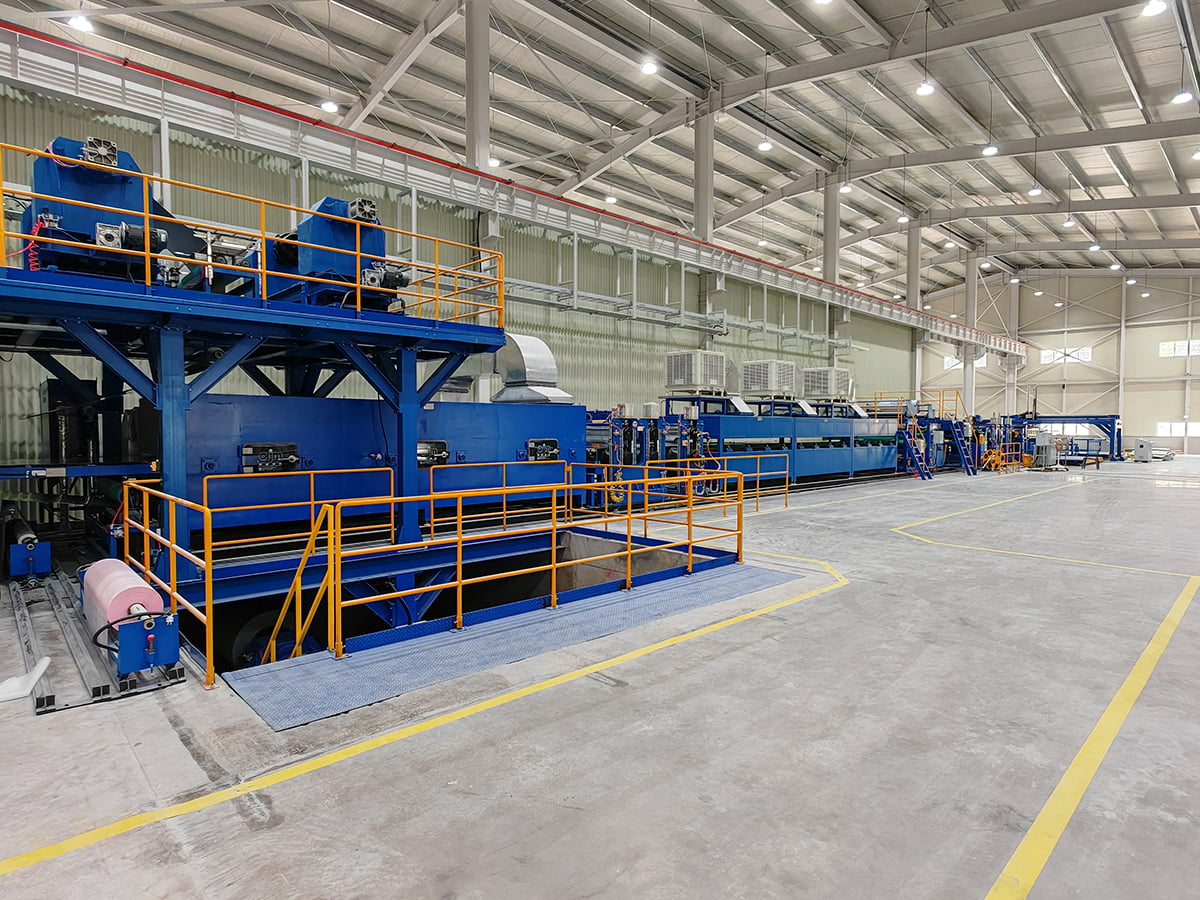
An aluminum composite panel (ACP) production line is a large-scale, fully automated manufacturing system specifically engineered to continuously produce aluminum composite panels — flat sheets consisting of two thin aluminum skins permanently bonded to a lightweight non-aluminum core material such as polyethylene (PE), fire-retardant mineral-filled core, or aluminum honeycomb. The production line integrates mechanical engineering, materials science, thermal processing, chemical surface treatment, and precision automated control into a single continuous process that transforms raw coiled aluminum and core materials into finished, cut-to-size composite panels ready for downstream fabrication and installation. The system is designed for large-scale continuous output, typically producing panel widths of 1,000 mm to 2,000 mm at line speeds of 5 to 30 metres per minute depending on the process and core material, delivering consistent, high-quality panels that meet international building material and architectural cladding standards.
What Is an Aluminum Composite Panel and Why Manufacture It on a Dedicated Production Line?
An aluminum composite panel is a three-layer sandwich structure: two aluminum alloy face sheets (typically 0.2 mm to 0.5 mm thick) permanently bonded to a core layer that provides the panel's overall thickness (commonly 3 mm, 4 mm, or 6 mm total panel thickness) and determines its mechanical, thermal, and fire performance characteristics. The bonding between the face sheets and the core must be permanent, uniform, and capable of withstanding the environmental stresses the panel will encounter throughout its service life — which in architectural cladding applications may span 20 to 40 years of exposure to UV radiation, thermal cycling, rain, wind loading, and atmospheric pollution.
Achieving this quality of bonding and dimensional consistency across panel widths exceeding 1.5 metres and production lengths of hundreds of metres per shift is impossible through batch manufacturing methods. A dedicated continuous production line is the only practical way to:
- Ensure that adhesive application, bonding pressure, and curing temperature are precisely and uniformly controlled across the full panel width without variation.
- Achieve the surface preparation quality required for permanent adhesion between the pre-coated aluminum skin and the core adhesive system.
- Produce panels at volumes sufficient to meet market demand — a single ACP production line can generate 500,000 to several million square metres of finished panel per year depending on line speed and shift pattern.
- Laminate thin, expensive aluminum face sheets onto cost-effective core materials, delivering the performance properties of aluminum at significantly lower material cost than solid aluminum sheet of equivalent bending stiffness.
The Complete Process Sequence of an ACP Production Line
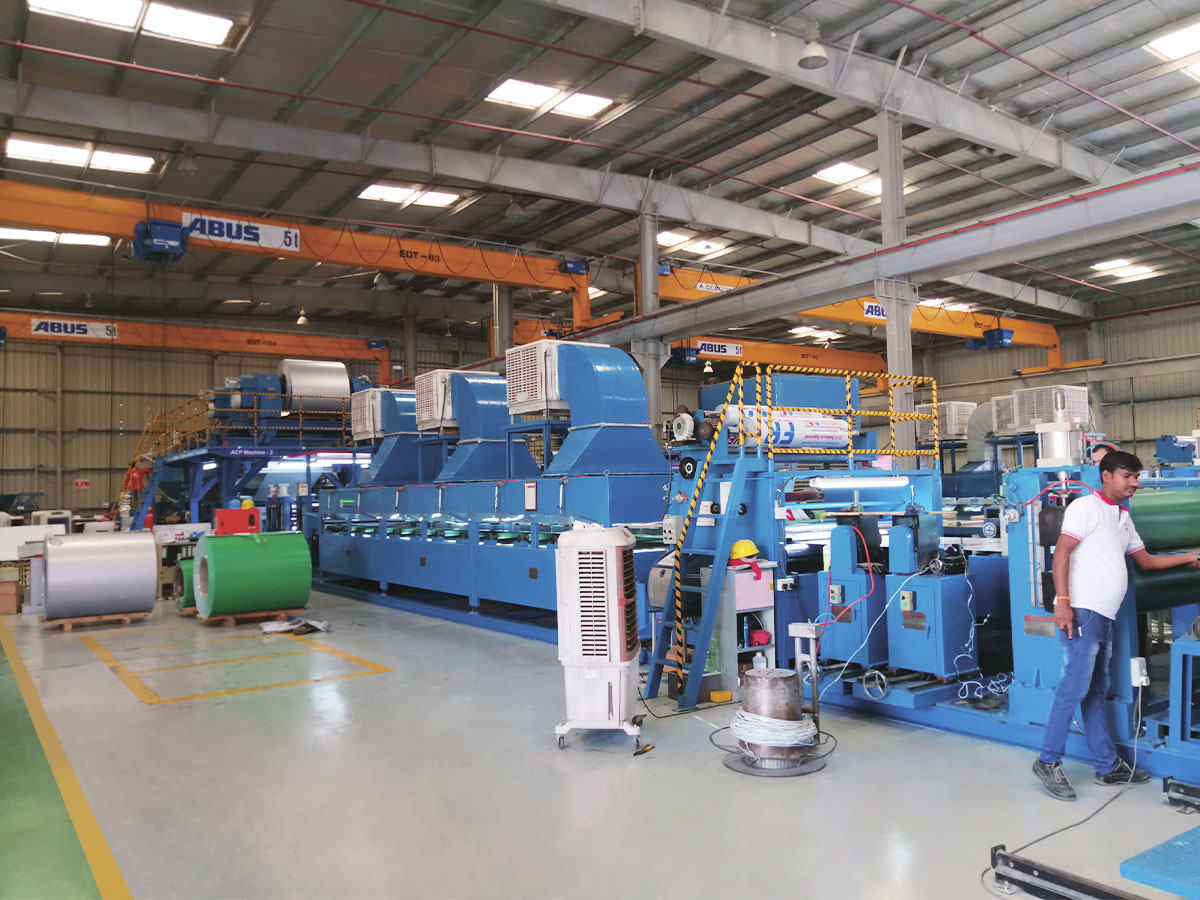
A complete aluminum composite panel production line is composed of a sequence of processing stations arranged in-line, each performing a specific function that builds toward the finished panel. The material flow is continuous — aluminum coils and core material enter at the beginning of the line, and cut, finished panels emerge at the end. The overall process sequence is as follows:
Stage 1 — Aluminum Coil Unwinding
The production line begins with dual or multiple unwind stands that hold coils of pre-painted or pre-coated aluminum strip. The unwind system is typically equipped with hydraulic coil loading arms that lift coils weighing 3 to 8 tonnes onto the mandrel without manual handling. A coil joining station (stitcher or welder) allows the tail end of one coil to be joined to the leading end of the next, enabling continuous line operation without stopping to load new coils. A tension control system — typically using dancer rolls or load cell feedback — maintains precise and constant tension in the aluminum strip as it is pulled from the coil, preventing wrinkles, lateral wander, or strip telescoping that would cause surface defects or width variation in the finished panel.
Stage 2 — Surface Cleaning and Chemical Pre-Treatment
The pre-painted aluminum strip's inner surface (the surface that will be bonded to the core) must be chemically cleaned and activated before adhesive application to achieve the required bond strength and long-term adhesion durability. The cleaning and pre-treatment section typically includes:
- Degreasing: Alkaline or solvent-based cleaning removes rolling oils, release agents, and organic contamination from the strip surface. Residual oil films as thin as a few nanometres can reduce bond strength by orders of magnitude, making thorough degreasing critical to product integrity.
- Rinsing: Multiple rinse stages with deionised or controlled-quality water remove cleaning agent residues that could otherwise contaminate the adhesive system.
- Chemical conversion coating or chromating: A thin chemical conversion coating (chromate conversion or chromate-free alternative) is applied to the cleaned aluminum surface, creating a chemically active surface with maximised adhesive receptivity. This treatment also provides additional corrosion protection at the bond interface.
- Drying: The treated strip passes through a drying oven that removes all moisture from the surface before adhesive application, preventing moisture entrapment in the bond line that would create voids and reduce bond strength.
Stage 3 — Adhesive Application
The adhesive that bonds the aluminum skins to the core is the most chemically critical element of the ACP structure. The adhesive must form a permanent, high-strength bond to both the aluminum and the core material, resist UV degradation and hydrolysis over decades of outdoor service, and maintain adequate flexibility to accommodate the differential thermal expansion between the aluminum skin and the core through temperature cycles from -40°C to +80°C or beyond.
Adhesive application methods vary by adhesive system type:
- Hot-melt adhesive extrusion (PE core lines): In production lines for polyethylene-core ACP, the adhesive is typically co-extruded with the PE core material as a continuous tri-layer sheet (adhesive / PE / adhesive), sandwiched between the two aluminum skins and pressure-bonded in a continuous lamination press. The adhesive layers are thermoplastic and form the bond by cooling under pressure after extrusion.
- Roll coater application (thermosetting adhesive systems): For fire-retardant or mineral-core ACP, a thermosetting adhesive (epoxy, polyurethane, or modified polymer system) is applied to the inner surface of the aluminum strip by precision gravure or roll coater at a controlled film thickness — typically 50 to 150 microns wet film thickness. Uniform coating weight across the full strip width is critical for consistent bond quality.
Stage 4 — Core Material Preparation and Feeding
The core material is prepared and introduced into the lamination station in a form that allows it to be precisely positioned between the two adhesive-coated aluminum skins:
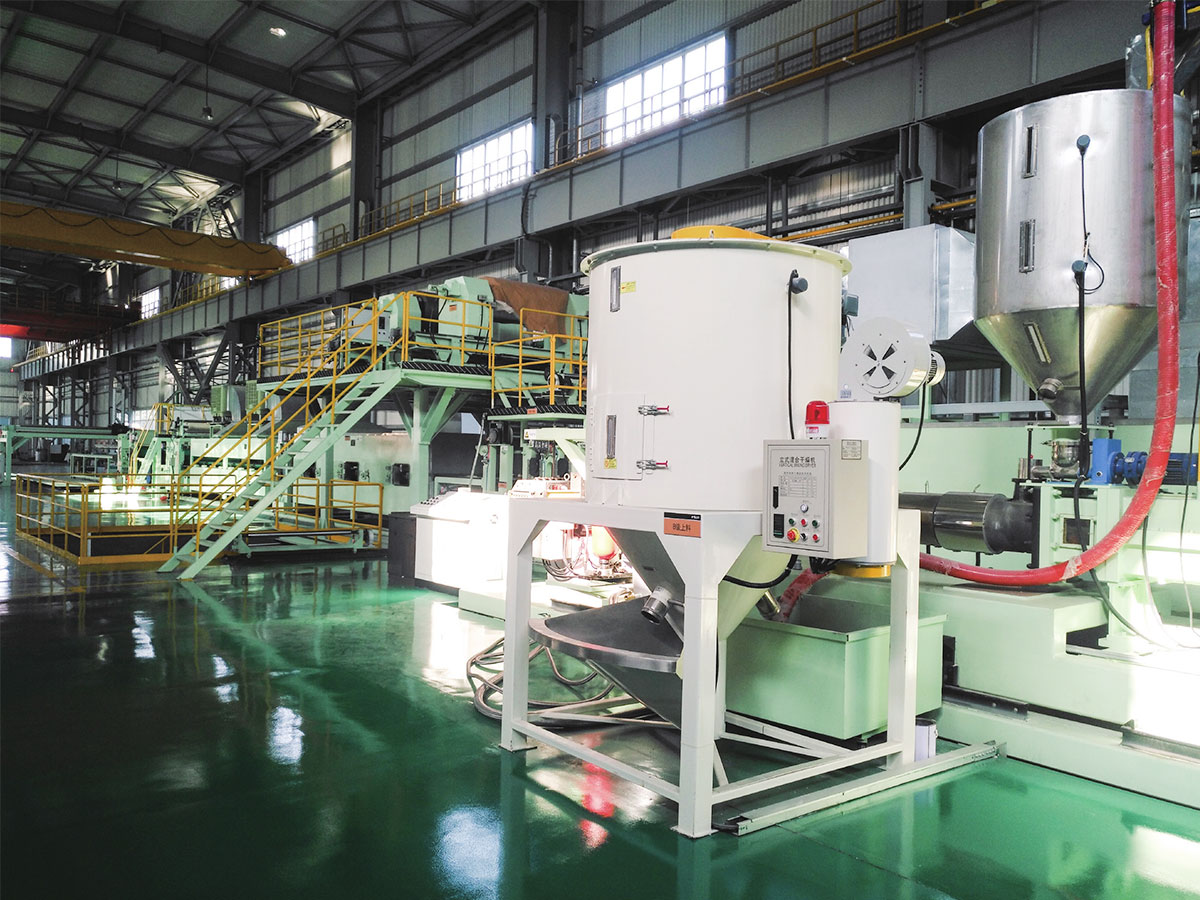
- Polyethylene core: PE resin is fed to a single or twin-screw extruder that melts the resin and extrudes a continuous flat sheet of the required thickness. The extrusion die width matches the panel width. For standard 4 mm ACP with 0.3 mm aluminum skins, the PE core sheet is approximately 3.4 mm thick.
- Fire-retardant mineral core: A mineral-filled polymer compound (containing aluminium hydroxide or magnesium hydroxide as fire-retardant fillers at 60–70 wt% loading) is compounded and extruded. Higher filler content in fire-retardant cores increases melt viscosity and requires more powerful extrusion equipment.
- Aluminium honeycomb core: Pre-fabricated aluminium honeycomb panels are fed from an unwind or cut-and-feed system into the lamination zone, positioned between the two aluminum skins. Honeycomb core ACP requires a different lamination process (typically hot press or vacuum lamination) compared to extruded polymer core production.
Stage 5 — Lamination (Bonding Press)
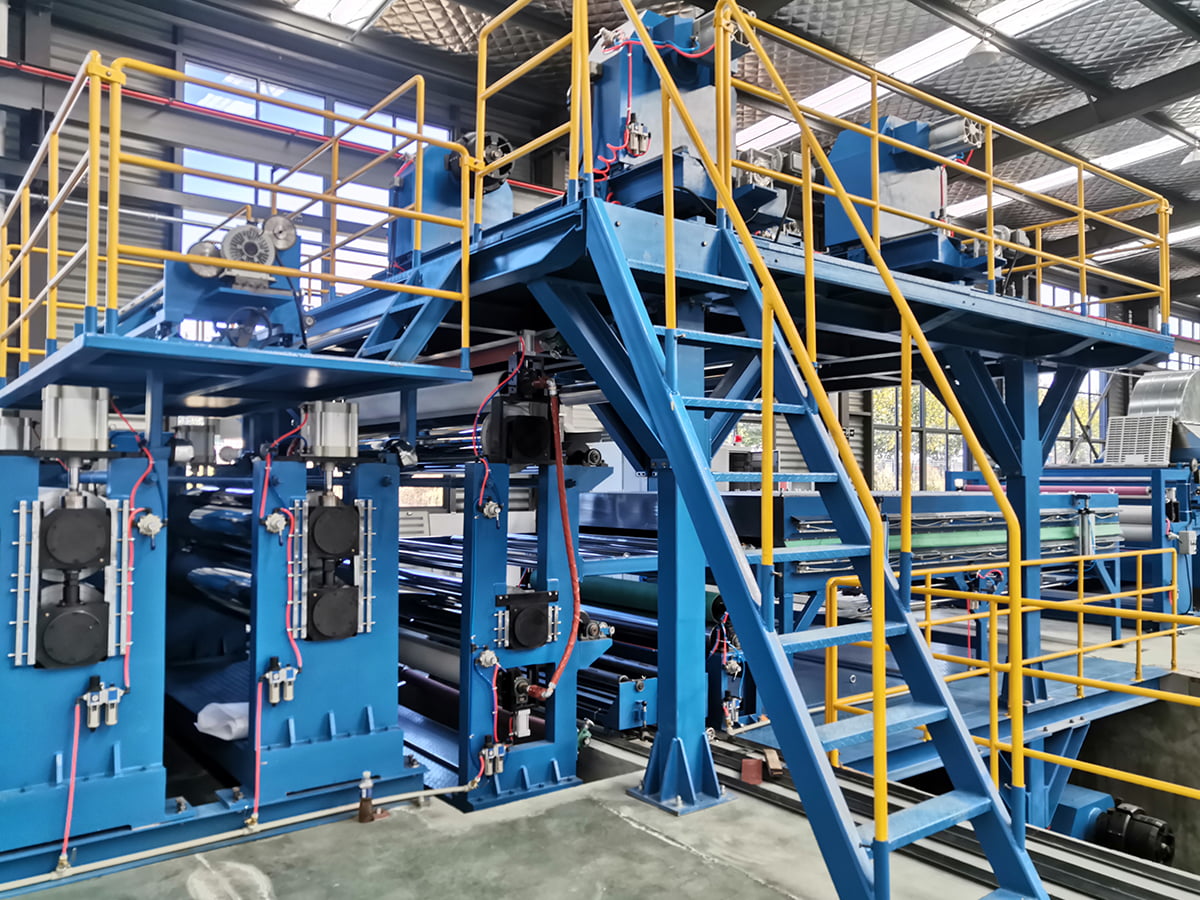
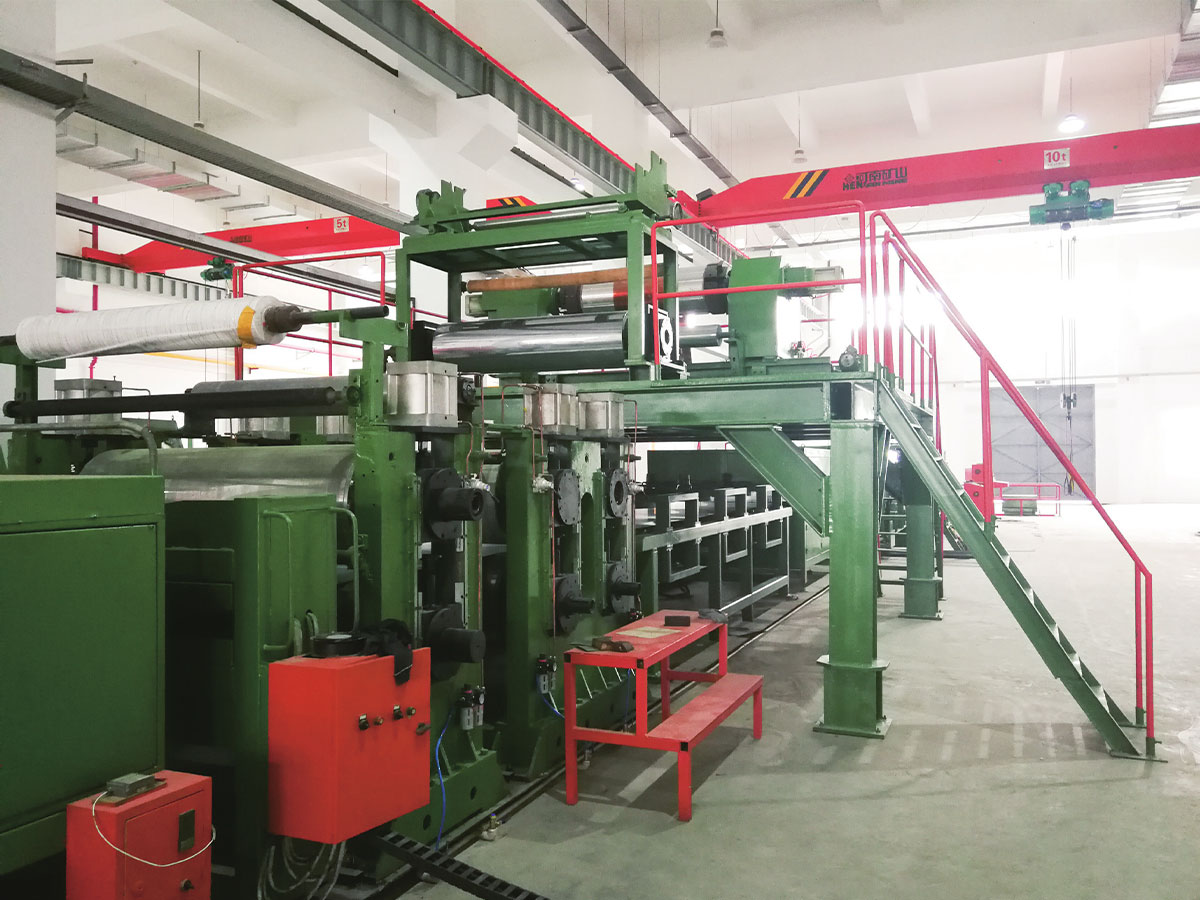
The lamination station is the heart of the ACP production line — the point where the three layers (top aluminum skin, core, bottom aluminum skin) are brought together under controlled pressure and temperature to form the permanent composite structure. The lamination press is typically a double belt press or a heated roller press:
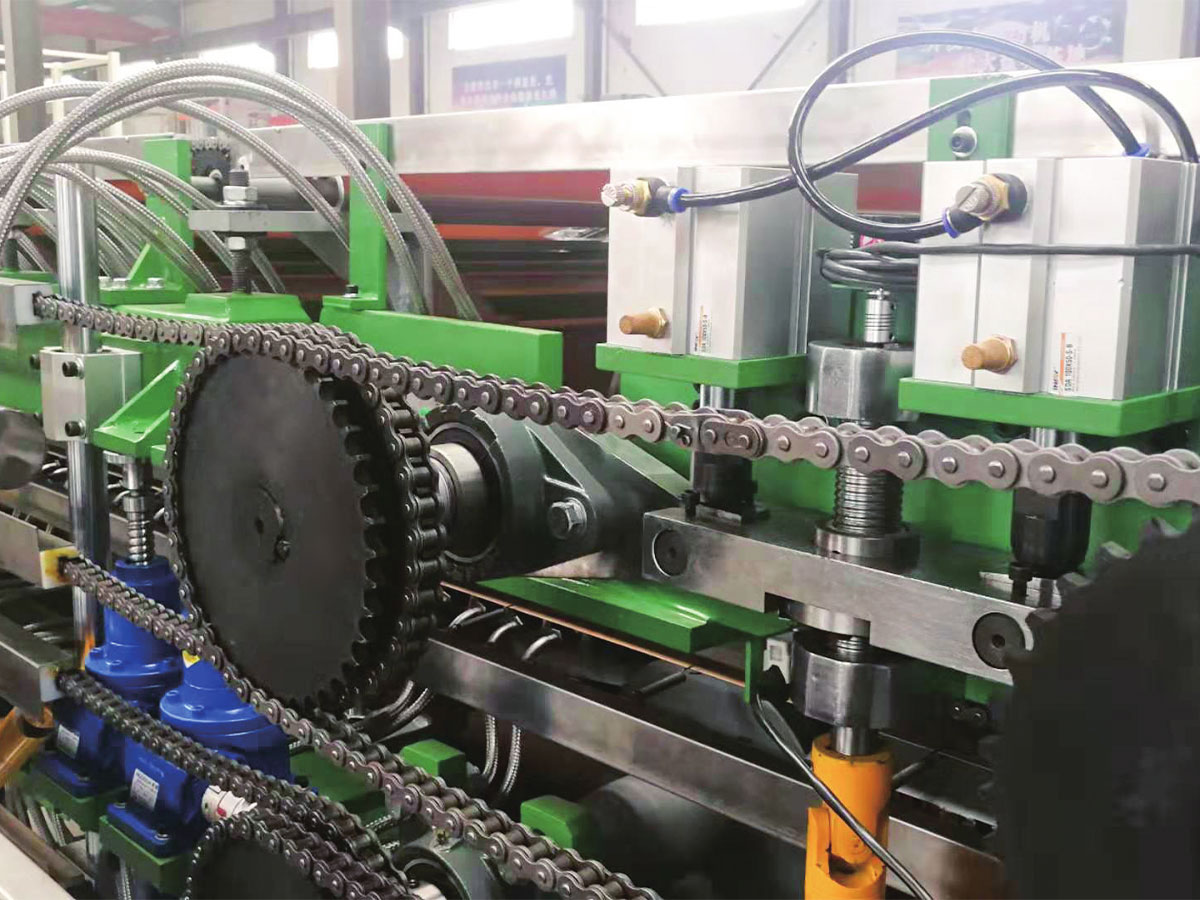
- Double belt press: Two continuous steel belts — one above and one below the panel sandwich — transport the laminate through a heated platen zone where controlled pressure of 0.5 to 5 MPa is applied uniformly across the full panel width, followed by a cooling zone where the panel consolidates under continued pressure. The double belt press provides the longest dwell time at temperature and pressure of any lamination method, enabling the highest bond quality for demanding thermosetting adhesive systems.
- Heated roller press: A series of heated pressure rollers apply progressively increasing pressure to the panel sandwich as it passes through the nip zones. Roller presses are simpler and faster than belt presses and are widely used for PE-core ACP production where the thermoplastic adhesive bond is formed quickly under moderate temperature and pressure.
Process temperature in the lamination zone typically ranges from 150°C to 220°C depending on the adhesive and core system used. Temperature uniformity across the full panel width — maintained within ±3°C to ±5°C — is critical for achieving consistent bond strength without local over-curing or under-curing.
Stage 6 — Cooling and Panel Consolidation
After the lamination press, the panel must be cooled under controlled conditions to prevent thermal distortion (bowing or warping) as the panel returns to ambient temperature. Controlled cooling — using water-cooled rollers, air cooling chambers, or cooling belt sections — allows the different layers of the composite to contract uniformly, minimising internal stresses that would otherwise cause permanent panel curvature. The cooling rate is a critical process parameter: too rapid cooling can lock in thermal stresses; insufficient cooling before cutting can cause the cut panel to distort after leaving the line.
Stage 7 — Online Quality Inspection
Modern ACP production lines incorporate automated online inspection systems that continuously monitor panel quality without slowing the line:
- Flatness measurement: Laser triangulation or optical sensors measure panel flatness deviation across the width and along the length, flagging panels with bow or waviness exceeding the specified tolerance (typically 0.5% of panel length or less).
- Thickness measurement: Non-contact thickness gauges (X-ray or capacitive) continuously verify total panel thickness within the specified tolerance, detecting variations that indicate core thickness inconsistency or pressure variation in the lamination press.
- Surface defect detection: Camera-based vision systems inspect the panel surface at line speed, identifying coating defects, scratches, adhesive bleed, or surface contamination that would cause product rejection.
Stage 8 — Cutting, Edge Trimming, and Panel Finishing
The continuous panel is cut to the required length by a flying cut saw or guillotine shear that operates synchronously with the moving panel — cutting without stopping the production line. The edge trimming station removes a defined width from each longitudinal edge of the panel, eliminating the edge taper and width variation that occurs at the periphery of the laminate and producing clean, parallel edges to the specified panel width tolerance (typically ±1 mm or better). A protective film laminator may also be integrated into this section, applying a removable PE protective film to the finished panel surface to protect the pre-painted aluminum coating from scratching during handling, transportation, and on-site fabrication.
Core Material Types and Their Impact on Production Line Configuration
The type of core material used in the ACP has a fundamental influence on the production line configuration, equipment specification, and process parameters. Different core materials require different lamination methods, temperatures, and pressures.
| Core Material | Density | Fire Performance | Lamination Method | Primary Applications |
|---|---|---|---|---|
| Polyethylene (PE) | ~930 kg/m³ | Combustible (Class B2/C) | Co-extrusion + roller press | Interior cladding, signage, low-rise facades |
| Fire-retardant mineral-filled | 1,400–1,700 kg/m³ | Limited combustibility (Class B1/B) | Extrusion + double belt press | High-rise facades, public buildings, transport hubs |
| Aluminium honeycomb | ~50–100 kg/m³ | Non-combustible (Class A2/A) | Adhesive bonding, hot press | Aerospace, premium architecture, lightweight structures |
| Stone wool / mineral wool | 100–180 kg/m³ | Non-combustible (Class A1) | Adhesive + press bonding | High-rise building envelopes, fire-rated cladding |
Key Technical Specifications of an ACP Production Line
When specifying or evaluating an aluminum composite panel production line, the following technical parameters define the line's capability, output volume, and product quality range:
- Maximum production width: The widest panel that the line can produce, determined by the width of the lamination press, coil unwind width, and extruder die width. Standard lines produce panels from 1,000 mm to 2,000 mm wide, with some heavy-duty lines capable of 2,500 mm.
- Production speed: The line speed in metres per minute, which directly determines daily output volume. PE-core lines typically operate at 10–30 m/min; fire-retardant core lines operate at 5–15 m/min due to the higher curing demands of thermosetting adhesive systems.
- Aluminum skin thickness range: The minimum and maximum aluminum strip thickness the line can process, typically 0.15 mm to 0.8 mm. Thinner skins require more precise tension control; thicker skins require more powerful straightening and lamination equipment.
- Total panel thickness range: Typically 2 mm to 8 mm for standard architectural ACP, with some specialised lines capable of producing panels up to 20 mm thick for structural applications.
- Installed power: A complete ACP production line including extrusion, double belt press, and all auxiliary systems requires total installed electrical power of 500 kW to 2,000 kW depending on line width and production speed.
- Line length: The total footprint of a complete ACP production line from coil unwind to panel stacking is typically 50 to 150 metres, requiring a purpose-built production hall with adequate ceiling height (minimum 5–8 metres) and floor load capacity.
Automation and Control Systems in Modern ACP Lines
Modern aluminum composite panel production lines are fully automated, integrating PLC-based control systems, distributed I/O, SCADA supervision, and increasingly, Industry 4.0 data management capabilities. The level of automation directly determines product consistency, production efficiency, and the skill level required from operating personnel.
PLC and Servo Drive Control
Every process variable that affects product quality is monitored and controlled by the line's PLC system. Speed synchronisation between the unwind, cleaning section, adhesive applicator, lamination press, cooling section, and cut-to-length system must be maintained within ±0.1% of set speed across the full line to prevent tension variation, adhesive thickness inconsistency, or cut length errors. Servo drives on each driven roll section respond to the master line speed reference with the precision and response speed needed to maintain this synchronisation.
Temperature and Pressure Process Control
The lamination press temperature is controlled by multiple independent heating zones across the press width, each with its own temperature sensor and PID control loop. This zonal control compensates for heat losses at the panel edges and ensures uniform temperature distribution — essential for achieving consistent bond quality across the full panel width. Lamination pressure is controlled hydraulically or pneumatically, with pressure sensors at multiple points across the press width confirming that the target pressure profile is maintained throughout the panel's transit through the press.
Recipe Management and Production Data Logging
Modern ACP lines store complete process parameter sets ("recipes") for each product specification — line speed, lamination temperature and pressure, adhesive coat weight, core extrusion temperature profile, cooling rate, and cut length — in the SCADA system. Switching between products requires only recipe recall rather than manual re-adjustment of individual parameters, enabling rapid, accurate changeovers between different panel specifications. Production data logging records all key process parameters against the corresponding panel serial number, creating a traceable manufacturing record that supports quality certification, warranty claims, and process optimisation analysis.
Quality Standards and Certifications That ACP Production Lines Must Support
Aluminum composite panels produced on commercial production lines must comply with a range of international, regional, and national quality and safety standards that govern their mechanical performance, fire behaviour, durability, and dimensional accuracy. The production line must be capable of consistently delivering panels that meet these standards across the entire output volume.
- EN 1396 (Europe): Specifies the requirements for coil-coated aluminum and aluminum alloy sheet and strip for general applications, including mechanical properties, coating adhesion, and surface quality.
- ASTM C1396 / ASTM D1781 (North America): Standards governing aluminum composite panel mechanical properties, including peel strength (climbing drum peel test), flatwise tension, and core shear strength.
- EN 13501 / BS 8414 (Fire performance, Europe): European fire classification standards that ACP must pass for use in building facades, requiring panels to be tested at full scale for fire spread behaviour under realistic fire conditions.
- GB/T 17748 (China): The Chinese national standard for aluminum composite panels, specifying requirements for dimensions, peel strength, bending strength, impact resistance, and weathering performance.
- AAMA 2605 (USA): The premium durability standard for architectural coatings on aluminum, requiring the panel's pre-painted aluminum surface to retain 90% of original gloss and less than 5 Delta E colour change after 10 years of Florida exposure testing.
Market Applications of ACP Produced on Dedicated Production Lines
The consistent, high-quality panels produced on modern ACP production lines are used across a wide range of architectural, industrial, and commercial applications. The combination of a rigid, flat, dimensionally precise surface with low weight, excellent weathering resistance, and broad design flexibility makes ACP one of the most widely specified exterior and interior cladding materials globally.
- Architectural facade cladding: The dominant application — ACP is used on office towers, retail centres, airports, transport hubs, hospitals, and residential towers worldwide, valued for its flat appearance, colour range, weathering durability, and lightweight compared to stone or solid metal cladding systems.
- Interior wall cladding and partitions: ACP provides a cleanable, durable, aesthetically attractive wall surface in commercial interiors including retail environments, hotel lobbies, airports, and corporate offices.
- Signage and advertising structures: The flatness, rigidity, and light weight of ACP make it the material of choice for large-format printed signage panels, pylon signs, fascia boards, and channel letter backing.
- Clean room and laboratory panels: Smooth-surfaced ACP panels with specific coating systems provide the cleanable, non-reactive wall surface required in pharmaceutical manufacturing, laboratory, and food processing environments.
- Vehicle body panels and transportation: ACP is used in truck cab cladding, trailer side panels, railway carriage interior panels, and bus body fabrication, where the combination of light weight, formability, and surface finish quality provides performance advantages over heavier solid metal alternatives.