grammy@cjm.com.cn

 English
 русский
 Español
 عربى
عربى
Content
- 1 Why Waste Edge Strips Are Generated and Why They Must Be Removed Immediately
- 2 How an Online Trimming and Delamination Machine Works
- 3 Core Advantages of Online vs. Offline Processing
- 4 Material Recovery: Economic Value of Clean Delamination
- 5 Primary Application Areas and Industries
- 6 Key Technical Specifications and Performance Parameters
- 7 Automation and Control: How PLC Integration Ensures Stable Operation
- 8 Cost-Benefit Analysis: Justifying the Investment
- 9 Installation Considerations and Integration Requirements
- 10 Summary: What an Online Trimming and Delamination Machine Delivers
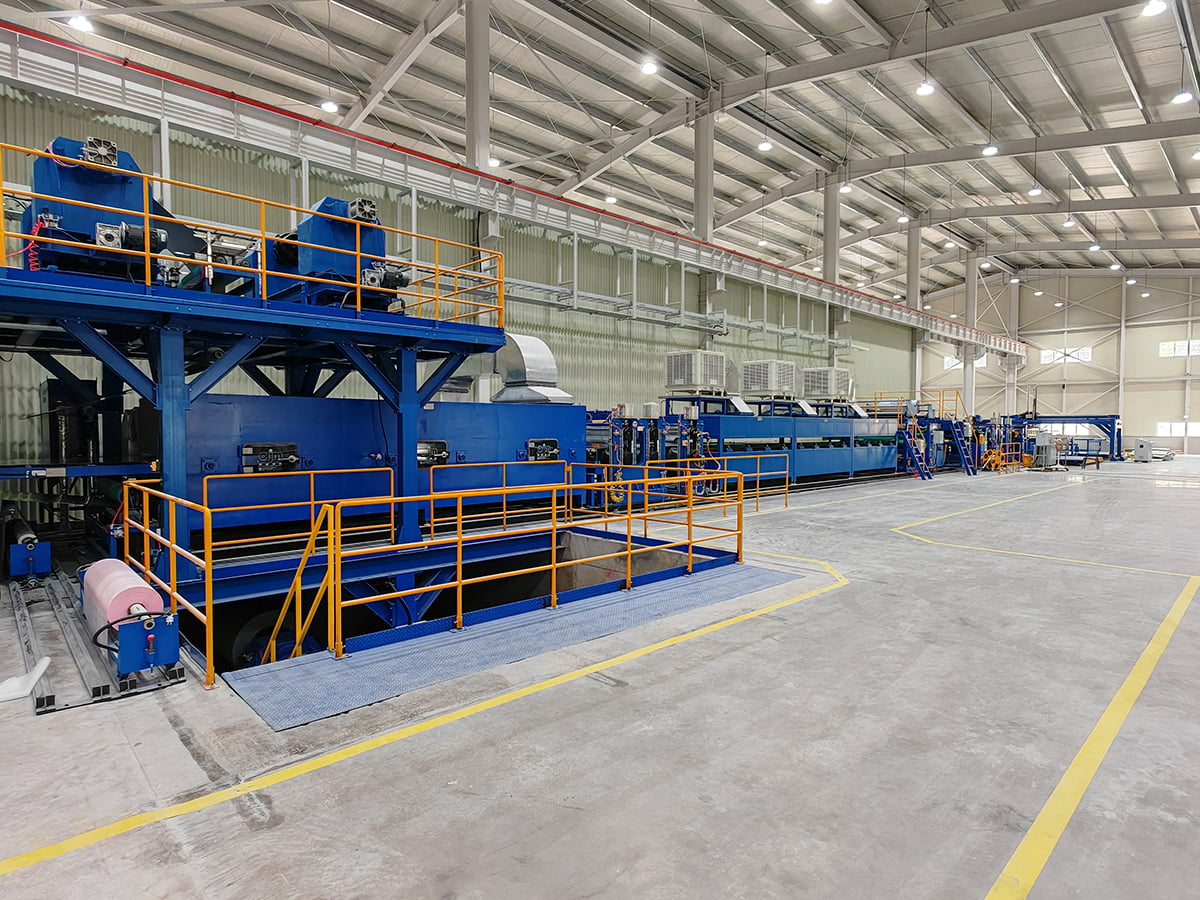
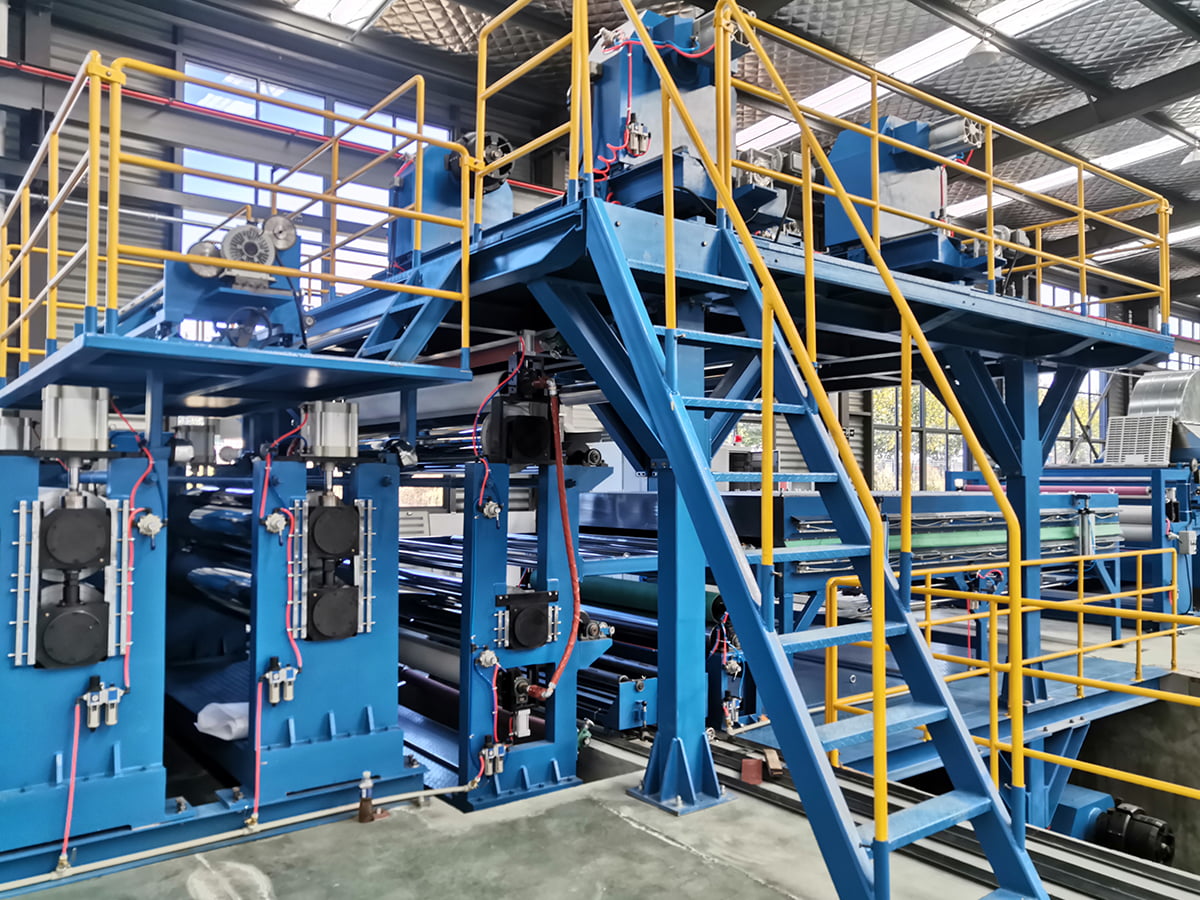
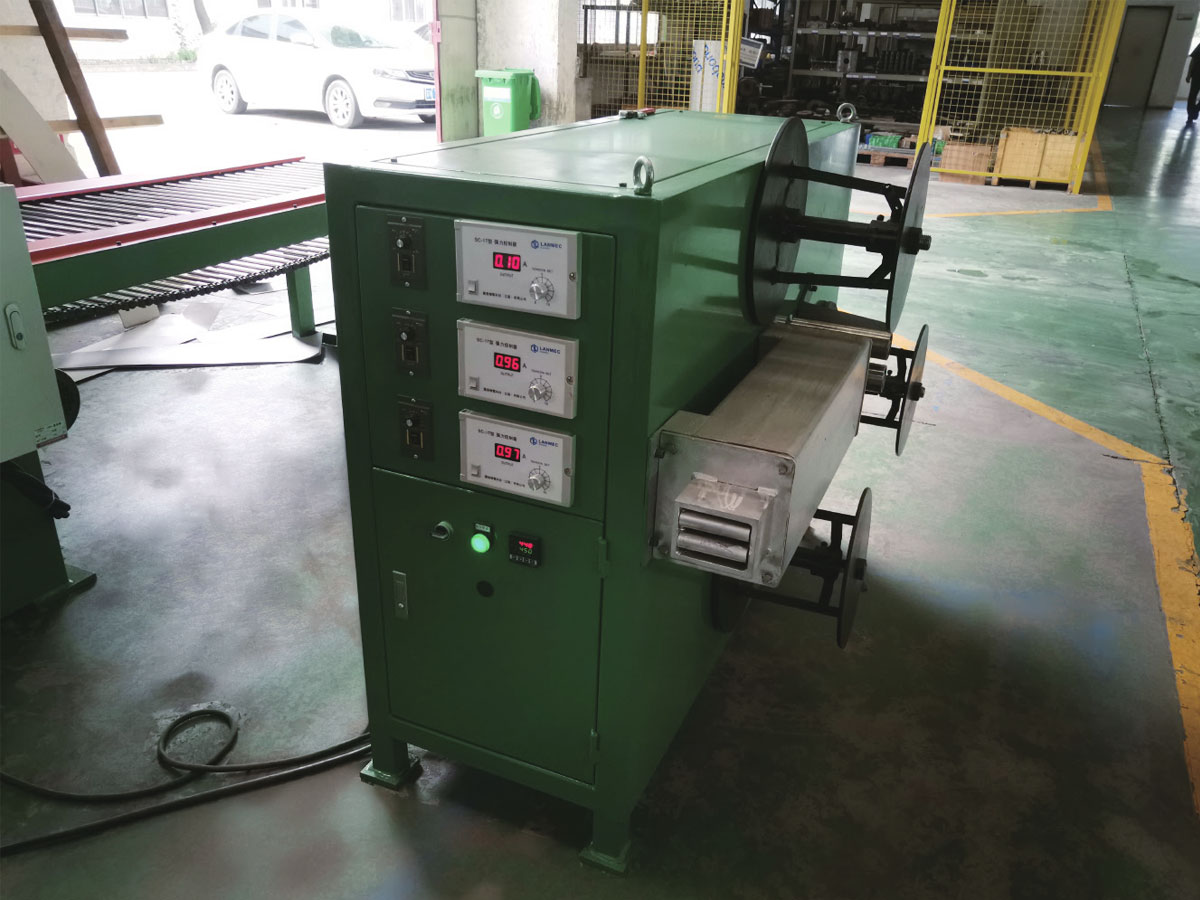
An online trimming and delamination machine — also called an edge strip stripping machine — is used to automatically remove and separate the waste edge strips generated on both sides of composite board materials in real time during the production process, without interrupting or slowing the main production line. It performs two functions simultaneously: trimming the excess composite edge material away from the finished product, and delaminating that waste strip into its constituent layers — typically separating metal skin (such as aluminum foil) from the non-metal core material (such as polyethylene or other polymer). The separated materials are then channeled into respective recovery streams for recycling or reuse.
These machines are deployed primarily in the aluminum processing industry, cable manufacturing, and other industries that produce laminated or composite strip materials as part of a continuous rolling, laminating, or rewinding process. Without such a machine, waste edge strips accumulate on the production line, risking surface damage to finished products, equipment jams, and the loss of valuable recoverable materials that cannot be efficiently sorted offline.
Why Waste Edge Strips Are Generated and Why They Must Be Removed Immediately
Composite board and strip materials — such as aluminum-plastic composite panels, cable shielding tape, and laminated metal foils — are produced through a lamination or forming process in which multiple material layers are bonded together under heat and pressure. During this process, the adhesive film, the metal skin layer, and any protective covering inevitably overflow at the lateral edges of the material beyond the intended product width. This creates a continuous strip of composite waste running along both edges of the finished product as it exits the forming or laminating station.
These edge strips are structurally similar to the main product — they contain the same metal and polymer layers — but they are dimensionally irregular and serve no function in the finished product. Allowing them to remain attached or to accumulate on the production line creates several serious problems:
- Surface damage: During downstream rolling, pressing, or rewinding operations, detached or partially attached edge strips can fold back onto the product surface and scratch or mark the finished material — causing cosmetic or functional defects that may require rejection of entire rolls or sheets.
- Equipment fouling: Loose edge strips can be drawn into drive rollers, tension control systems, winding mandrels, or other transmission components of the production line, causing mechanical jams, belt damage, and unplanned downtime that is costly to diagnose and repair.
- Dimensional inaccuracy: If edge strips are not removed cleanly and consistently, the effective width of the finished product varies, making downstream processing — cutting, coiling, punching — less precise and increasing scrap rates.
- Material value loss: Edge strips generated during aluminum composite processing contain significant quantities of aluminum — a high-value material. If these strips are simply discarded as mixed waste rather than being cleanly delaminated and separated, the aluminum cannot be directly recycled and its economic value is lost or substantially reduced.
- Manual handling hazards: Without automated removal, operators must manually clear edge strips from the line — a repetitive, physically demanding, and potentially hazardous task in a high-speed production environment where moving material and rotating machinery are present.
Online trimming and delamination machines address all five of these problems simultaneously by removing and processing edge strips continuously and automatically at production speed, with no operator intervention required during normal operation.
How an Online Trimming and Delamination Machine Works
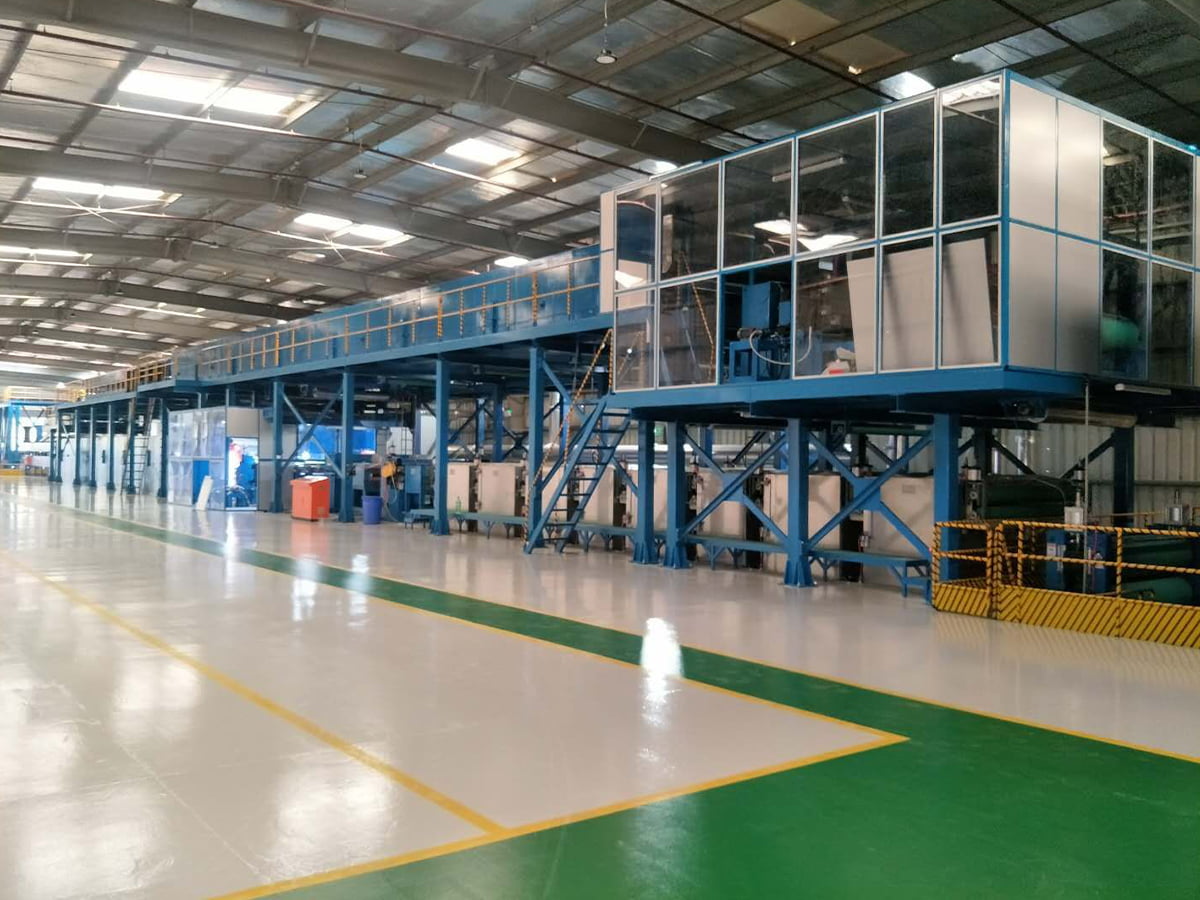
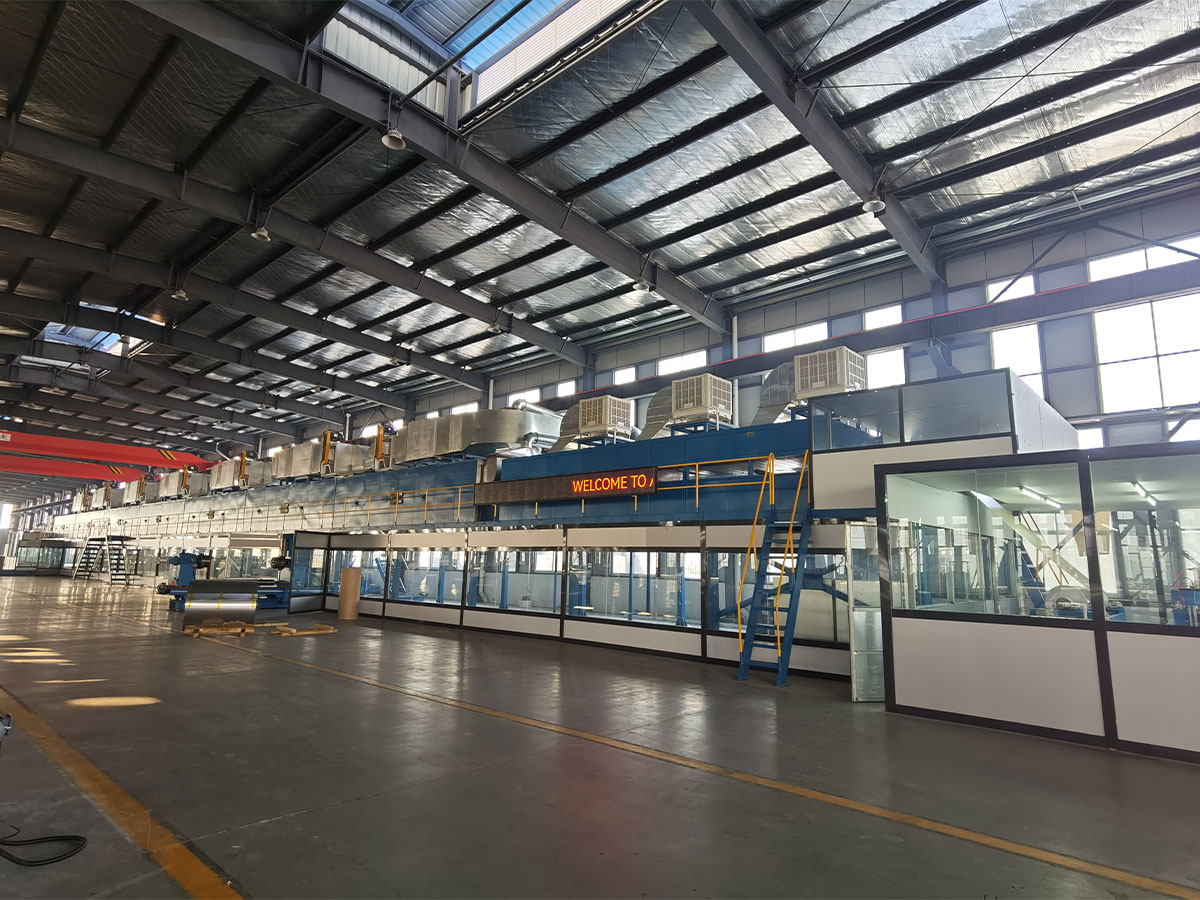
The machine is installed inline — directly integrated into the production line downstream of the composite forming or laminating station — and operates synchronously with the main line speed. Its operation can be broken into a sequence of coordinated functions.
Edge Strip Detection and Guiding
As the composite material exits the forming process and enters the trimming machine, sensors detect the position of both lateral edges of the material. Edge guides or steering rollers ensure the material is correctly centered and aligned before the trimming knives engage, compensating for any lateral wander of the material that could cause inconsistent trim width or off-center cutting.
Precision Trimming of Edge Strips
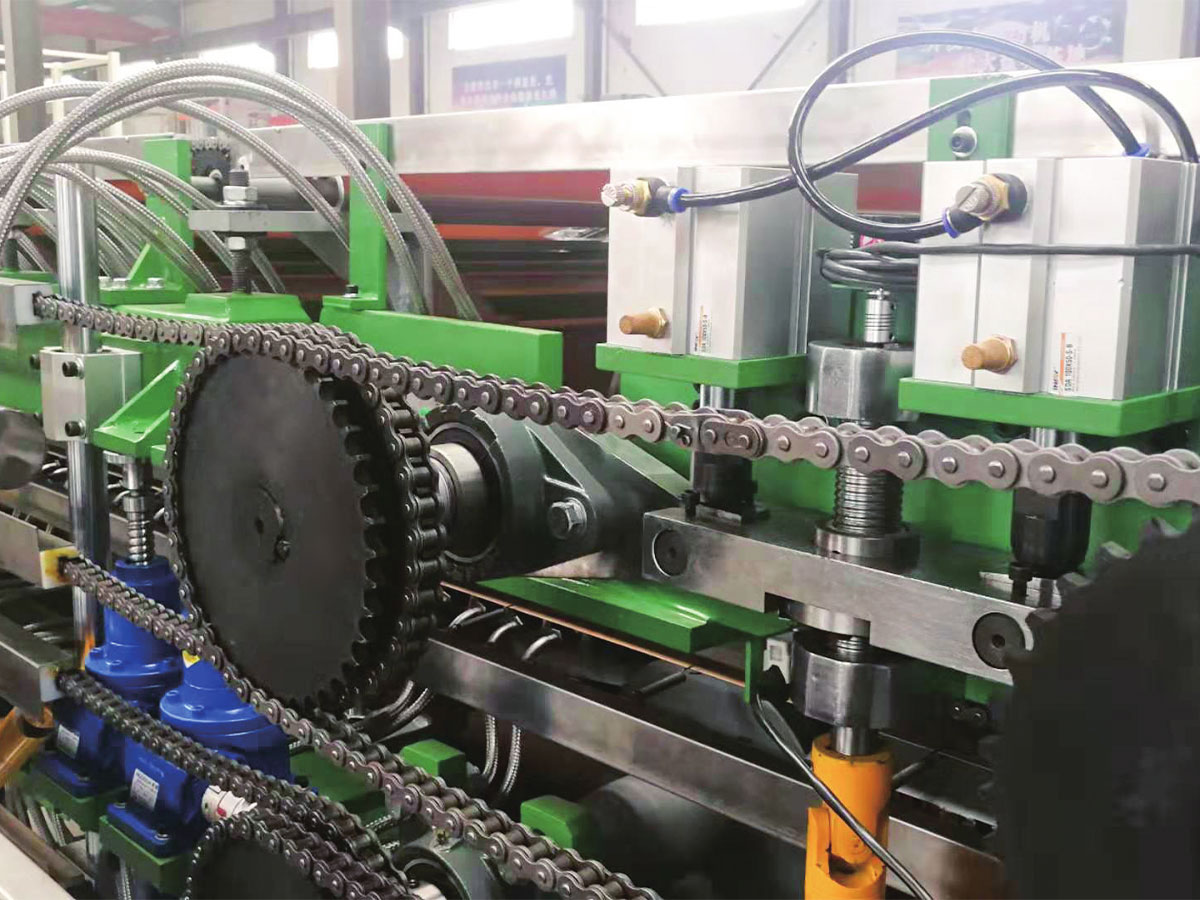
Rotary slitting knives or trimming blades — positioned at both lateral edges of the material path — cut through the composite structure at the precise boundary between the finished product width and the waste edge strip. The knife position is adjustable to accommodate different product widths and edge overflow dimensions, and the cutting geometry is engineered to produce a clean, straight cut edge without burrs, deformation, or delamination of the main product at the cut line. The trimmed edge strips are then separated from the main material web and guided into the delamination stage.
Mechanical or Pneumatic Delamination
The separated edge strips — still in composite form, with metal skin bonded to polymer core — pass through the delamination mechanism, which physically separates the layers using either mechanical peeling geometry or pneumatic assistance. In mechanical delamination, the strip passes around a precision-engineered separation wedge or peel roller at an angle calculated to exceed the interlayer bond strength while remaining below the tensile strength of either individual layer — causing the layers to peel apart cleanly without tearing. In pneumatic-assisted designs, a pressurized air stream is directed into the peel interface, facilitating separation at higher line speeds or for materials with stronger interlayer bonds.
The result of this stage is two distinct, separated material streams from each edge strip: a metal layer (typically aluminum foil or aluminum laminate) and a non-metal core layer (typically polyethylene film, foam, or other polymer substrate).
Separated Material Collection and Handling
After delamination, the separated metal and non-metal streams are directed into separate collection systems — typically winding spools, chopper units, or shredder-baler combinations — that compact or coil the materials into a form suitable for direct onward transfer to recycling or reprocessing. The metal stream can be fed directly to an aluminum melting furnace without further sorting; the non-metal stream is similarly collected in a pure, uncontaminated form that simplifies downstream recycling.
PLC-Based Automation and Line Speed Synchronization
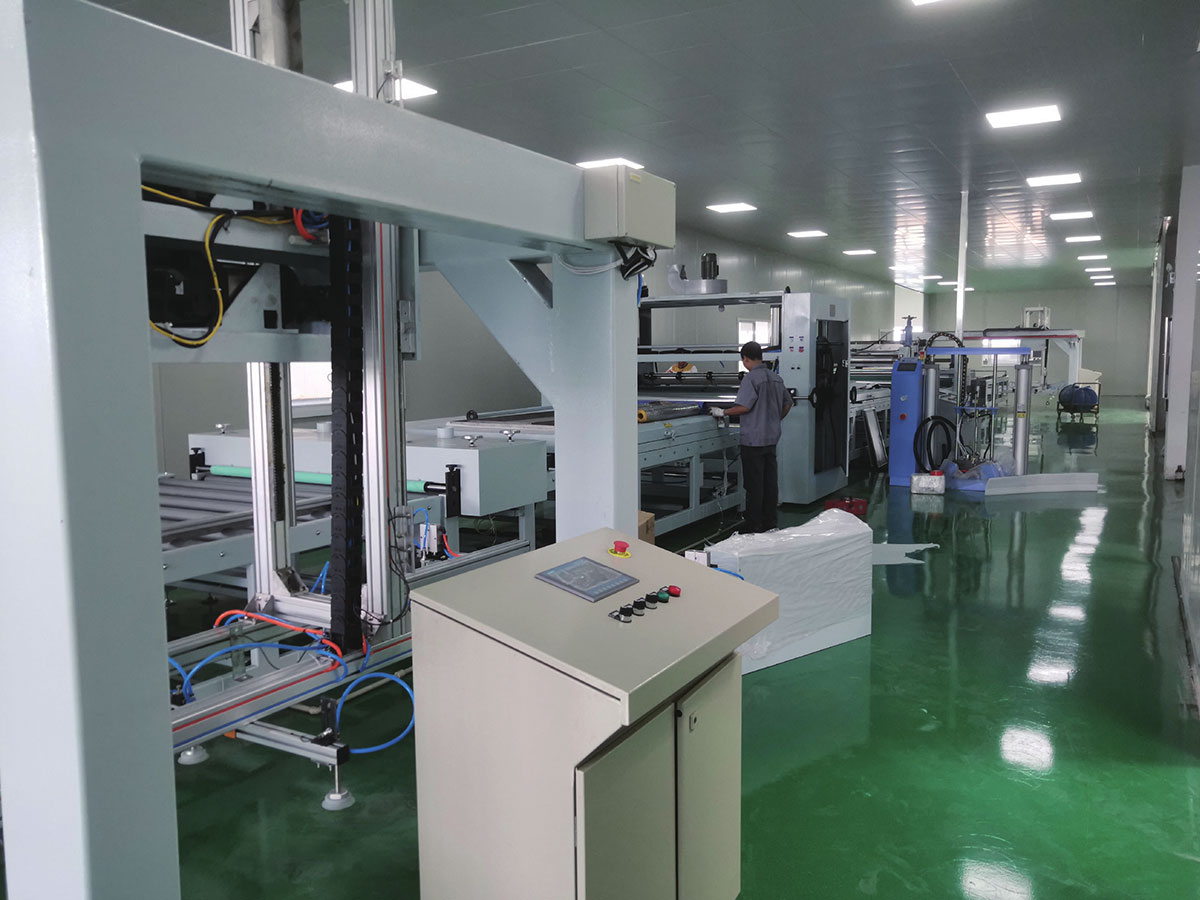
The entire operation is coordinated by a programmable logic controller (PLC) that monitors line speed, material position, and component status in real time. The PLC synchronizes the trimming and delamination functions with the main production line speed — automatically adjusting knife engagement, strip tension, and collection system speed as the line accelerates, decelerates, or pauses. This ensures consistent cut quality and separation purity across the full operating speed range without operator adjustment.
Core Advantages of Online vs. Offline Processing
The defining advantage of an online trimming and delamination machine is captured in the word "online" — the machine operates as an integral part of the production line rather than as a separate, offline process that receives accumulated waste materials for batch processing. This distinction has profound implications for production efficiency, material value recovery, and operational cost.
| Factor | Online Trimming and Delamination | Offline Batch Processing |
|---|---|---|
| Production interruption | None — operates synchronously with main line | Requires periodic line stops or material diversion |
| Labor requirement | Minimal — PLC-controlled continuous operation | High — manual collection, transport, and handling |
| Risk of surface damage | Eliminated — strips removed before downstream rollers | High — strips remain on line and cause scratching |
| Metal recovery purity | High — clean separation at point of generation | Lower — mixed waste accumulates contamination |
| Equipment jam risk | Eliminated — strips removed continuously | Persistent — strips can enter drive components |
| Process consistency | High — automated, speed-synchronized | Variable — dependent on operator timing and skill |
| Storage and handling space | Minimal — material flows directly to recovery | Significant — waste accumulates awaiting processing |
Material Recovery: Economic Value of Clean Delamination
The economic case for an online trimming and delamination machine is substantially driven by the material recovery value it enables. In composite strip manufacturing, the edge strips that are trimmed away contain the same high-value materials as the main product — and in the case of aluminum-containing composites, the metal content represents significant recoverable economic value.
Aluminum Recovery: Direct Return to Smelter or Resale
When edge strips from aluminum-plastic composite materials are cleanly delaminated — separating the aluminum foil or aluminum laminate from the plastic core — the recovered aluminum is of high purity and can be directly returned to the aluminum melting furnace without any further sorting, cleaning, or pre-treatment. This "furnace-ready" quality is critical: aluminum contaminated with plastic or adhesive residues cannot be fed directly to a smelter and must instead be sold at a significant discount as mixed scrap, or processed through an energy-intensive de-coating step before recovery.
High-purity recycled aluminum commands a substantially higher price than mixed composite scrap. For a production line generating significant volumes of aluminum-containing edge strips, the difference in recovered value between clean delaminated aluminum and mixed waste can justify the capital cost of the online delamination machine within a relatively short payback period — particularly when aluminum prices are elevated and production volumes are high.
The machine achieves 100% recycling of high-value metal content from the edge strips — meaning none of the aluminum in the waste stream is lost to landfill or downgraded to low-value scrap merely because it was mixed with plastic material at the time of disposal.
Core Material Recovery and Classification
The non-metal core material separated during delamination — typically polyethylene film, expanded polyethylene foam, or other thermoplastic substrate — is collected in a similarly clean, uncontaminated condition. Clean separated polymer waste has higher recycling value than mixed composite waste because it can be directly fed into plastics recycling streams — pelletizing lines, compounding operations, or energy recovery systems — without requiring the same type of separation that the machine itself has just performed.
By classifying and separately collecting both the metal and non-metal fractions from the edge strips, the online delamination machine maximizes the total recovered value of what would otherwise be a single, low-value mixed waste stream.
Primary Application Areas and Industries
Online trimming and delamination machines are applied across several industrial sectors that produce laminated or composite strip and sheet materials as part of continuous manufacturing processes. The common thread across all applications is the generation of composite edge waste containing at least one high-value or otherwise recoverable material layer.
Aluminum Processing Industry
This is the primary and most widespread application sector. Manufacturers producing aluminum foil, aluminum strip, and aluminum coil products frequently laminate the aluminum with plastic films, protective coatings, or adhesive layers to create composite products for packaging, construction, or industrial applications. The edge strips generated during these processes contain aluminum and polymer in varying thickness ratios. Online delamination is essential for recovering the aluminum content at maximum purity while maintaining production line efficiency.
Specific aluminum industry applications include:
- Aluminum-plastic composite panel (ACP) production — edge trim delamination of multi-layer panels consisting of aluminum face sheets bonded to a polyethylene core.
- Aluminum foil laminate production — processing of edge strips from foil laminated to paper, polymer film, or non-woven materials for packaging and insulation applications.
- Aluminum strip slitting lines — trimming and recovering material from the edge trim generated when composite aluminum coils are slit to narrower widths.
Cable Manufacturing Industry
Modern power and telecommunications cables use aluminum-plastic composite tape — bonded laminates of aluminum foil on a polymer substrate — as an electromagnetic shielding layer wrapped around the cable core. During the manufacturing process of this composite shielding tape, edge strips are generated that contain the same aluminum-polymer structure as the main product. Online delamination machines recover the aluminum content from these edge strips, enabling it to be returned to production rather than discarded as mixed composite scrap.
Given that cable shielding tape is produced in high volumes continuously — cable manufacturers often run their tape production lines 24 hours per day — even a small reduction in edge strip width or improvement in edge strip material recovery rate translates to significant cumulative cost savings over a production year.
Special and Engineered Material Processing
Beyond the two primary industries above, online trimming and delamination machines are also applicable to the processing of other metal/non-metal composite strip materials with similar laminated structures. These include:
- Copper-clad laminates used in printed circuit board production — edge trimming and copper layer recovery from composite strip waste.
- Stainless steel laminate strips bonded to polymer for architectural and industrial cladding applications.
- Metallized film edge strips from the production of metallized packaging films where a thin metal layer is vapor-deposited onto a polymer substrate.
- Composite battery electrode materials — strip trimming and current collector recovery from electrode laminate production in battery cell manufacturing lines.
Key Technical Specifications and Performance Parameters
When evaluating or specifying an online trimming and delamination machine, the following technical parameters determine whether the machine is correctly matched to the production line and material characteristics of a given application.
| Parameter | Typical Range / Specification | Significance |
|---|---|---|
| Operating line speed | 10 – 600 m/min (application dependent) | Must match or exceed main production line speed |
| Edge strip width range | 5 – 100 mm per side (adjustable) | Must cover the full range of edge overflow widths for the product mix |
| Composite material thickness | 0.05 – 10 mm total laminate thickness | Determines trimming blade specification and delamination force requirements |
| Separation purity | >98% clean separation of metal from non-metal | Determines recyclability grade of recovered materials |
| Control system | PLC with HMI touchscreen interface | Enables automated speed matching, parameter storage, and fault diagnostics |
| Edge guide accuracy | ±0.5 mm lateral position control | Ensures consistent trim width and protects main product edge quality |
| Knife adjustment method | Manual or motorized, with position memory | Determines changeover time when switching product widths |
| Labor requirement | Zero during normal operation (fully automatic) | Eliminates manual edge strip management labor cost |
Automation and Control: How PLC Integration Ensures Stable Operation
The automation architecture of an online trimming and delamination machine is central to its ability to deliver consistent, unattended performance across extended production runs. A well-engineered control system eliminates the variability and response-time limitations of human operators, replacing them with deterministic, millisecond-response automated control.
Speed Synchronization
The PLC receives a real-time speed reference signal from the main production line — either via an encoder output, a drive speed reference signal, or a digital communication bus — and uses this signal to synchronize the trimming, delamination, and collection mechanisms precisely to line speed. When the main line accelerates or decelerates, the trimming machine tracks the change automatically, maintaining constant strip tension and separation quality without operator intervention. This synchronization is critical: a delamination mechanism running at the wrong speed relative to the strip will either allow the strip to pile up and jam, or stretch and tear the strip before delamination is complete.
Fault Detection and Automatic Response
The PLC monitors key process parameters — strip tension, knife position, collection system fill level, and drive motor current — continuously during operation. When any parameter exceeds its normal operating range, the system responds automatically: reducing line speed, disengaging a specific function, or stopping the trimming machine and signaling an alarm to the operator. This automatic fault response prevents minor issues from escalating to major equipment damage or production quality problems, and provides the maintenance team with specific fault information that reduces diagnostic time.
Recipe-Based Product Changeover
Modern PLC-controlled trimming machines store operating parameters — knife positions, tension setpoints, collection speed ratios — for each product in a recipe database. When the production schedule changes to a different composite product with a different width or edge strip configuration, the operator selects the appropriate recipe from the HMI touchscreen and the machine automatically adjusts all parameters to the new product specification. This recipe-based changeover capability reduces setup time between products and eliminates the risk of operator error in setting parameters manually for each new run.
Integration with Factory Automation Systems
Advanced installations connect the trimming machine PLC to the plant-level SCADA or MES system, enabling remote monitoring of machine status, production statistics (meters processed, edge strip weight recovered, uptime percentage), and maintenance scheduling data. This integration supports Industry 4.0 production management approaches where real-time data from all line components is aggregated for analysis, performance optimization, and predictive maintenance planning.
Cost-Benefit Analysis: Justifying the Investment
The decision to invest in an online trimming and delamination machine is typically justified on the basis of multiple concurrent financial benefits that together substantially exceed the capital cost of the equipment within a measurable payback period. The following framework identifies the primary value drivers.
Labor Cost Reduction
Manual edge strip removal and handling on a production line typically requires at least one dedicated operator per shift — a person whose time is entirely consumed by collection, clearing jams, and moving waste material to a processing area. For a three-shift continuous operation, this represents three full-time labor positions dedicated solely to waste handling. Replacing this labor with an automated machine delivers immediate and quantifiable savings that begin accruing from the first day of operation. In high-wage manufacturing environments, this labor saving alone can justify the machine investment within 12 to 24 months.
Material Recovery Revenue
For aluminum-containing composite strips, the difference in recovered value between clean delaminated aluminum foil and mixed composite scrap is substantial. Clean aluminum suitable for direct smelting commands market prices close to primary aluminum value, while mixed composite scrap may be valued at 20 to 40% of that figure due to the processing cost burden placed on the buyer. A production line generating even modest quantities of aluminum-containing edge strip — say, 500 kg per day — can generate significant additional revenue from the premium pricing of clean delaminated aluminum versus the mixed composite scrap alternative.
Reduced Downtime and Maintenance Costs
Equipment jams caused by unmanaged edge strips can halt a production line for 15 to 60 minutes per incident. On a high-throughput line, a single jam event can cost thousands of dollars in lost production. If jams occur multiple times per week — a not-uncommon situation on lines without automatic edge strip removal — the cumulative downtime cost over a year is substantial. The online trimming machine eliminates this failure mode entirely, converting a recurring unplanned cost into a fixed maintenance expense for the trimming machine itself, which is typically far lower.
Scrap Reduction from Surface Damage Prevention
Surface scratches or marks caused by loose edge strips dragging across the product surface can render entire rolls or sheets of finished material non-conforming. The cost of this scrap — not just the material value but the energy and processing time invested in it — represents a real but difficult-to-quantify loss that the trimming machine prevents. For high-value surface-sensitive products such as bright-finish aluminum foil or decorative composite panel, even a modest reduction in surface defect scrap rate represents significant financial benefit.
Installation Considerations and Integration Requirements
Successfully deploying an online trimming and delamination machine requires careful planning at the integration stage to ensure the machine fits physically within the production line, receives the correct control signals, and delivers separated materials to appropriate downstream handling systems. The following factors should be evaluated during the specification and installation planning process.
- Physical placement: The machine must be positioned downstream of the laminating or forming station but upstream of any rollers or coiling equipment that could trap or be damaged by unmanaged edge strips. Sufficient space must be available for the machine footprint, its collection systems, and maintenance access clearances on both sides.
- Line speed signal interface: The main production line control system must provide a compatible speed reference signal — analog voltage, encoder pulse, or digital bus — that the trimming machine PLC can use for synchronization. This interface must be agreed between the trimming machine supplier and the main line control system supplier during the design phase.
- Material tension management: The trimming machine must be designed to handle the edge strips without introducing back-tension into the main material web that could cause tracking, stretching, or gauge variation in the main product. Strip tension control within the machine must be independent of main web tension.
- Collection system capacity: The edge strip collection spools, choppers, or baler units must have sufficient capacity to operate continuously between changeovers for a duration consistent with the production schedule — typically a minimum of one full shift without emptying the collection system.
- Dust and fines management: The trimming and delamination process may generate fine particles of metal or polymer at the cutting and peeling points. Dust extraction or containment provisions should be incorporated into the installation design to prevent contamination of the main product or accumulation of combustible polymer dust near the machine.
- Maintenance access and knife replacement: Trimming knives require periodic replacement as they wear. The machine design should allow knife change with minimal disruption to the production line — ideally within a planned brief stoppage, or through a quick-change knife cartridge system that minimizes changeover time.
Summary: What an Online Trimming and Delamination Machine Delivers
An online trimming and delamination machine solves a specific and commercially significant manufacturing problem: the continuous generation of composite edge waste on composite strip and sheet production lines that, if left unmanaged, damages products, jams equipment, consumes labor, and destroys the economic value of recoverable materials. By integrating trimming and layer separation into a single automatic inline operation synchronized with the main production line, the machine simultaneously eliminates product damage risk, removes the manual labor burden, and converts what was previously a disposal cost into a material recovery revenue stream.
The key outcomes it delivers are:
- Continuous, automatic edge strip removal synchronized with production line speed, with zero production interruption.
- Clean separation of metal and non-metal layers from composite edge strips, enabling high-purity material recovery and direct recycling of valuable metal content.
- Elimination of surface damage and equipment jam risk from unmanaged edge strips on downstream rollers and winding equipment.
- Fully automated operation requiring minimal labor — the machine runs unattended during normal production, freeing operators for higher-value tasks.
- 100% recovery of high-value metal content from edge strips, converting a waste disposal cost into a recoverable asset that can be returned to the smelter or sold as clean secondary raw material.
For any production operation generating composite edge strips in significant volumes — whether in aluminum processing, cable manufacturing, or other laminated material production — an online trimming and delamination machine represents a measurable improvement in both operational efficiency and material cost economics that strengthens the competitive position of the manufacturing operation as a whole.