grammy@cjm.com.cn

 English
 русский
 Español
 عربى
عربى
Content
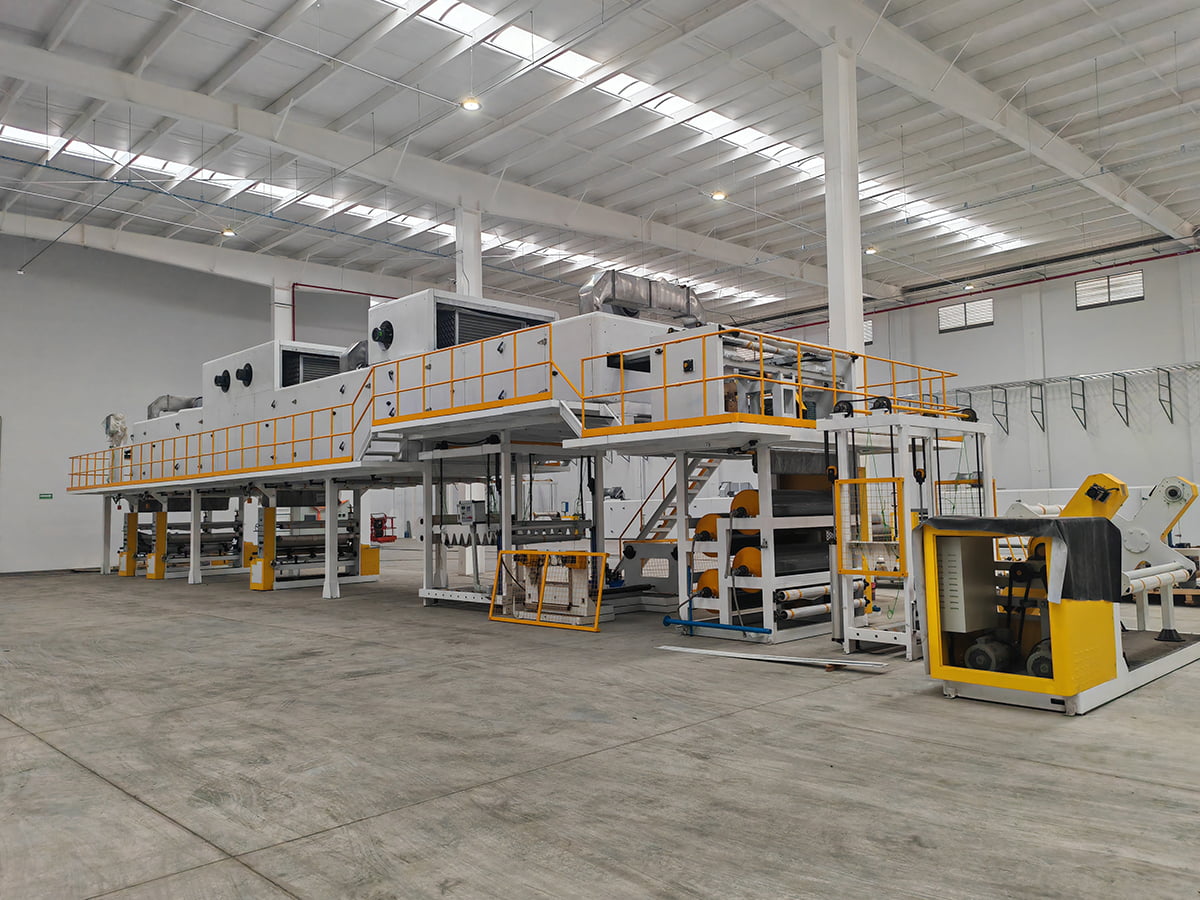
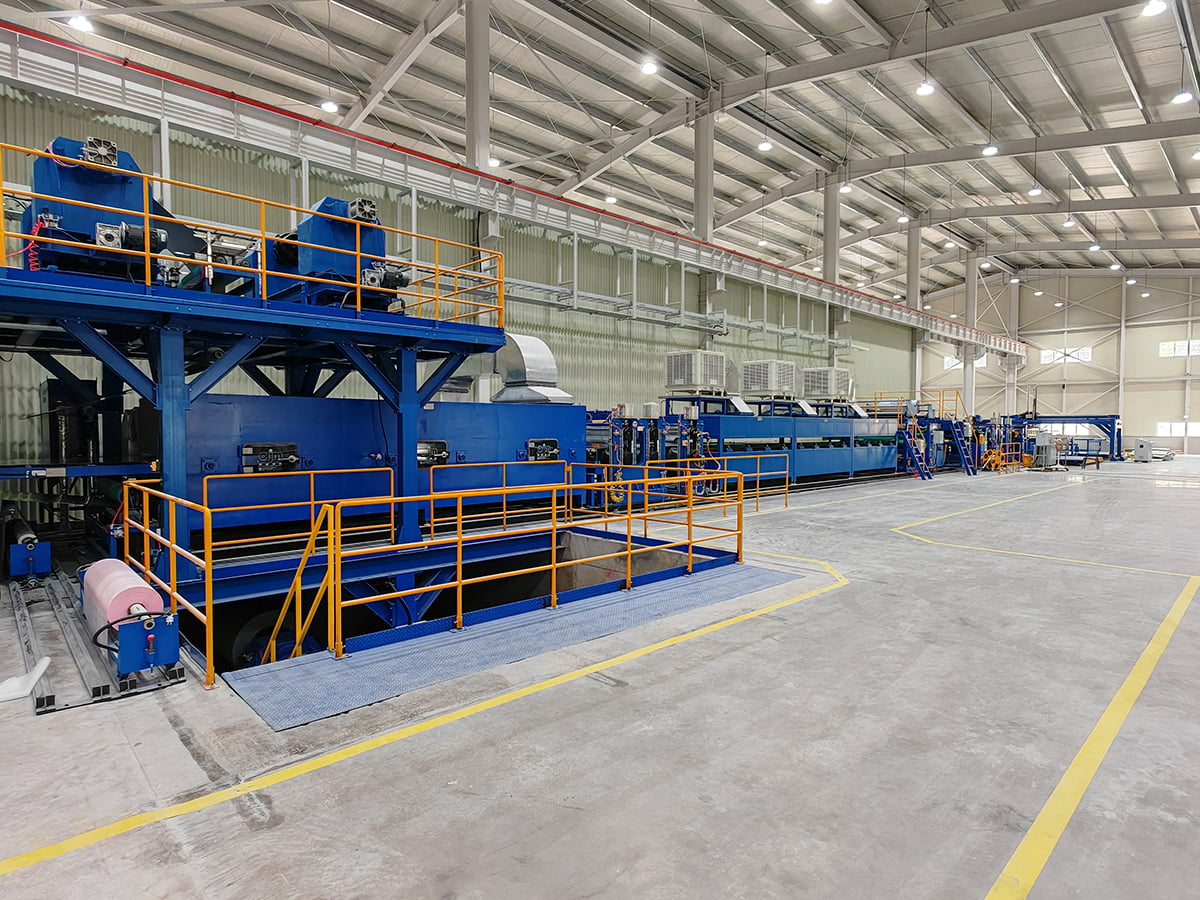
The Metal Composite Panel Production Line process mainly includes six core steps: raw material preparation, surface treatment, composite forming, hot pressing and curing, cooling and shaping, and cutting into finished products. Taking aluminum-plastic composite panel production as an example, the entire Metal Composite Panel Production Line is fully automated from raw material input to finished product output. The production speed can reach 8-25 m/min, and the product thickness tolerance is controlled within ±0.05 mm, making it a typical example of efficient manufacturing in the modern building decoration materials field.
1. Overview of the Metal Composite Panel Production Line
A Metal Composite Panel (MCP) is a new type of functional panel formed by using thin metal sheets (such as aluminum, steel, copper, titanium, etc.) as the surface layer, and polyethylene (PE), mineral-filled core material, or honeycomb aluminum as the core, continuously compounded using a professional Metal Composite Panel Production Line. It is widely used in building curtain walls, interior decoration, transportation vehicle shells, household appliance panels, and new energy vehicle battery boxes, among other fields.
Currently, mainstream Metal Composite Panel Production Lines are divided into three types: aluminum-plastic composite panel production lines (ACP Line), aluminum-honeycomb composite panel production lines, and steel-plastic/aluminum-steel composite panel production lines. Among them, the aluminum-plastic composite panel production line has the highest market share, with a global annual production capacity of over 1.2 billion square meters.
2. Core Production Processes of the Metal Composite Panel Production Line
Raw Material Preparation and Unwinding
The starting point of the Metal Composite Panel Production Line is the unwinding station. Aluminum or steel coils are automatically fed by a dual-head uncoiler. Typically, aluminum coil widths range from 1000 to 1600 mm, with thicknesses of 0.18 to 0.5 mm (surface layer) and 0.08 to 0.15 mm (back layer).
For core materials, LDPE (low-density polyethylene) pellets are accurately fed by a loss-in-weight metering system, with a formulation error of no more than ±0.3%. Fire-resistant composite panels use mineral-filled core materials, with an aluminum hydroxide (ATH) content of up to 60%-65% to meet the EN13501-1 B-class or A2-class fire standards.
Metal Sheet Surface Treatment
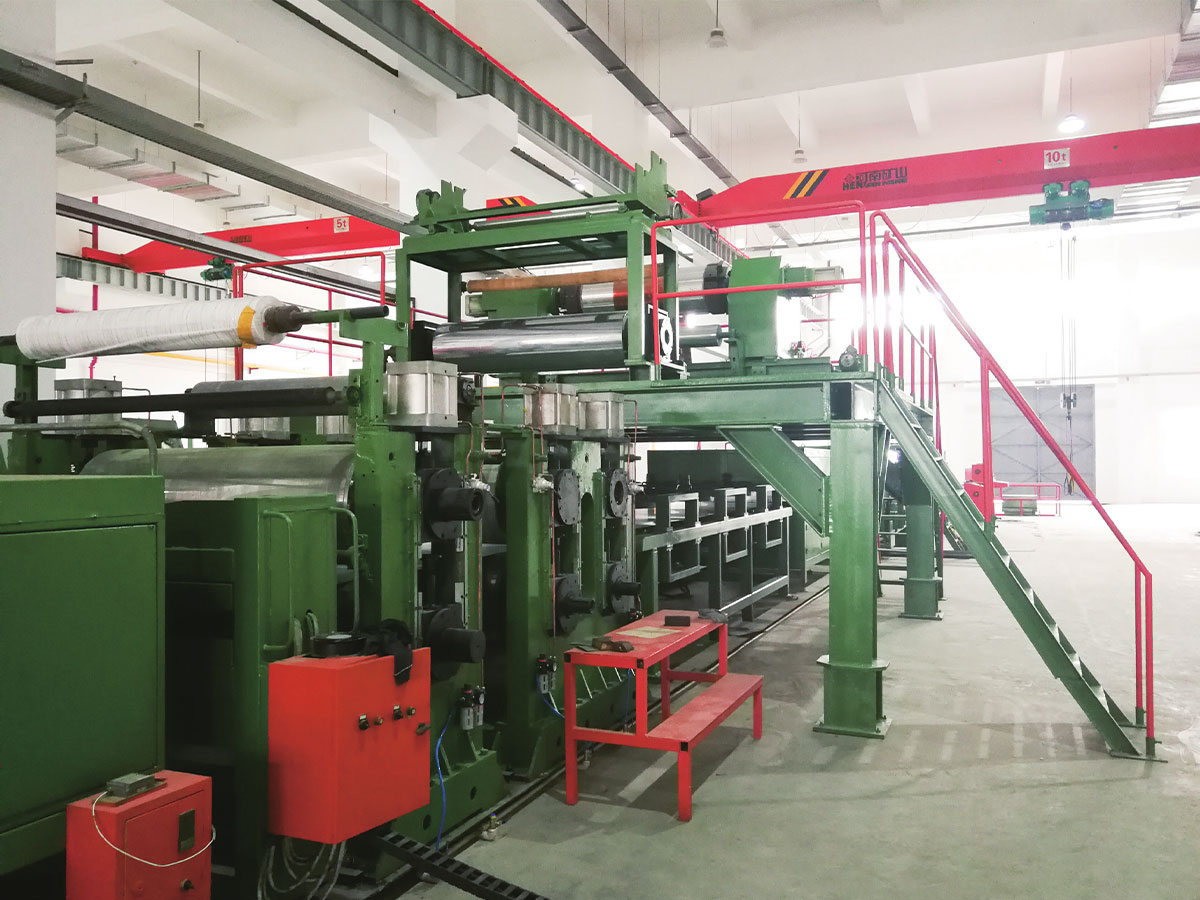
This is the key process affecting the interlayer peel strength of metal composite panels. The surface treatment unit of the Metal Composite Panel Production Line generally includes the following steps:
- Degreasing and Cleaning: Use alkaline solution (NaOH concentration 3-5%) for spraying or soaking to remove oil and dirt from the metal surface.
- Water Washing and Drying: After multiple rinses with clean water, the sheets are dried in an infrared hot air drying furnace at 80-120°C to remove moisture.
- Chemical Pre-treatment (Chromate/Non-chromate treatment): Apply chromate or silane-based conversion coatings with a coating weight of 15-30 mg/m².
- Primer Treatment: Roller coating of heat-cured polyurethane or epoxy primer with a dry film thickness of 3-5 μm to enhance the chemical bonding strength between the metal and core materials.
Metal composite panels with standardized surface treatment can achieve an interlayer peel strength of ≥7 N/mm, significantly higher than untreated panels, which only have a strength of 2-3 N/mm.
Co-Extrusion Composite Forming
The extrusion of the core material and its bonding with metal sheets is the technological core of the Metal Composite Panel Production Line. There are two main process routes:
| Process Type | Extrusion Method | Applicable Core Material | Production Speed | Characteristics |
| Dry Composite | Single-layer/Multilayer Co-extrusion | PE, Flame-retardant PE | 8-15 m/min | Low equipment investment, suitable for small batches |
| Wet Composite | T-type Die Co-extrusion | PE, Modified PE | 12-25 m/min | High speed, uniform thickness, suitable for large batches |
| Pre-impregnated Film Composite | Pre-impregnated core film composite | Functional core materials | 5-10 m/min | Flexible material formulation, stable quality |
The extruder (usually a twin-screw extruder with a screw diameter of 120-200 mm) extrudes the molten core material at a temperature of 200-230°C, evenly distributing it between the two layers of metal sheets through a T-type die and into the composite roller group.
Hot Press Curing
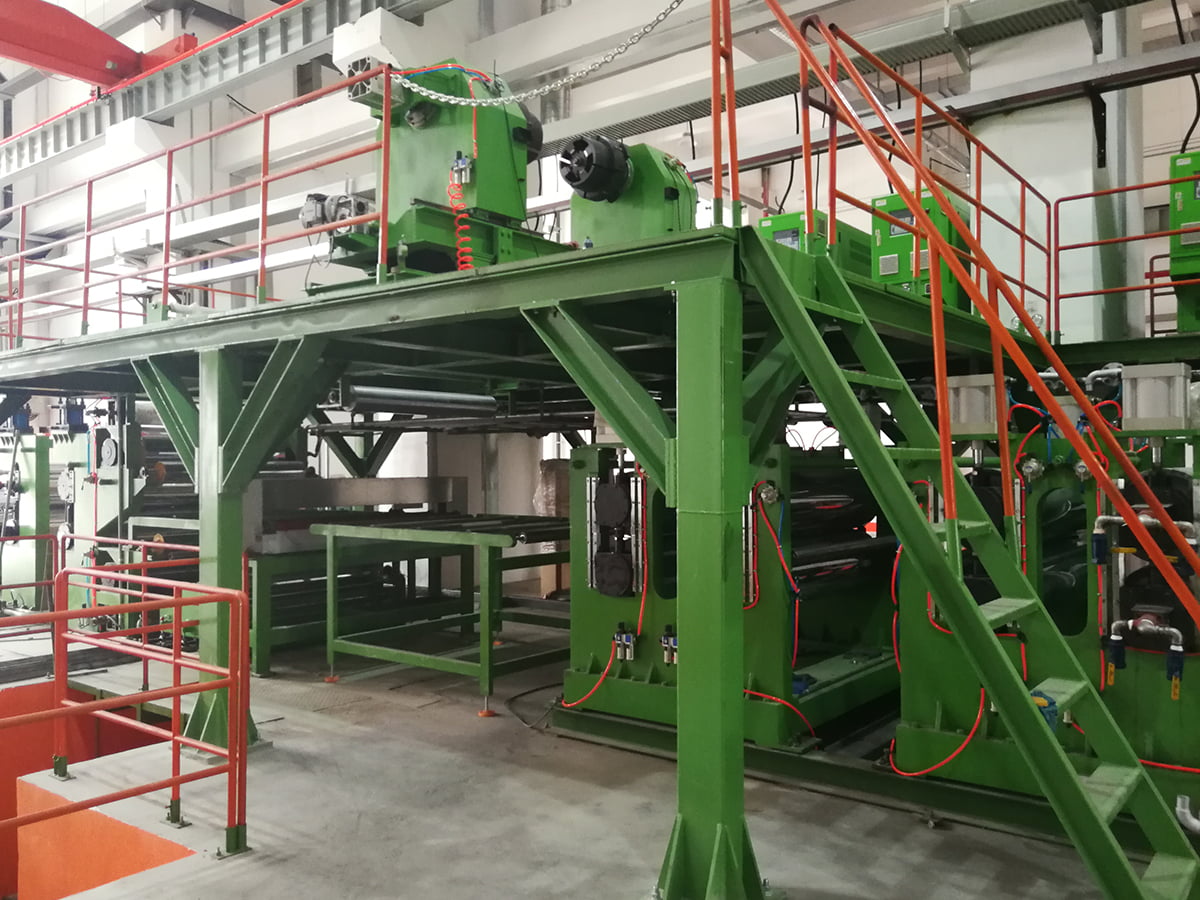
The composite roller group is the core mechanical unit of the Metal Composite Panel Production Line, consisting of a preheating roller, pressing roller, and stabilizing roller. The upper and lower metal sheets sandwich the molten core layer in this station to achieve hot pressing and bonding:
Preheating Zone: Metal sheets are preheated to 60-90°C to improve the spreadability of the core material and bonding ability of the interface.
Pressing Zone: The main pressure roller typically exerts a pressure of 0.3-0.8 MPa to ensure the three layers bond well without bubbles or delamination.
Shaping Zone: The constant temperature roller group keeps the core material evenly cured under certain pressure, preventing internal stress and warping.
Cooling and Shaping
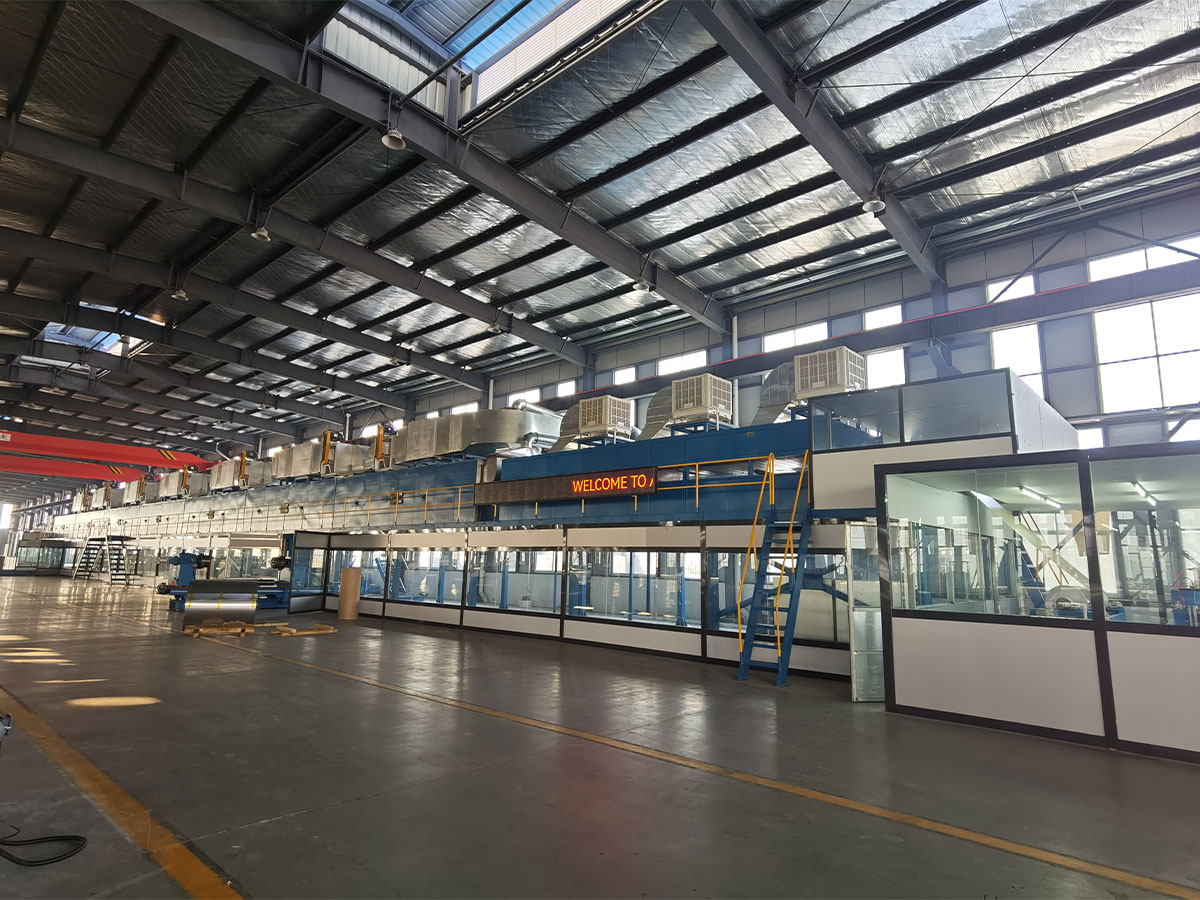
After hot pressing, the composite panel temperature remains above 60°C. It must go through multiple cooling stages to prevent deformation or delamination caused by rapid cooling. The cooling section of the Metal Composite Panel Production Line typically has a length of 8-15 m and consists of both natural cooling and forced air cooling segments. The exit panel temperature is controlled below 35°C, ensuring the core material is fully cured, and the interlayer bonding strength reaches the final design value.
Coating and Protective Film Lamination
Some high-end Metal Composite Panel Production Lines add a coating unit after cooling and shaping to apply a PVDF fluorocarbon coating (25-35 μm thick) or PE coating treatment to the panel surface, improving product weatherability (with a service life of over 20 years) and color richness.
Finally, the protective film lamination machine (60-80 μm PE film) covers the product on both sides to prevent scratching during storage and transportation.
Precision Cutting and Inspection
Finished panels are cut to size using a flying saw or disc cutter system, with common specifications of 1220×2440 mm or 1500×4050 mm, with a cutting accuracy of ±1 mm. An online inspection system is installed at the end of the Metal Composite Panel Production Line, which mainly checks:
- Panel flatness: (≤1 mm/m²)
- Thickness tolerance: (±0.2 mm)
- Color difference: (ΔE ≤ 1.5)
- Peel strength: (sampling inspection)
Main Technical Parameters of the Metal Composite Panel Production Line
| Technical Parameters | Standard Configuration | High-Speed Configuration |
| Production Speed | 8-15 m/min | 15-25 m/min |
| Applicable Panel Width | 1000-1250 mm | 1000-1600 mm |
| Finished Panel Thickness | 3 mm / 4 mm | 2-6 mm (adjustable) |
| Thickness Accuracy | ±0.2 mm | ±0.05 mm |
| Installed Power | Approx. 350 kW | Approx. 600 kW |
| Production Team Size | 4-6 people/shift | 3-5 people/shift (automated) |
| Annual Capacity (Double Shift) | Approx. 2 million m² | Approx. 4.5 million m² |
Technical Development Trends of the Metal Composite Panel Production Line
With the rapid development of new energy vehicles, the demand for aluminum-steel composite panels in the automotive lightweighting field has greatly increased, raising higher requirements for Metal Composite Panel Production Lines.
Intelligent Control
Integration of the MES system and PLC for recipe management, quality traceability, and predictive equipment maintenance in the entire process.
Multi-material Composite Capability
Supports the composite of dissimilar metals such as aluminum/steel, aluminum/copper, titanium/aluminum, and mixing with carbon fiber prepregs.
Energy Saving and Emission Reduction
The next-generation Metal Composite Panel Production Line uses heat recovery systems, reducing energy consumption by approximately 18%-25%.
Quick Changeover
Modular design allows switching between width and thickness specifications within 45 minutes, compared to 4 hours previously.
The Metal Composite Panel Production Line achieves efficient and precise composite bonding between metal panels and functional core materials through closely linked processes such as unwinding, surface treatment, extrusion composite, hot pressing, cooling, and cutting. Choosing a suitable Metal Composite Panel Production Line requires a comprehensive evaluation of target product specifications, annual production requirements, automation level, fire rating, and other factors. With the continuous increase in demand for high-performance composite panels in downstream industries such as construction, automotive, and home appliances, the Metal Composite Panel Production Line is continuously evolving toward higher speed, intelligence, and multifunctionality.