grammy@cjm.com.cn

 English
 русский
 Español
 عربى
عربى
Content
- 1 Faster Production Speed
- 2 Uniform Coating Quality
- 3 Stronger Corrosion and Weather Resistance
- 4 Lower Material and Labor Cost
- 5 Environmental and Compliance Benefits
- 6 Common Coating Types Used on These Lines
- 7 Wide Range of Applications
- 8 Core Equipment in a Coating Line
- 9 Quality Control and Testing Methods
- 10 Comparing Coil Coating to Other Metal Finishing Methods
- 11 Maintenance Best Practices for Long Term Reliability
- 12 Return on Investment Considerations
- 13 Choosing the Right Line for Your Facility
A metal coil coating line applies paint to flat metal in continuous rolls before it is cut or formed, which gives manufacturers faster production, more uniform coatings, lower waste, and stronger corrosion protection compared with painting parts after fabrication. Companies that switch to coil coating typically report shorter lead times, fewer rejects, and a lower total cost per square meter of finished product. For manufacturers researching equipment options, a Metal Coil Coating Line is built specifically to deliver these results at industrial scale, and the sections below explain why each advantage matters in practice.
Faster Production Speed
Coil coating processes metal in a continuous strip rather than as individual pieces, so line speeds commonly range from 30 to 200 meters per minute depending on coating thickness and curing requirements, according to data published by the National Coil Coating Association (NCCA). This continuous flow removes the stop-start delays found in batch spray painting or powder coating booths.
Why Speed Matters for Output
- A single shift can coat several thousand square meters of steel or aluminum coil
- Downtime between batches is nearly eliminated since coil splicing keeps the line running
- Curing ovens are calibrated to the line speed, so drying does not become a bottleneck
Impact on Delivery Schedules
Because the process runs continuously, a facility can commit to shorter delivery windows without adding shifts. A roofing panel producer, for example, can move from raw coil to finished coated product in the same working day, rather than routing parts through a separate paint shop that adds days to the schedule.
Uniform Coating Quality
Because the coating rollers apply paint at a fixed, controlled thickness across the entire strip width, coil coating produces a far more consistent film than manual or robotic spray application. Coating thickness tolerance on a well-maintained line typically stays within plus or minus 2 microns, a figure widely cited by coil coating equipment suppliers and reflected in ASTM D1400 thickness testing practices used in the industry.
Consistency Across Batches
This uniformity matters most for architectural panels and appliance parts, where visible color or gloss variation between sheets is unacceptable to end customers. A properly configured line keeps color and gloss readings within tight delta E values from the first meter of coil to the last, which reduces customer complaints tied to visible seams or panel mismatch on building facades.
How Roller Setup Affects Film Thickness
The gap and speed ratio between the pickup roller and the applicator roller determine how much wet film is transferred to the strip. Operators adjust this ratio based on paint viscosity and target dry film thickness, and small deviations are corrected automatically on modern lines using closed loop thickness sensors mounted after the coating station.
Stronger Corrosion and Weather Resistance
Pre-treatment stages built into a coating line, such as chemical cleaning, chromate or chrome-free conversion coating, and controlled drying, prepare the metal surface far more thoroughly than post-fabrication painting allows. Independent salt spray testing referenced by paint manufacturers such as PPG and Beckers shows coil-coated steel with a proper primer and top coat system can resist corrosion for over 1000 hours in ASTM B117 salt spray testing, compared with much shorter resistance times for parts painted after forming with incomplete edge coverage.
Why Pre-Treatment Matters
Surface contamination such as oil residue or oxide scale left on metal before painting is one of the leading causes of early coating failure. The multi-stage washing and rinsing sections on a coating line remove these contaminants before the conversion coating is applied, giving the primer a clean, chemically active surface to bond to.
Lower Material and Labor Cost
Coil coating reduces paint consumption because the coating is applied in a thin, even film with minimal overspray, unlike spray booths where overspray losses can reach 20 to 30 percent of the paint used. Fewer workers are needed to operate a continuous line compared with staffing multiple manual paint stations, and rework caused by uneven coverage drops significantly.
Cost Comparison Overview
| Factor | Coil Coating Line | Post-Fabrication Painting |
| Paint Waste | Low, typically under 5 percent | High, up to 30 percent overspray |
| Labor per Unit Area | Low, continuous automated flow | Higher, manual handling of pieces |
| Coating Uniformity | Very consistent, tight tolerance | Variable, operator dependent |
| Curing Method | Controlled oven, fast cycle | Ambient or batch oven, slower |
Long Term Savings
Beyond raw material savings, facilities running a coil coating line often reduce quality control staffing because inline sensors flag thickness or color deviations automatically, rather than relying on manual spot checks after painting.
Environmental and Compliance Benefits
Modern coil coating lines are equipped with regenerative thermal oxidizers that capture and burn off volatile organic compounds released during curing, which allows facilities to meet strict air quality regulations such as those enforced by the U.S. Environmental Protection Agency under 40 CFR Part 60. Centralized paint application also makes it easier to control and treat wastewater compared with scattered manual painting stations.
Solvent Recovery and Energy Reuse
Regenerative thermal oxidizers commonly achieve over 95 percent destruction efficiency for volatile organic compounds, based on figures published by industrial oxidizer manufacturers, and the heat generated during oxidation is often recycled back into the curing oven to reduce fuel consumption.
Common Coating Types Used on These Lines
Coil coating lines are compatible with several paint chemistries, and the right choice depends on the intended end use of the finished metal.
Typical Coating Systems
- Polyester coatings for general purpose panels and appliance housings
- PVDF or fluoropolymer coatings for long term outdoor architectural cladding
- Plastisol coatings for heavy duty applications requiring thicker films
- Silicone modified polyester for improved heat and UV resistance
PVDF coatings in particular are known to retain gloss and color for decades on building exteriors, which is why they are widely specified for high rise facade panels.
Wide Range of Applications
Coil coated metal is used across several industries because the finished coil can later be slit, cut, roll formed, or stamped without damaging the coating, as long as the paint system is formulated for post-forming flexibility.
Common End Uses
- Architectural roofing and wall cladding panels
- Home appliance housings such as refrigerators and washing machines
- HVAC ductwork and equipment casings
- Automotive trim and structural components
- Metal composite panels used in commercial building facades
Core Equipment in a Coating Line
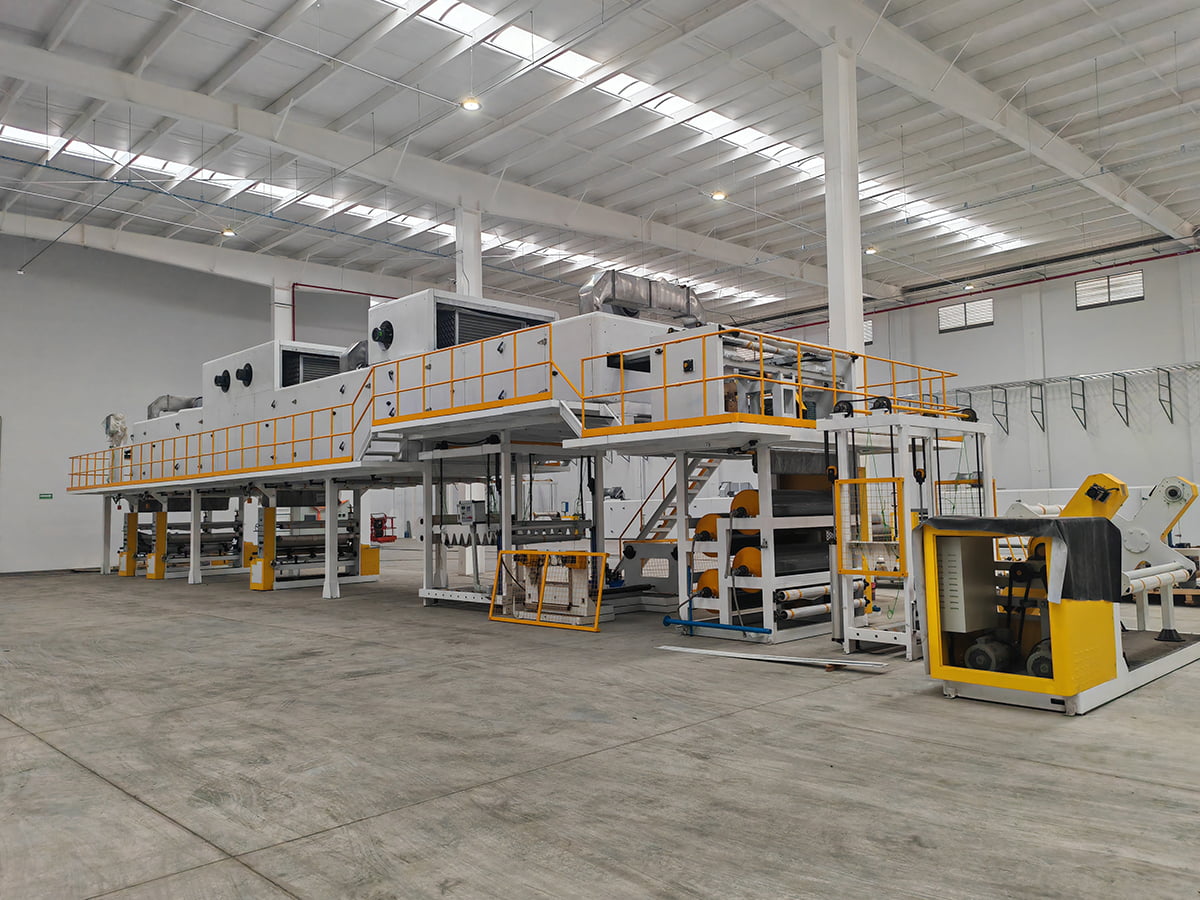
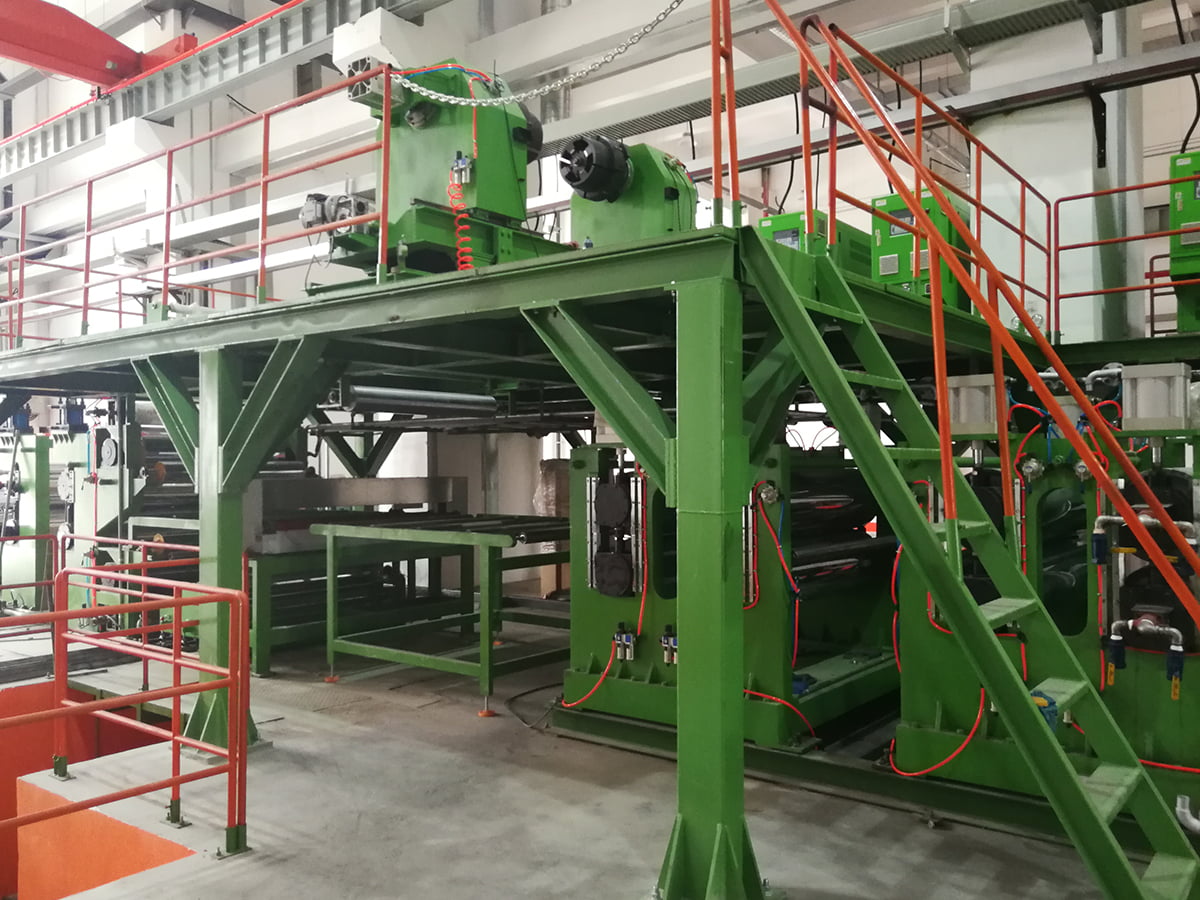
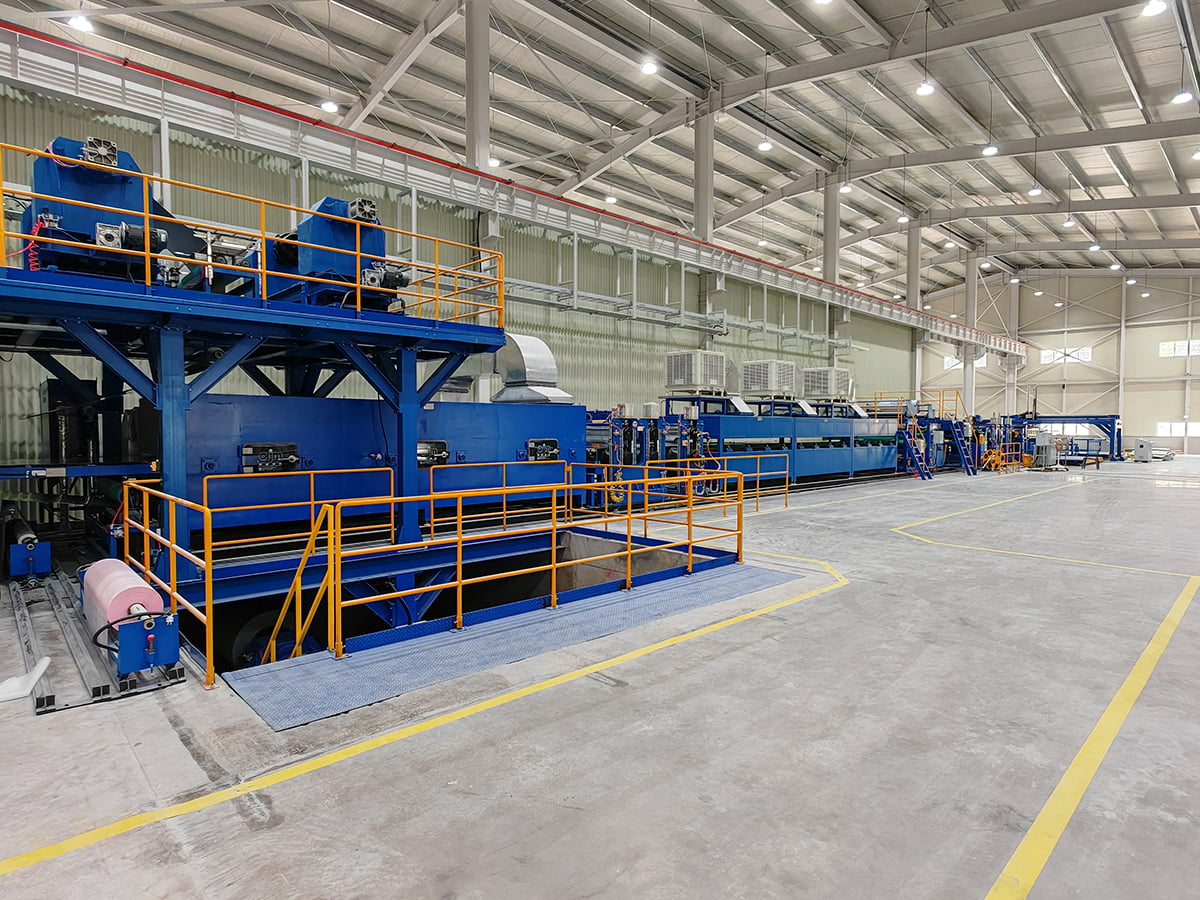
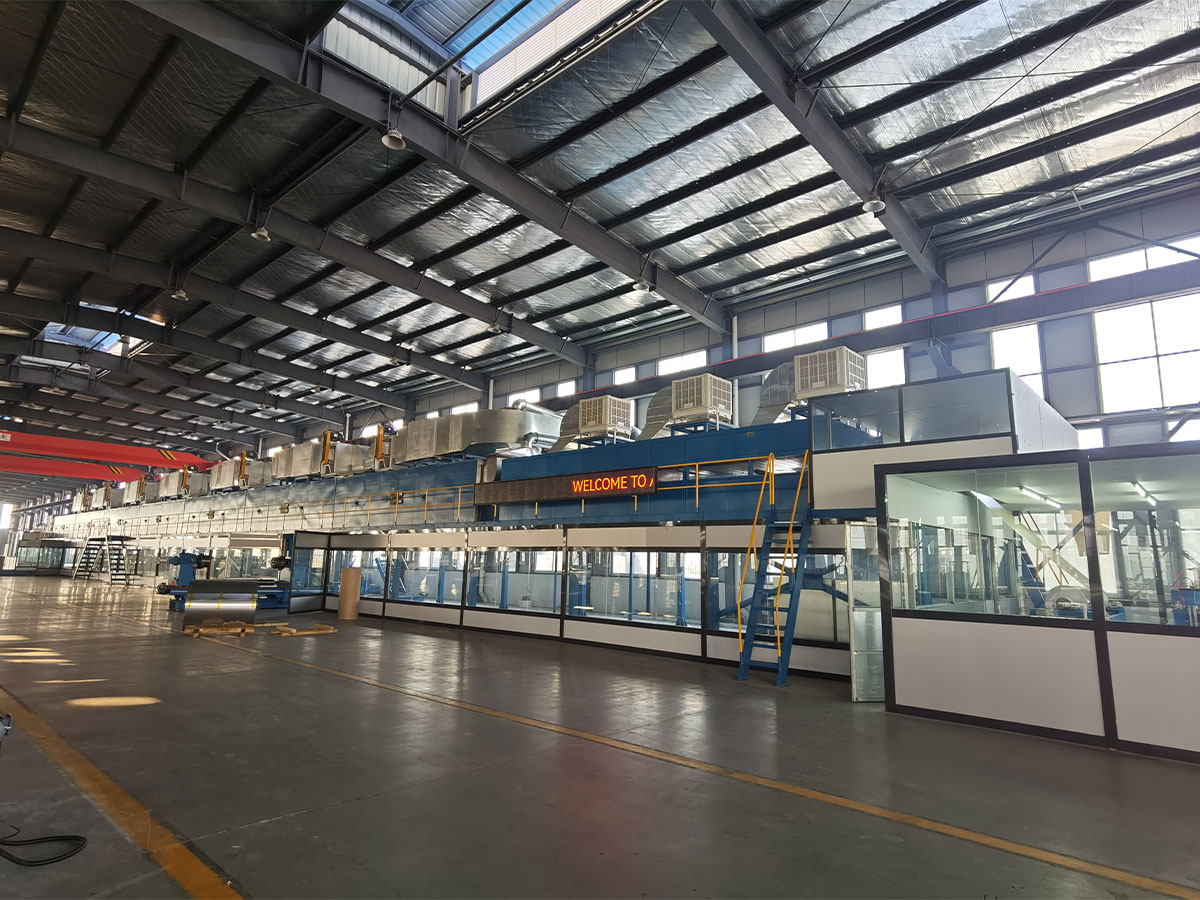
A complete coil coating system typically includes an uncoiler, surface cleaning and pretreatment section, chemical coating station, drying oven, primer and top coat application rollers, curing oven, cooling section, and a recoiler or cut-to-length unit. Each stage is synchronized to the line speed so the metal moves through cleaning, coating, and curing without manual intervention.
How the Sections Work Together
The uncoiler feeds raw coil into the line at a controlled tension, which prevents wrinkling or misalignment as the strip moves through each processing zone. After cleaning and pretreatment, the strip passes through the coater where rollers apply a precise, even film, then into the curing oven where temperature profiles are set to fully cross link the paint without scorching the metal. A cooling section brings the strip back to a safe handling temperature before it is rewound or cut to length.
Manufacturers evaluating new equipment often compare throughput, coating tolerance, and energy efficiency across suppliers. A dedicated Metal Coil Coating Line is designed to combine these stages into one continuous, automated process suited for steel and aluminum coil production.
Quality Control and Testing Methods
Reliable coil coating operations rely on standardized testing to confirm that finished coil meets specification before it ships. Common tests include the pencil hardness test for film hardness, the T-bend test for coating flexibility during forming, and cross hatch adhesion testing to confirm the paint bonds properly to the substrate.
Typical Test Standards
| Test | Purpose | Common Standard |
| Pencil Hardness | Measures film hardness | ASTM D3363 |
| T-Bend Test | Checks coating flexibility during bending | ASTM D4145 |
| Cross Hatch Adhesion | Confirms paint adhesion to substrate | ASTM D3359 |
| Salt Spray Resistance | Evaluates corrosion resistance | ASTM B117 |
Comparing Coil Coating to Other Metal Finishing Methods
Manufacturers often weigh coil coating against post-fabrication spray painting or powder coating. Powder coating provides a thick, durable finish but is generally applied to already formed parts, which limits throughput and makes uniform coverage on complex shapes more difficult. Liquid spray painting after fabrication offers flexibility for small batches but suffers from higher paint waste and more variation between operators. Coil coating trades some of that shape flexibility for very high throughput, tight thickness control, and lower cost per unit area, which is why it remains the preferred method for flat panel products produced in large volumes.
Maintenance Best Practices for Long Term Reliability
Routine maintenance keeps a coating line running at rated speed and prevents costly unplanned downtime. Operators typically inspect and clean applicator rollers daily to prevent paint buildup, check oven burner calibration on a scheduled basis to maintain consistent curing temperatures, and monitor pretreatment bath chemistry to ensure cleaning and conversion coating remain effective.
Common Maintenance Tasks
- Daily cleaning of coating rollers to remove dried paint residue
- Weekly inspection of oven burners and temperature sensors
- Regular testing of pretreatment bath concentration and pH
- Periodic calibration of thickness and color measurement sensors
Return on Investment Considerations
While a coil coating line requires a larger upfront capital investment than a manual spray booth, the combination of reduced paint waste, lower labor cost per unit, higher throughput, and fewer rejected parts typically shortens the payback period for medium to high volume producers. Facilities that run the line close to full capacity across multiple shifts see the fastest return, since fixed equipment costs are spread across more coated square meters.
Choosing the Right Line for Your Facility
Facility planners should match line width, speed, and oven capacity to expected coil thickness and target output. A line designed for thin aluminum coil at high speed will differ significantly from one built for thicker structural steel. Reviewing coating thickness tolerance, oxidizer efficiency, and maintenance access before purchase helps avoid costly retrofits later, and working with an experienced equipment supplier ensures the line is sized correctly for current and future production needs.